
Now Reading: Priming Explained: How Previous Experiences Shape Memory, Perception, and Decision-Making
-
01
Priming Explained: How Previous Experiences Shape Memory, Perception, and Decision-Making
Priming Explained: How Previous Experiences Shape Memory, Perception, and Decision-Making
Imagine walking into a bakery on your way home from work. The warm smell of freshly baked bread instantly makes you feel hungry—even if you had dinner an hour earlier. Later that evening, you find yourself craving pastries without really knowing why. Nothing forced you to think about food. Instead, your brain quietly connected a recent experience with your current thoughts and behavior.
Or imagine seeing the word yellow followed immediately by the word banana. Chances are you’ll recognize the second word faster than if it were completely unrelated. Once again, your brain has already prepared itself before you consciously realize what’s happening.
These everyday experiences illustrate one of the most fascinating cognitive processes in psychology: priming.
Unlike deliberate memorization or conscious reasoning, priming influences perception, memory, language, and decision-making automatically. It quietly prepares the brain to process information more efficiently based on previous experiences. Although most people have never heard the term, they experience priming hundreds—perhaps thousands—of times every day.
From recognizing familiar faces to reading faster, making purchasing decisions, understanding conversations, and even interpreting emotions, priming continuously shapes how people interact with the world.
Because priming operates largely outside conscious awareness, it has become one of the most widely studied topics in cognitive psychology, neuroscience, education, marketing, and behavioral science.
Quick Answer
Priming is an unconscious memory process in which prior exposure to one stimulus influences how the brain responds to a later stimulus. It is considered a form of implicit memory because its effects occur automatically without requiring conscious awareness or intentional recall.
What Is Priming?
Priming is a psychological phenomenon in which previous experiences influence later thoughts, perceptions, decisions, or behaviors without conscious intention.
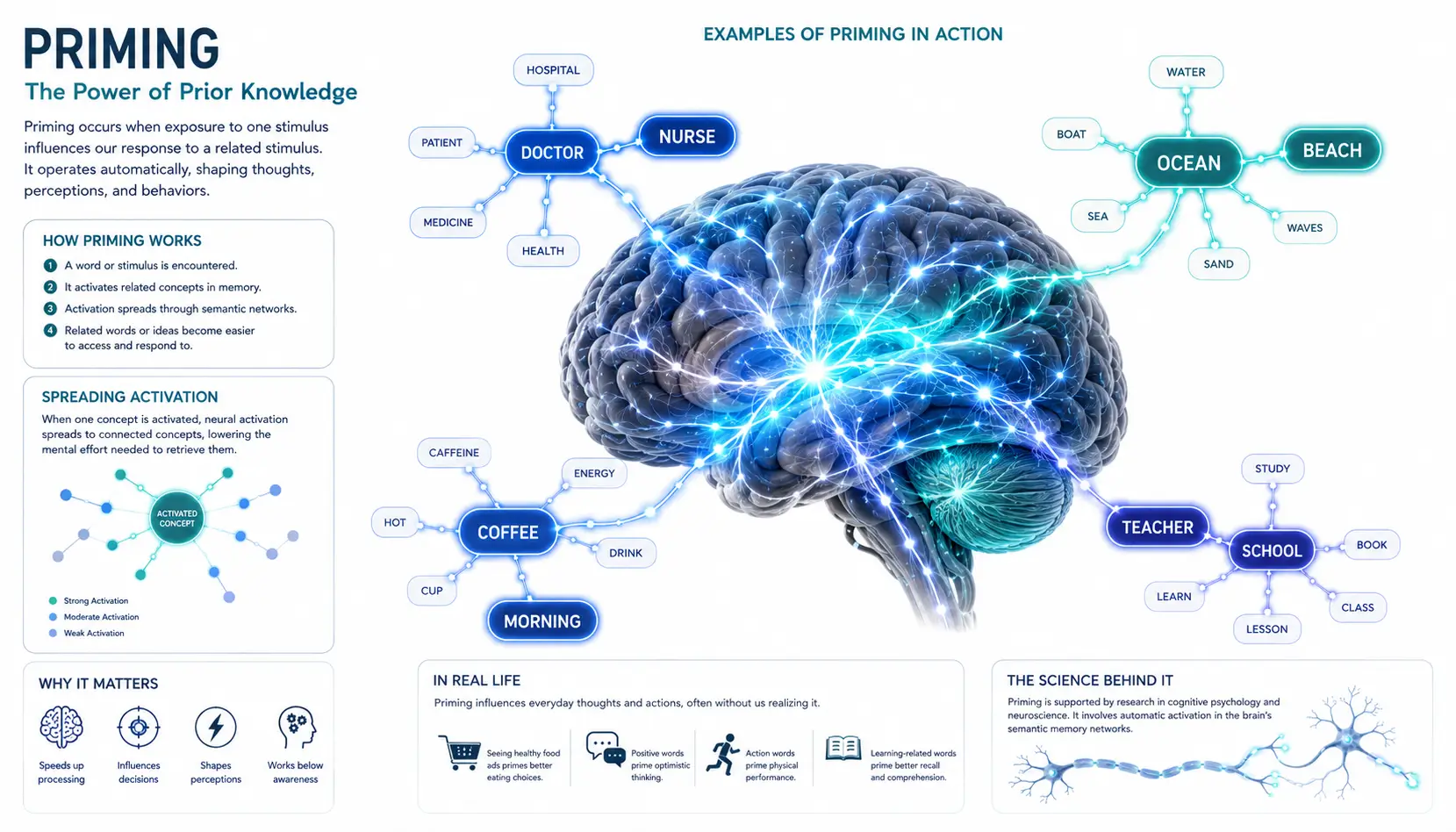
When the brain encounters information, it does not process every stimulus as completely new. Instead, previously activated concepts remain temporarily more accessible, allowing related information to be recognized and processed more quickly.
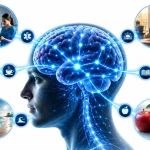
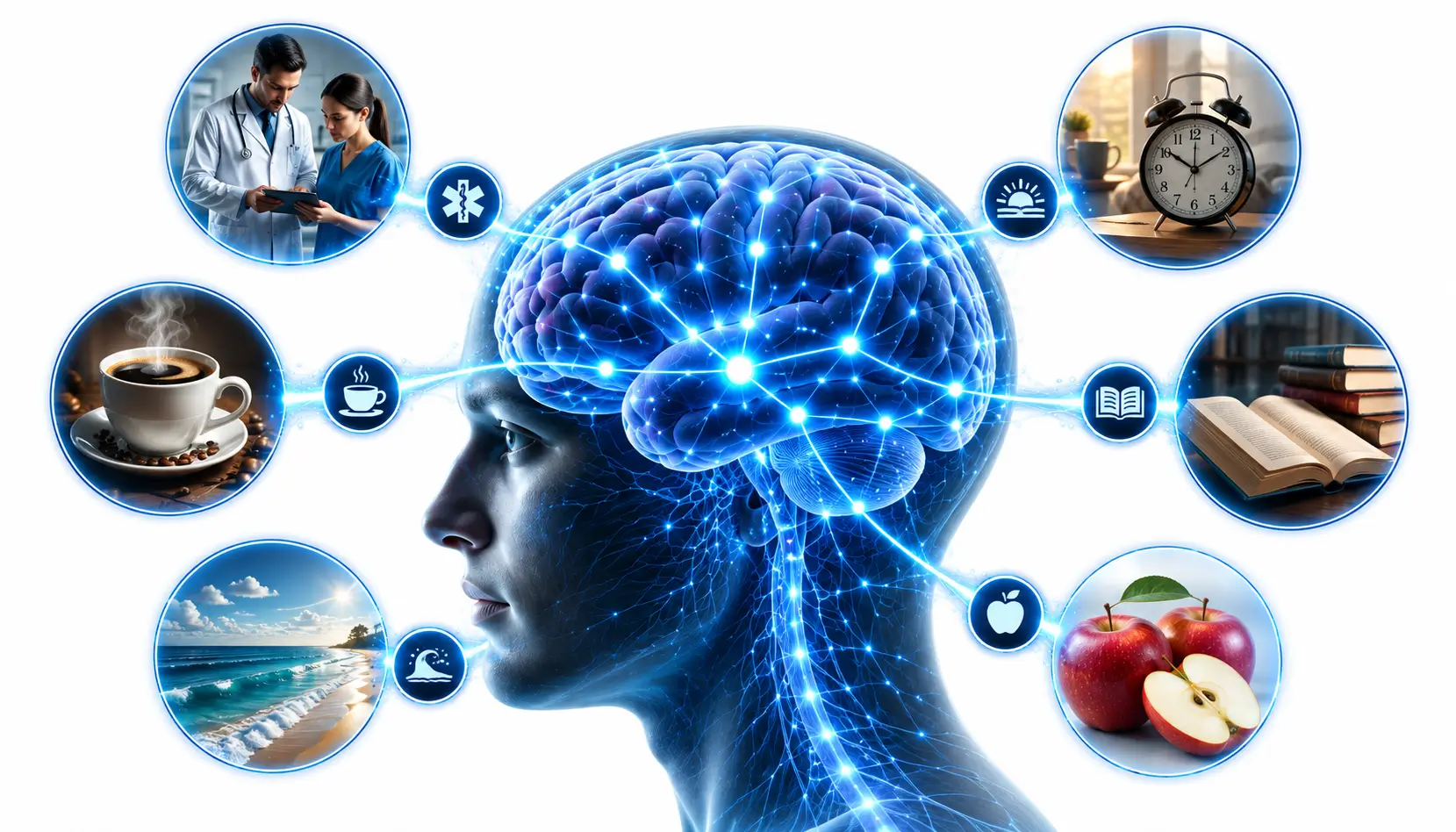
Think of memory as a massive network rather than a collection of isolated facts.
Each idea, word, image, emotion, or experience is connected to thousands of others through associations built over years of learning.
When one concept becomes active, nearby concepts also become easier to access.
For example:
- Doctor → Nurse
- Ocean → Beach
- School → Teacher
- Coffee → Morning
- Fire → Heat
Seeing one concept briefly activates many related ideas, allowing the brain to recognize them more quickly moments later.
This happens automatically and often without any awareness that previous information is influencing current thinking.
Why Does the Brain Use Priming?
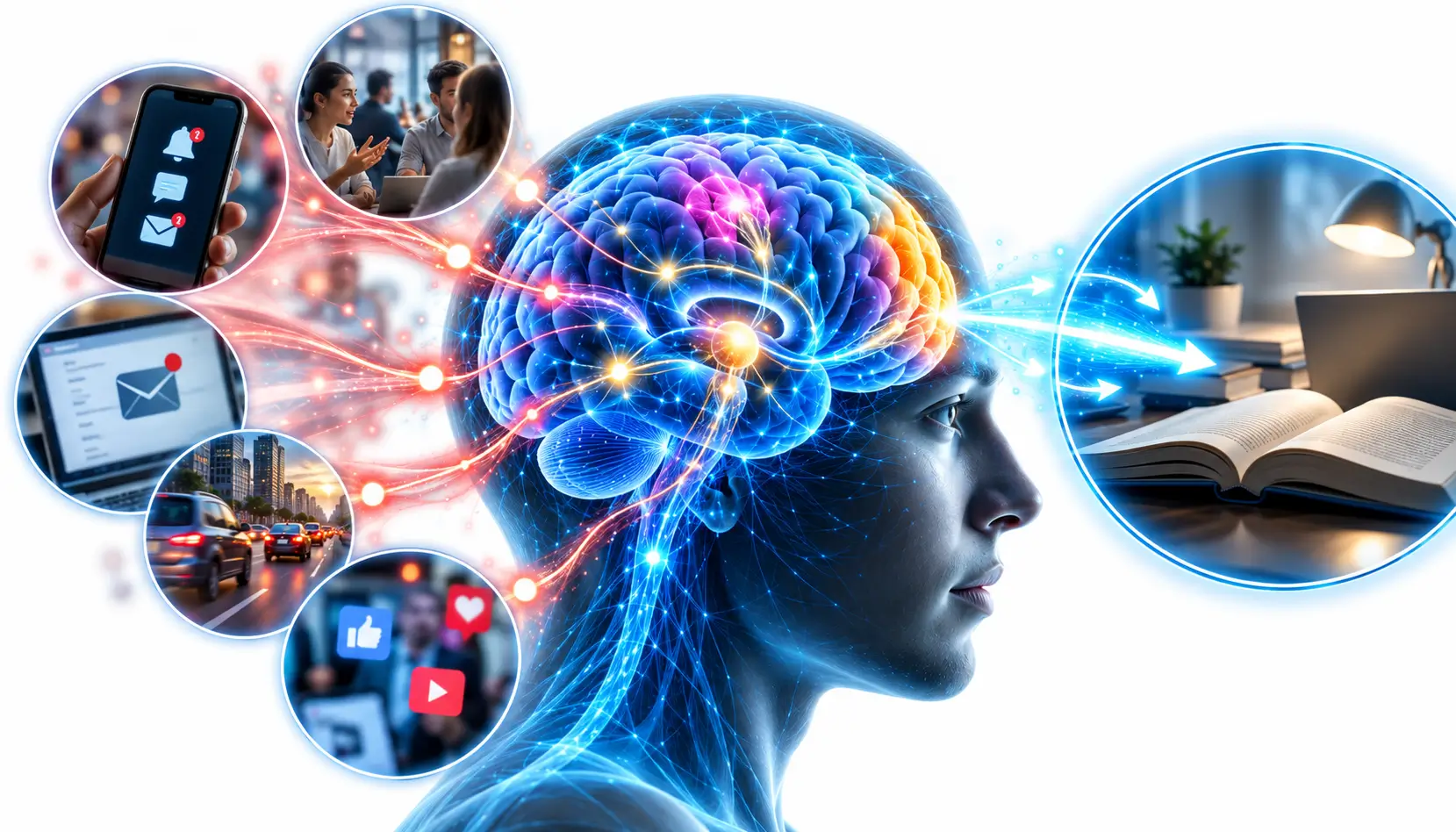
If the brain analyzed every piece of information from scratch, daily life would become incredibly inefficient.
Imagine reading a newspaper while having to consciously identify every individual letter before understanding each word. Or imagine recognizing your best friend by carefully analyzing every facial feature each time you met.
Instead, the brain constantly predicts what is most likely to appear next.
This predictive ability dramatically reduces mental effort while increasing processing speed.
Priming is one of the mechanisms that makes this possible.
Rather than starting from zero, the brain prepares itself using recent experiences, previous knowledge, and learned associations.
From an evolutionary perspective, this provided enormous advantages.
Quickly recognizing dangerous animals, identifying edible foods, interpreting social signals, or responding to familiar environments increased survival long before humans developed language or formal education.
Today, the same mechanism helps us navigate conversations, drive safely, understand written language, solve problems, and make rapid decisions.
How Priming Works Inside the Brain
Although priming often feels almost magical, its underlying mechanism is rooted in well-established principles of neuroscience.
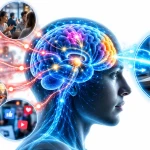
The brain stores knowledge as networks of interconnected neurons. Concepts that are frequently experienced together gradually develop stronger neural connections through repeated activation.
When one concept becomes active, electrical activity spreads across neighboring neural pathways.
Neuroscientists often describe this process as spreading activation.
Imagine dropping a stone into a calm lake.
The initial splash creates expanding ripples that spread outward in every direction.
Similarly, activating one memory automatically increases activity in related memories, making them easier to retrieve seconds later.
This neural preparation explains why related information can often be recognized hundreds of milliseconds faster than unrelated information.
Although these differences seem tiny, they dramatically improve overall cognitive efficiency throughout daily life.
The History of Priming Research
While philosophers had long suspected that ideas become linked through association, modern scientific research on priming accelerated during the twentieth century.
One of the most influential discoveries came in 1971 when psychologists David Meyer and Roger Schvaneveldt demonstrated that participants recognized related word pairs significantly faster than unrelated pairs.
In their classic lexical decision experiments, volunteers identified combinations such as doctor–nurse more rapidly than unrelated combinations like bread–planet.
This finding provided strong evidence that activating one concept automatically facilitates access to related concepts within memory.
Later research expanded priming far beyond language.
Scientists discovered that previous experiences could unconsciously influence:
- Visual perception.
- Object recognition.
- Decision-making.
- Consumer behavior.
- Motor performance.
- Problem solving.
- Emotional processing.
- Social judgments.
Today, priming remains one of the most extensively studied phenomena in cognitive psychology because it reveals how unconscious memory continuously shapes conscious experience.
Priming and Implicit Memory
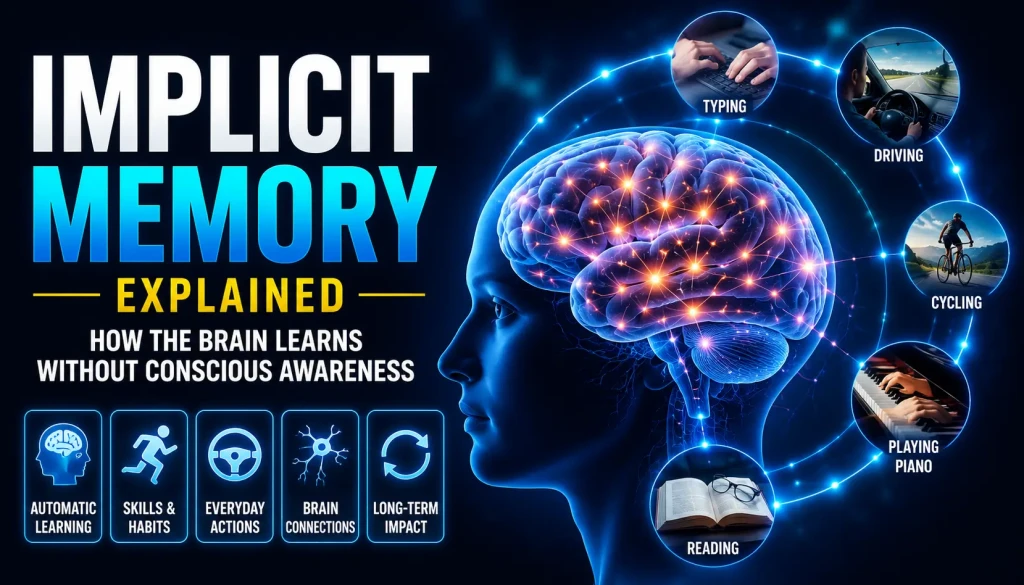
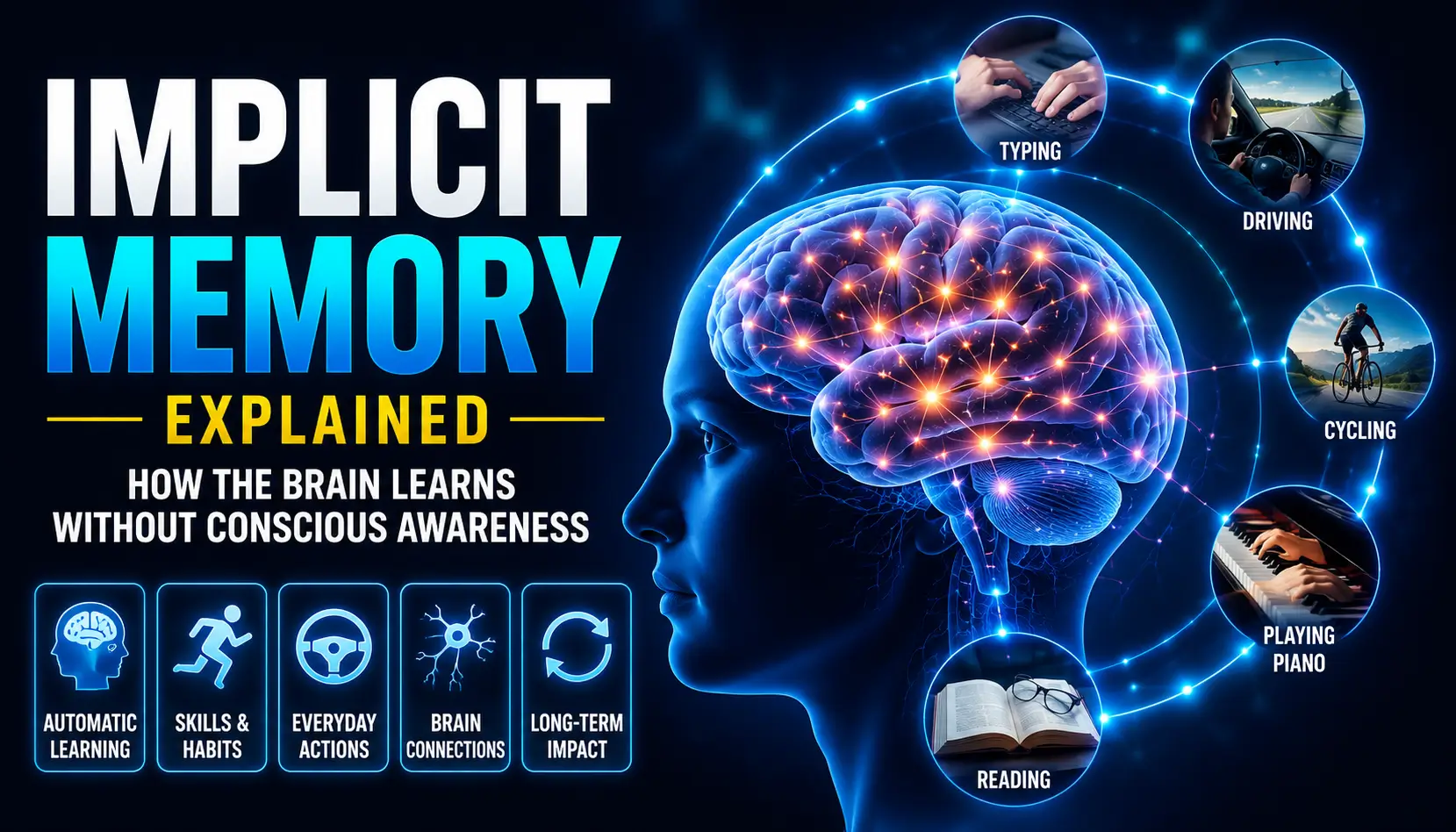
Priming is considered one of the major forms of implicit memory.
Unlike explicit memory, which requires consciously recalling facts or experiences, priming influences behavior automatically.
You do not intentionally remember previous exposures. Instead, earlier experiences quietly change how efficiently the brain processes new information.
For this reason, priming demonstrates that memory is not simply about recalling the past. It also prepares the brain for the future by making related information easier to process before conscious awareness even begins.
In the next section, we’ll explore the major types of priming—including semantic, perceptual, repetition, conceptual, positive, and negative priming—and examine how each one influences learning, memory, language, marketing, and everyday decision-making.
The Major Types of Priming
Although priming is often described as a single cognitive phenomenon, psychologists recognize several distinct forms of priming. Each type influences the brain in a different way, yet all share one important characteristic: they affect information processing automatically without requiring conscious awareness.
Understanding these different forms helps explain why previous experiences influence everything from reading speed and object recognition to purchasing decisions and social interactions.
Semantic Priming
Semantic priming is the most widely studied form of priming. It occurs when exposure to one word or concept makes the brain recognize another meaningfully related concept more quickly.
Because our memories are organized as interconnected semantic networks, activating one concept temporarily increases the accessibility of nearby concepts.
Classic examples include:
- Doctor → Nurse
- Dog → Cat
- Bread → Butter
- Winter → Snow
- Apple → Fruit
- Ocean → Beach
Numerous laboratory experiments have shown that people identify related words significantly faster than unrelated ones. This effect occurs within fractions of a second, demonstrating how efficiently the brain organizes stored knowledge.
Semantic priming also explains why conversations often flow naturally. Once a topic has been introduced, related ideas become easier to retrieve, making communication more efficient.
Perceptual Priming
Perceptual priming occurs when previous exposure improves the recognition of the same or visually similar stimuli.
Unlike semantic priming, which depends on meaning, perceptual priming focuses on physical characteristics such as shape, color, texture, sound, or visual appearance.
Examples include:
- Recognizing a blurred company logo after previously seeing the complete image.
- Identifying a partially hidden object more quickly after viewing it earlier.
- Recognizing familiar handwriting despite poor image quality.
- Reading distorted letters that initially appear difficult to identify.
Because perceptual priming improves recognition efficiency, it plays an important role in everyday visual processing.
Repetition Priming
Repetition priming refers to improved processing following repeated exposure to exactly the same stimulus.
Every time the brain encounters familiar information, neural processing becomes slightly more efficient.
This explains why:
- Reading becomes faster after repeated exposure to a text.
- Frequently used software becomes easier to navigate.
- Video game controls eventually feel automatic.
- Repeatedly hearing someone’s name makes it easier to remember.
Interestingly, people often experience repetition priming even when they cannot consciously remember seeing the original stimulus.
Conceptual Priming
While semantic priming activates related meanings, conceptual priming influences broader ideas and abstract relationships.
For example, reading several articles about healthy living may later increase the likelihood of choosing a salad over fast food without consciously connecting the earlier reading to the later decision.
The previously activated concept—health—continues influencing thought patterns long after the original exposure.
Conceptual priming demonstrates that the brain often carries recent themes forward into future decisions.
Positive Priming
Positive priming occurs when previous exposure makes later processing faster or more accurate.
This is the form of priming most commonly discussed in psychology because it reflects improved cognitive efficiency.
Examples include:
- Recognizing familiar words more quickly.
- Finding repeated objects faster in visual search tasks.
- Understanding repeated concepts with less mental effort.
- Completing familiar tasks more efficiently.
Negative Priming
Negative priming produces the opposite effect.
If the brain has recently ignored specific information, processing that same information later may actually become slower.
This phenomenon demonstrates that attention involves both selecting relevant information and actively suppressing distractions.
Researchers often study negative priming to better understand selective attention and executive control.
Everyday Examples of Priming
Although priming is commonly studied in laboratories, it influences daily life far more often than most people realize.
Reading
As you read a sentence, previously processed words help prepare the brain for likely upcoming words. This predictive mechanism contributes to fluent reading and faster comprehension.
Conversations
During discussions, recently mentioned topics make related vocabulary easier to access. This is one reason conversations often remain focused around similar themes.
Shopping
Seeing images of fresh fruit, exercise equipment, or healthy lifestyles may unconsciously influence later purchasing decisions by activating related concepts before entering a grocery store.
Likewise, seasonal decorations often activate holiday-related memories that influence buying behavior.
Driving
Drivers constantly rely on priming while recognizing traffic signs, anticipating intersections, and responding to familiar road conditions.
Previous driving experiences continuously prepare the brain for similar situations before they actually occur.
Learning New Skills
Students often find related material easier to understand because previously learned concepts activate associated knowledge networks.
This is one reason educators frequently review earlier lessons before introducing new material.
Priming in Marketing and Advertising
Few areas outside psychology have shown greater interest in priming than marketing.
Advertisers understand that repeated exposure increases familiarity, and familiarity often influences preference.
However, it is important to distinguish between scientifically supported findings and exaggerated marketing claims.
Evidence suggests that repeated exposure can improve brand recognition and familiarity. However, priming does not allow marketers to secretly control people’s decisions or override free choice.
Consumer behavior remains influenced by numerous factors including price, quality, personal experience, values, and conscious decision-making.
Modern research views priming as one contributor among many rather than a hidden form of mind control.

In the next section, we’ll explore how priming differs from implicit memory, procedural memory, and classical conditioning, examine the neuroscience behind spreading activation, and review what modern research reveals about priming’s role in learning and decision-making.
Priming vs. Implicit Memory
Because priming is often described as a form of implicit memory, many people assume the two terms mean exactly the same thing. In reality, they describe different levels of the same memory system.
Implicit memory is the broader category that includes all forms of unconscious learning and automatic memory processes. It encompasses procedural memory, conditioning, habituation, sensitization, and priming.
Priming is one specific mechanism within implicit memory. Rather than storing long-term skills or habits, it temporarily increases the accessibility of related information after previous exposure.
Think of implicit memory as an entire library.
Priming is like turning on the lights in one particular section of that library, making certain books easier to find for a short period of time.
For example:
- Knowing how to ride a bicycle depends primarily on implicit memory.
- Recognizing the word helmet more quickly after reading the word bicycle is an example of priming.
Understanding this distinction helps explain why priming is considered one of the many processes supported by implicit memory rather than a separate memory system.
Priming vs. Procedural Memory
Another common source of confusion involves procedural memory.
Both procedural memory and priming operate unconsciously, but they influence behavior in very different ways.
Procedural memory develops gradually through repeated practice and stores complex motor skills that may last for decades.
Priming, on the other hand, often produces temporary improvements in processing speed following recent exposure to related information.
For example:
- Learning to play the piano requires procedural memory.
- Recognizing the word music more quickly after reading the word piano reflects semantic priming.
Both systems contribute to efficient cognition, but they solve different problems.
Procedural memory helps us perform learned actions automatically, while priming prepares the brain to process related information more efficiently.
Priming vs. Classical Conditioning
Priming and classical conditioning also differ in important ways.
Classical conditioning develops when repeated associations create automatic responses between two stimuli. Priming, however, influences how recently activated information changes later perception or behavior.
Consider these examples:
- Feeling hungry whenever you smell popcorn at the movie theater because repeated visits created an automatic association reflects classical conditioning.
- Recognizing the word movie faster immediately after seeing the word cinema reflects semantic priming.
Although both occur automatically, conditioning creates learned behavioral responses, whereas priming temporarily changes information processing.
The Neuroscience of Priming
Advances in brain imaging have provided researchers with valuable insights into the neural mechanisms underlying priming.
Functional magnetic resonance imaging (fMRI), electroencephalography (EEG), and positron emission tomography (PET) studies consistently demonstrate that repeated exposure changes activity across distributed neural networks.
One particularly interesting finding is known as repetition suppression.
When the brain encounters familiar information for a second time, many neurons require less activity to process the same stimulus. Rather than indicating reduced performance, this lower activation reflects greater neural efficiency.
In other words, the brain becomes better at processing familiar information because it has already prepared the relevant neural pathways.
Researchers believe this increased efficiency explains why repeated words, images, sounds, and objects are often recognized more quickly than unfamiliar stimuli.
Several brain regions contribute to priming depending on the type of information involved, including:
- The temporal cortex for language processing.
- The occipital cortex for visual perception.
- The prefrontal cortex for higher cognitive processing.
- The hippocampal network during interactions between explicit and implicit memory.
- Distributed association networks responsible for semantic processing.
Rather than relying on a single “priming center,” the brain appears to recruit specialized neural systems depending on the task being performed.
Can Priming Improve Learning?
This question has attracted growing attention among educators and cognitive scientists.
The answer is nuanced.
Priming alone cannot replace meaningful learning, active recall, or deliberate practice. However, when used appropriately, it can prepare the brain to process new information more efficiently.
For example, briefly reviewing previously learned concepts before studying a related topic activates existing knowledge networks. This makes it easier to integrate new information because relevant concepts have already become more accessible.
Teachers often apply this principle by beginning lessons with review questions, familiar examples, or brief discussions connecting previous material to upcoming topics.
Students can use similar strategies by:
- Reviewing yesterday’s notes before studying new material.
- Looking over chapter headings before reading.
- Recalling previously learned concepts before solving practice problems.
- Using related examples to activate existing knowledge.
These techniques do not create learning by themselves, but they prepare the brain for more efficient encoding of new information.
Common Misconceptions About Priming
“Priming Can Control People’s Minds.”
This is perhaps the biggest misconception.
Although early media reports sometimes exaggerated priming’s influence, modern research shows that its effects are generally modest and highly dependent on context.
Priming may influence processing efficiency, but it does not override personal beliefs, values, intentions, or free decision-making.
“Priming Only Happens in Psychology Experiments.”
False.
Priming occurs continuously throughout everyday life whenever previous experiences influence how the brain processes later information.
Reading, driving, conversations, sports, education, shopping, and language comprehension all involve various forms of priming.
“Priming Only Affects Memory.”
Priming influences far more than memory.
Research has shown effects on perception, attention, language processing, object recognition, emotional evaluation, motor performance, and decision-making.
Rather than being limited to one cognitive function, priming reflects a general property of how the brain organizes information.
In the final section, we’ll summarize the key findings about priming, answer the most frequently asked questions, provide related reading recommendations, and include scientific references supporting the research discussed throughout this article.
Why Priming Matters in Everyday Life
Priming is much more than a laboratory curiosity. It is one of the brain’s natural optimization mechanisms, quietly improving the speed and efficiency of perception, language, memory, and decision-making throughout everyday life.
Every conversation you have, every book you read, every familiar face you recognize, and every road you drive activates networks of related information that prepare your brain for what comes next.
Without priming, the brain would need to process every experience as though it were completely new. Reading would become slower, conversations less fluid, and recognizing familiar objects would require significantly greater mental effort.
Instead, priming allows previous experiences to serve as shortcuts, helping the brain interpret incoming information rapidly while conserving valuable cognitive resources.
How Priming Supports Learning
Although priming cannot replace active study techniques such as retrieval practice or spaced repetition, it can significantly improve how efficiently new information is processed.
For example, a biology student who briefly reviews cell structure before studying genetics activates relevant knowledge already stored in long-term memory. When new concepts are introduced, the brain can connect them more easily because related neural networks are already active.
This principle explains why many effective teachers begin lessons by reviewing previously learned material before introducing new topics.
Students can also take advantage of priming by:
- Previewing chapter headings before reading.
- Reviewing notes from the previous lesson.
- Looking at diagrams before reading explanations.
- Recalling related concepts before solving new problems.
- Connecting unfamiliar information to existing knowledge.
These simple strategies help activate relevant memory networks, making learning more efficient without increasing study time.
Can Priming Improve Memory?
Priming itself does not directly strengthen long-term memory in the same way as repeated retrieval practice or spaced repetition. However, it can create more favorable conditions for learning by improving attention, recognition, and information processing.
Researchers generally agree that priming works best when combined with evidence-based learning strategies rather than used in isolation.
For example:
- Priming prepares the brain for learning.
- Active recall strengthens memory retrieval.
- Spaced repetition improves long-term retention.
- Sleep supports memory consolidation.
Together, these processes create a far more effective learning system than any single technique alone.
Key Takeaways
Priming demonstrates that memory is not simply about remembering the past—it is also about preparing for the future.
Every experience leaves traces that influence how new information is interpreted. Rather than consciously recalling every previous event, the brain continuously uses recent experiences to improve processing speed, recognize patterns, anticipate likely outcomes, and reduce unnecessary mental effort.
This remarkable ability helps explain why humans become increasingly efficient learners throughout life. The more knowledge and experience we accumulate, the more effectively our brains can predict, recognize, and respond to the world around us.
Although priming often occurs outside conscious awareness, understanding how it works offers valuable insights into education, psychology, neuroscience, language learning, professional expertise, and everyday decision-making.
Frequently Asked Questions
What is priming in psychology?
Priming is an unconscious cognitive process in which previous exposure to one stimulus influences how the brain responds to a later stimulus. It occurs automatically without conscious awareness.
Is priming a type of implicit memory?
Yes. Priming is widely recognized as one form of implicit (nondeclarative) memory because it influences behavior without requiring conscious recall.
What is the difference between priming and implicit memory?
Implicit memory is the broader memory system responsible for unconscious learning, while priming is one specific mechanism within that system that temporarily increases the accessibility of related information.
Can priming improve learning?
Priming can make learning more efficient by activating relevant knowledge before new material is introduced. However, lasting learning still depends on active recall, meaningful practice, and memory consolidation.
Does priming influence decision-making?
Yes. Previous experiences can subtly influence later judgments and decisions by making certain ideas or associations easier to access. However, priming does not eliminate conscious choice or free will.
What are the main types of priming?
The most commonly studied forms include semantic priming, perceptual priming, repetition priming, conceptual priming, positive priming, and negative priming.
Which part of the brain is responsible for priming?
Priming involves distributed neural networks rather than a single brain region. Depending on the task, areas involved in language, perception, attention, and semantic processing all contribute to the priming effect.
Does priming happen every day?
Absolutely. Reading, conversations, driving, shopping, language comprehension, and recognizing familiar people all involve various forms of priming operating outside conscious awareness.
Related Topics
- Implicit Memory Explained
- Procedural Memory Explained
- Memory Retrieval Explained
- Memory Encoding Explained
- Working Memory Explained
- Attention Span Explained
- The Complete Guide to Memory
Scientific References
https://pubmed.ncbi.nlm.nih.gov/
https://www.ncbi.nlm.nih.gov/books/NBK537022/
https://www.apa.org/
https://www.frontiersin.org/journals/psychology
https://www.nature.com/subjects/memory
https://www.sciencedirect.com/topics/psychology/priming
https://psycnet.apa.org/