
Now Reading: Chunking Memory: How to Remember More by Grouping Information
-
01
Chunking Memory: How to Remember More by Grouping Information
Chunking Memory: How to Remember More by Grouping Information
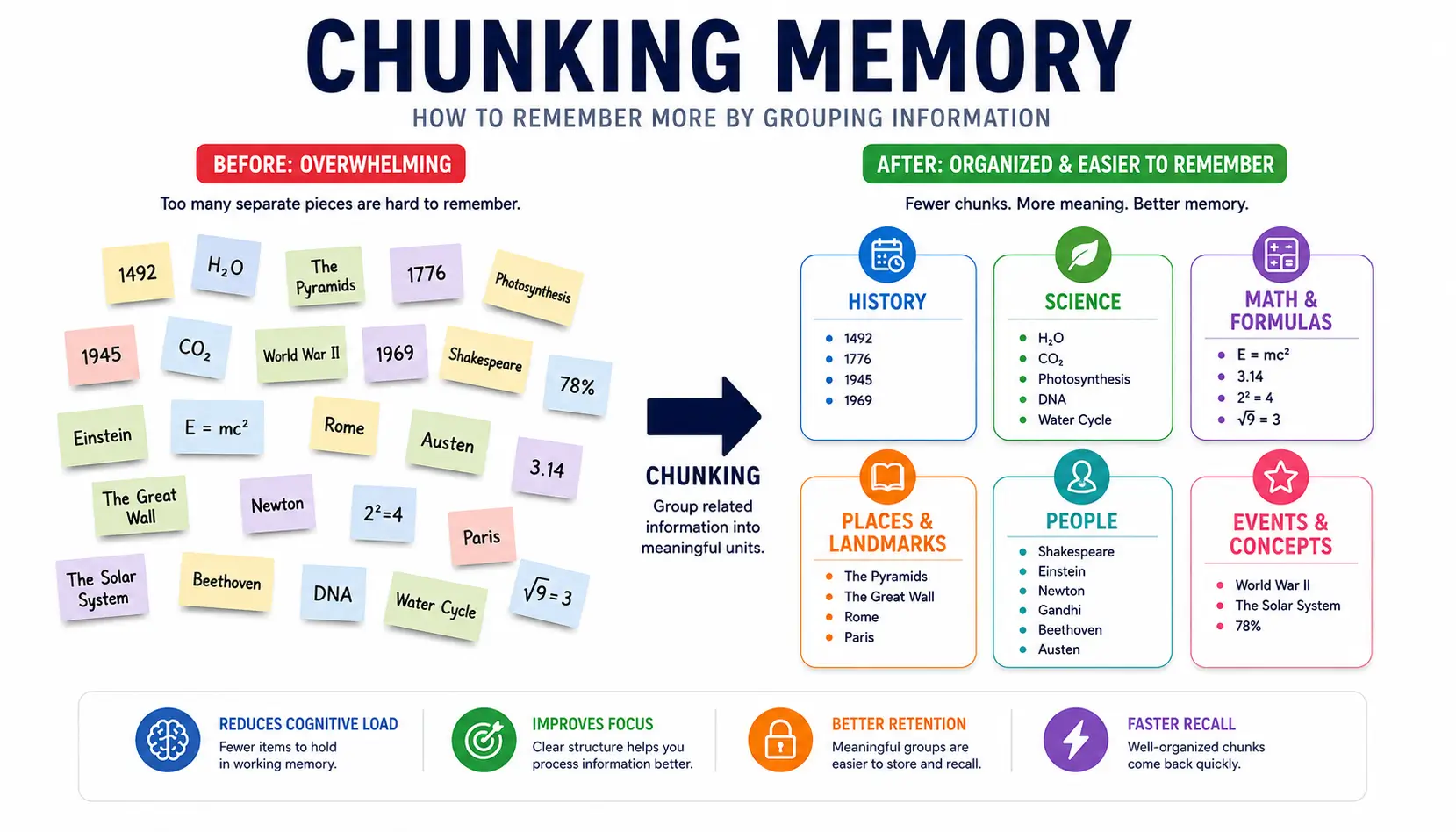
Imagine trying to memorize this sequence:
1492177619451969
Most people would struggle.
Now look at the same information arranged differently:
- 1492
- 1776
- 1945
- 1969
Suddenly, the task feels much easier.
The information itself hasn’t changed.
The only difference is how it is organized.
This simple example demonstrates one of the most powerful principles in memory science:
Chunking.
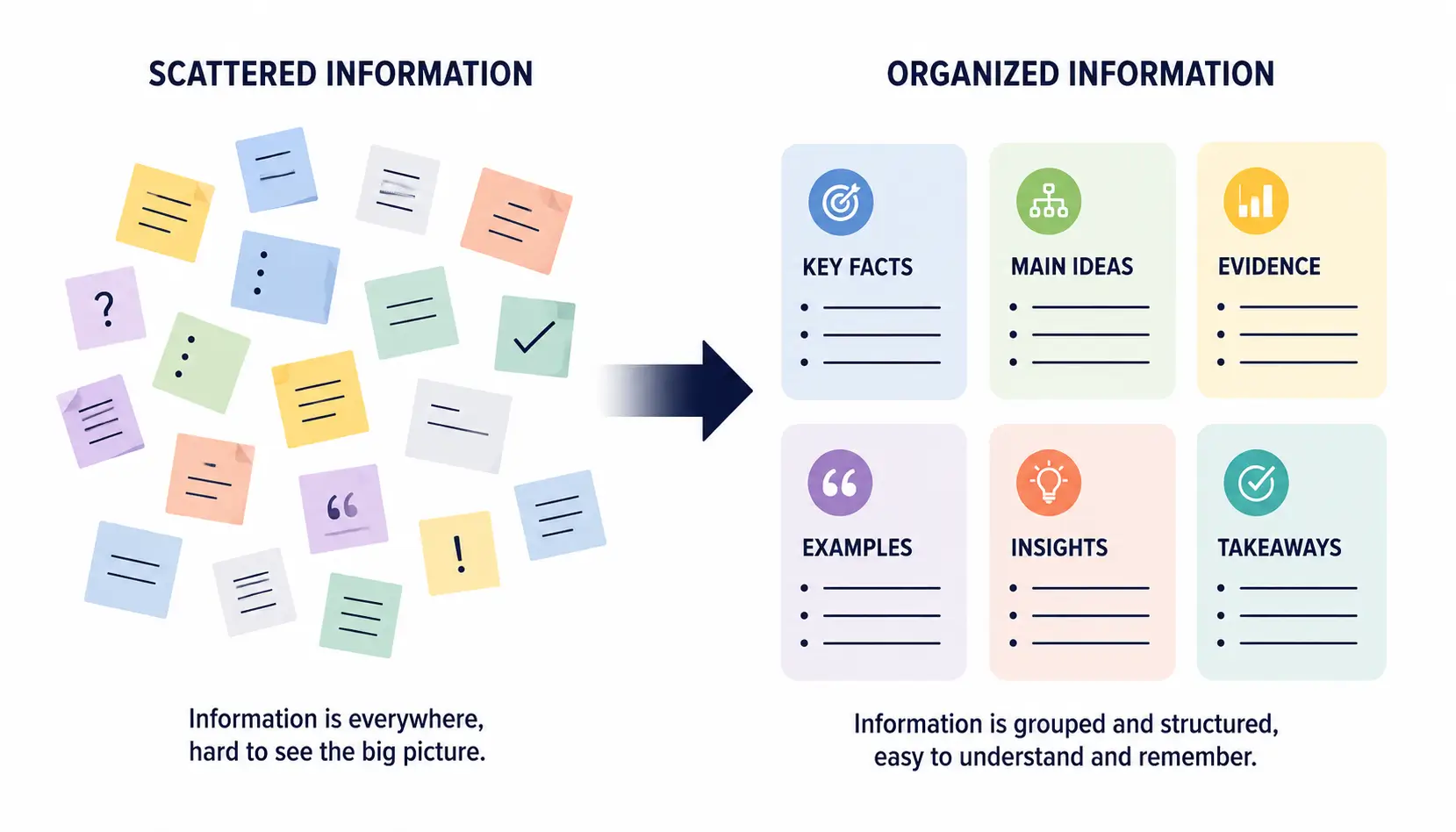
Chunking is the process of grouping individual pieces of information into larger, meaningful units. Rather than forcing your brain to remember dozens of separate elements, you create organized patterns that are easier to process and recall.
Whether you’re learning a language, studying for exams, remembering names, or improving everyday memory, chunking can dramatically increase the amount of information you can manage.
What Is Chunking?
Chunking is a cognitive strategy that organizes information into meaningful groups called chunks.
Instead of remembering many separate pieces of information, the brain treats each group as a single unit.
This reduces mental effort and improves recall.
For example, consider a phone number:
5558472391
Most people naturally remember it as:
555 – 847 – 2391
The number contains the same digits, but grouping creates structure.
Structure makes memory easier.
The human brain constantly uses chunking in daily life, often without realizing it.
Why Chunking Works
The effectiveness of chunking is closely related to the limitations of working memory.
Working memory is the mental workspace used to temporarily hold and manipulate information.
Unlike long-term memory, working memory has limited capacity.
Trying to manage too many separate items at once can quickly become overwhelming.
Chunking reduces that burden.
Instead of processing ten individual pieces of information, the brain may only need to process three or four chunks.
This makes information easier to understand, store, and retrieve.
The concept connects directly to Working Memory, which plays a central role in learning and cognitive performance.


A Simple Everyday Example
Imagine meeting someone whose address is:
742 Evergreen Terrace, Springfield, Illinois
You are unlikely to remember every word as an isolated unit.
Instead, your brain naturally groups information:
- House Number
- Street Name
- City
- State
Each group becomes a chunk.
This organization makes recall much easier than treating every word independently.
The same principle applies to names, dates, vocabulary, formulas, and many other forms of information.
🔬 The Psychology Behind Chunking
Chunking became famous through the work of cognitive psychologist George A. Miller.
In his influential paper “The Magical Number Seven, Plus or Minus Two,” Miller explored the limitations of short-term memory and the role of chunking in expanding effective memory capacity.
Source: https://psychclassics.yorku.ca/Miller/
Although modern research has refined some of Miller’s conclusions, the central insight remains important:
The way information is organized often matters as much as the information itself.
Chunking allows the brain to handle larger amounts of information by creating meaningful patterns.
Chunking and Long-Term Memory
Chunking is not simply a short-term memory trick.
It also supports long-term learning.
When information is organized into meaningful structures, it becomes easier to connect with existing knowledge.
Those connections improve retention.
For example, a language learner may remember vocabulary more effectively by grouping words into categories:
- Food
- Travel
- Family
- Work
Rather than memorizing isolated words, the learner builds organized knowledge networks.
This often leads to stronger recall later.
How Experts Use Chunking
One fascinating discovery in cognitive science is that experts often appear to have better memory than beginners.
However, the difference is not always raw memory capacity.
Experts frequently organize information more efficiently.
A chess master, for example, can remember complex board positions because they recognize familiar patterns.
Instead of seeing thirty-two separate pieces, they see meaningful chunks.
The same principle applies to musicians, programmers, doctors, and athletes.
Experience allows them to organize information into larger units.
Chunking turns complexity into familiarity.
Chunking and Memory Palaces
Chunking works especially well when combined with the Memory Palace Technique.
Instead of placing dozens of isolated facts inside a Memory Palace, learners can group related concepts together.
Each room or location can represent a larger chunk of information.
This creates a more organized memory structure and reduces mental clutter.
The combination of chunking and spatial memory can be remarkably effective for learning large amounts of information.
Chunking and Pattern Recognition
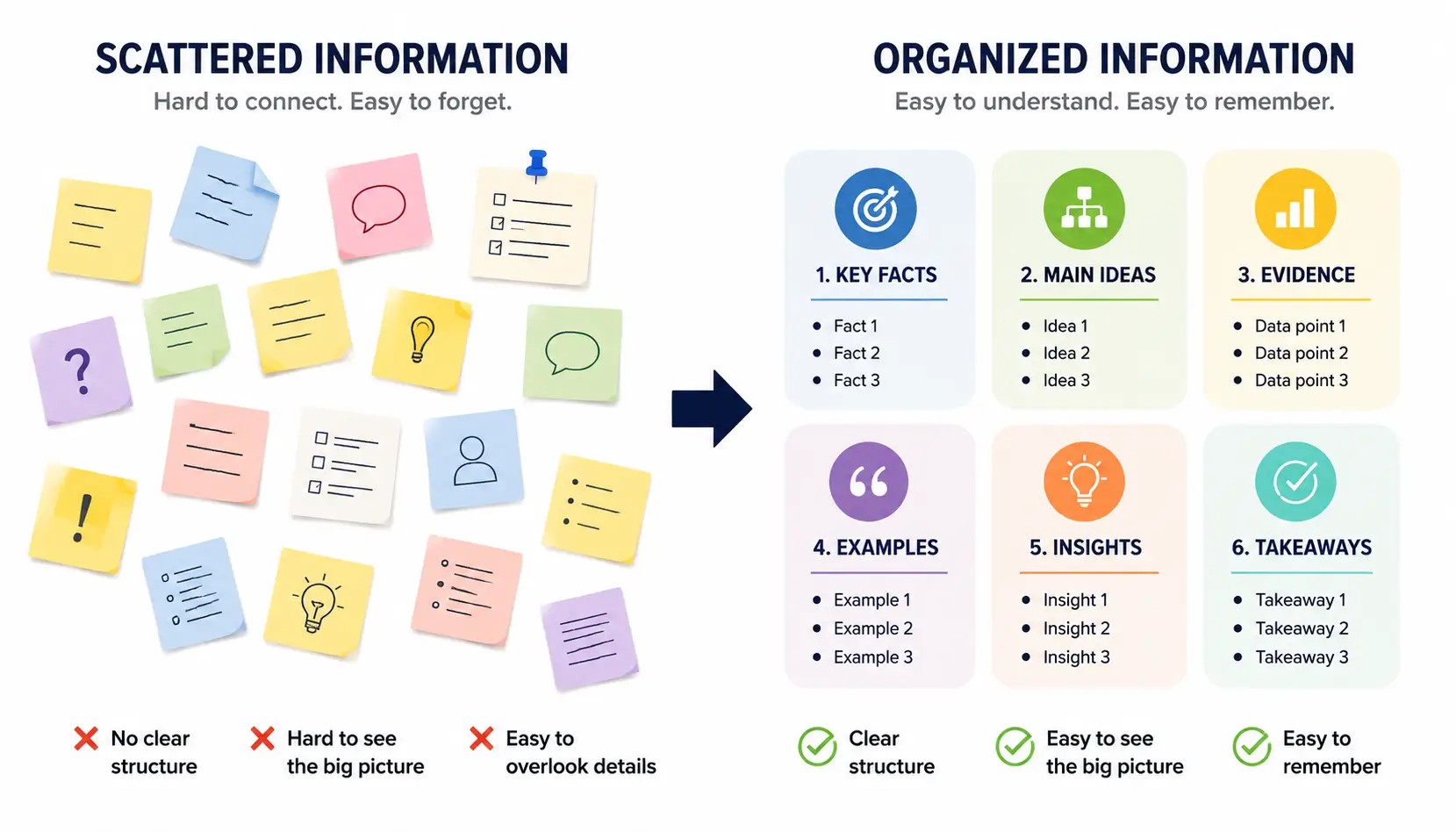
Pattern recognition is closely related to recognition memory, because the brain becomes faster at identifying familiar structures after repeated exposure. At its core, chunking is really about pattern recognition.
The brain constantly searches for relationships between pieces of information.
When patterns are discovered, memory becomes more efficient.
This is why chunking often feels natural.
Rather than fighting how the brain works, chunking takes advantage of one of its strongest abilities.
The better you become at recognizing patterns, the easier learning often becomes.
How to Use Chunking in Everyday Learning
The beauty of chunking is that it can be applied almost anywhere.
You do not need special software, expensive courses, or advanced memory training.
You simply need to organize information more intelligently.
Whenever you encounter a large amount of information, ask yourself:
Can this be grouped into smaller, meaningful units?
Often the answer is yes.
And that small adjustment can make a significant difference in retention.
Chunking for Students
Students use chunking constantly, even if they don’t realize it.
For example, instead of memorizing an entire chapter as one massive block of information, a student might divide it into:
- Main Concepts
- Key Definitions
- Important Examples
- Review Questions
This structure makes studying more manageable and improves understanding.
Chunking can also make revision sessions far less overwhelming because learners focus on smaller groups of information rather than entire subjects at once.
Chunking and Mnemonics
Chunking becomes even more powerful when combined with Mnemonics.
Mnemonics help create memorable associations.
Chunking organizes information into meaningful groups.
Together, they create a highly effective memory system.
For example, a learner studying the planets might first group them into categories and then create memorable mnemonic phrases for each group.
This combination reduces cognitive effort while increasing retrieval success.
Chunking and Dual Coding
Another powerful pairing is Dual Coding Theory.
Instead of organizing information only through words, learners can create visual chunks.
Examples include:
- Mind maps
- Concept diagrams
- Flowcharts
- Visual frameworks
- Color-coded study notes
These visual structures help the brain identify relationships between ideas more quickly.
The result is often faster comprehension and stronger recall.
Chunking and Cognitive Load Theory
Chunking has a close relationship with Cognitive Load Theory.
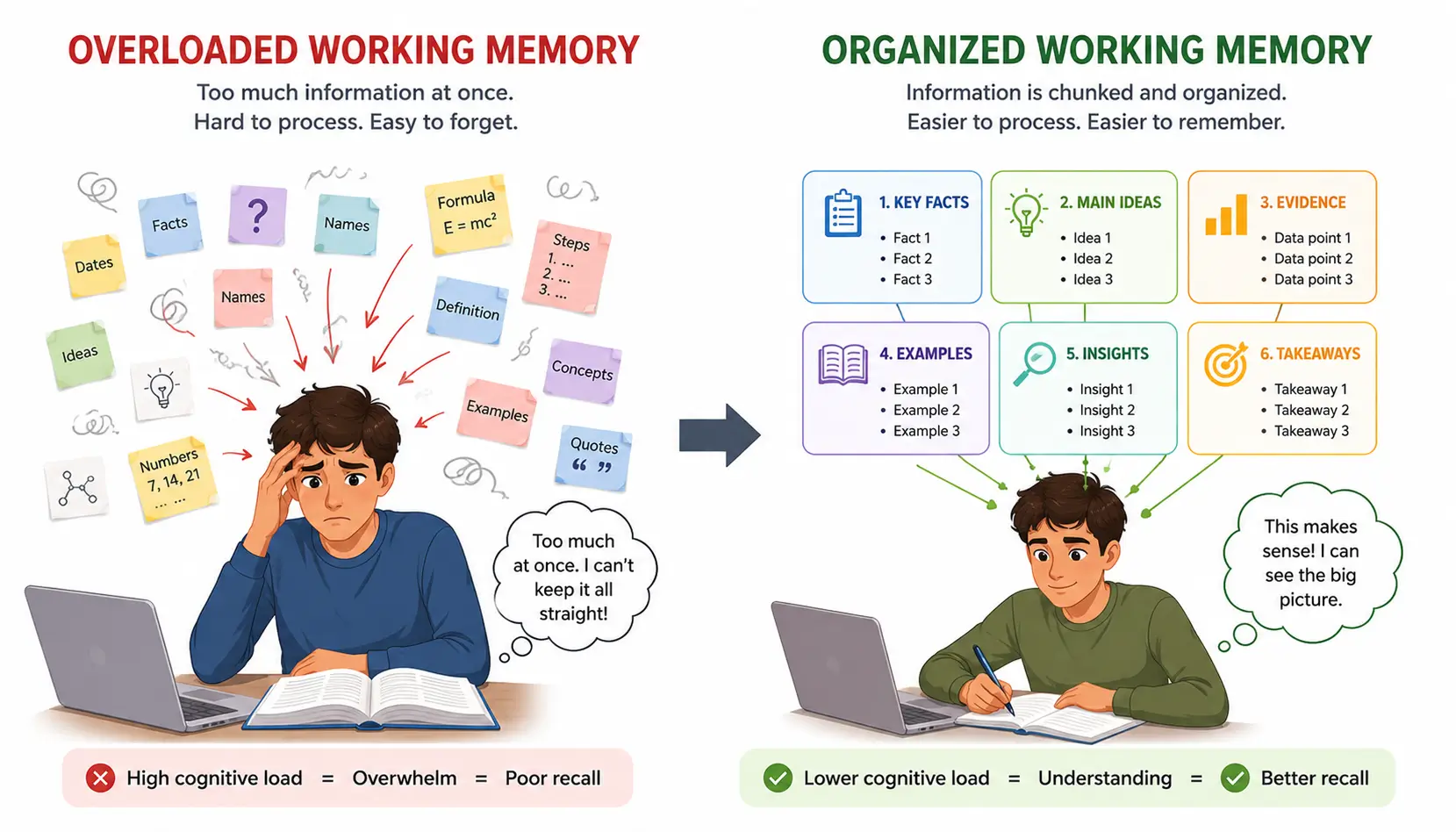
Cognitive Load Theory focuses on how much information working memory can handle at one time.
When learners encounter too much information simultaneously, performance often declines.
Chunking reduces this burden.
Instead of processing many separate elements, the brain processes a smaller number of organized units.
This makes learning feel more manageable and reduces unnecessary mental strain.
In many ways, chunking acts as a natural cognitive efficiency tool.
How Experts Build Large Knowledge Structures
One reason experts often learn faster is that they possess larger and more sophisticated chunks.
What appears to be a huge amount of information is often stored as a small number of highly organized structures.
A doctor does not view symptoms individually.
A musician does not see every note as a separate element.
A programmer does not think about every line of code independently.
Experience allows experts to recognize patterns and organize information efficiently.
This dramatically reduces mental effort during problem-solving.
The encouraging news is that chunking is a skill that improves with practice.
Chunking and Metacognition
Chunking also supports Metacognition, which refers to understanding your own learning process.
When information is organized into chunks, it becomes easier to identify:
- What you understand
- What you partially understand
- What still requires attention
This self-awareness helps learners study more efficiently.
Rather than reviewing everything equally, they can focus on weaker areas.
Better organization often leads to better decisions.
Common Chunking Mistakes
Creating Chunks That Are Too Large
If chunks contain too much information, they lose their usefulness.
The goal is simplification, not creating larger problems.
Grouping Unrelated Information
Effective chunks are based on meaningful relationships.
Random grouping often creates confusion instead of clarity.
Never Reviewing the Chunks
Chunking improves organization, but review is still necessary.
Combining chunking with Spaced Repetition can significantly improve long-term retention.
Ignoring Retrieval Practice
Organized information is useful only if it can be recalled.
This is why chunking works especially well alongside Retrieval Practice and Active Recall.
Beyond Memorization
Many people think of chunking as a memory trick.
In reality, it is much more than that.
Chunking helps organize knowledge.
Organized knowledge is easier to understand, easier to apply, and easier to remember.
This is why chunking appears across so many areas of expertise.
It is not merely a memorization strategy.
It is a thinking strategy.
Supporting Long-Term Memory Performance
Chunking is most effective when combined with healthy learning habits and evidence-based study techniques.
Sleep quality, attention management, stress reduction, and regular review all influence how effectively information is retained.
Many learners also explore broader approaches to supporting cognitive wellness.
Readers interested in memory-supportive nutritional strategies can learn more about Advanced Memory Formula, which provides information about ingredients formulated to support healthy memory function.
Why Chunking Remains One of the Most Powerful Memory Techniques
Chunking succeeds because it works with the brain rather than against it.
The human mind naturally seeks patterns, relationships, and structure.
By organizing information into meaningful groups, learners reduce mental overload while improving understanding and recall.
Whether you’re studying for exams, learning a language, building professional expertise, or simply trying to remember more of what you read, chunking offers a practical and scientifically supported solution.
Sometimes remembering more is not about increasing effort.
Sometimes it is about organizing information more intelligently.