
Now Reading: Active Recall: The Science-Backed Study Method for Long-Term Memory
-
01
Active Recall: The Science-Backed Study Method for Long-Term Memory
Active Recall: The Science-Backed Study Method for Long-Term Memory
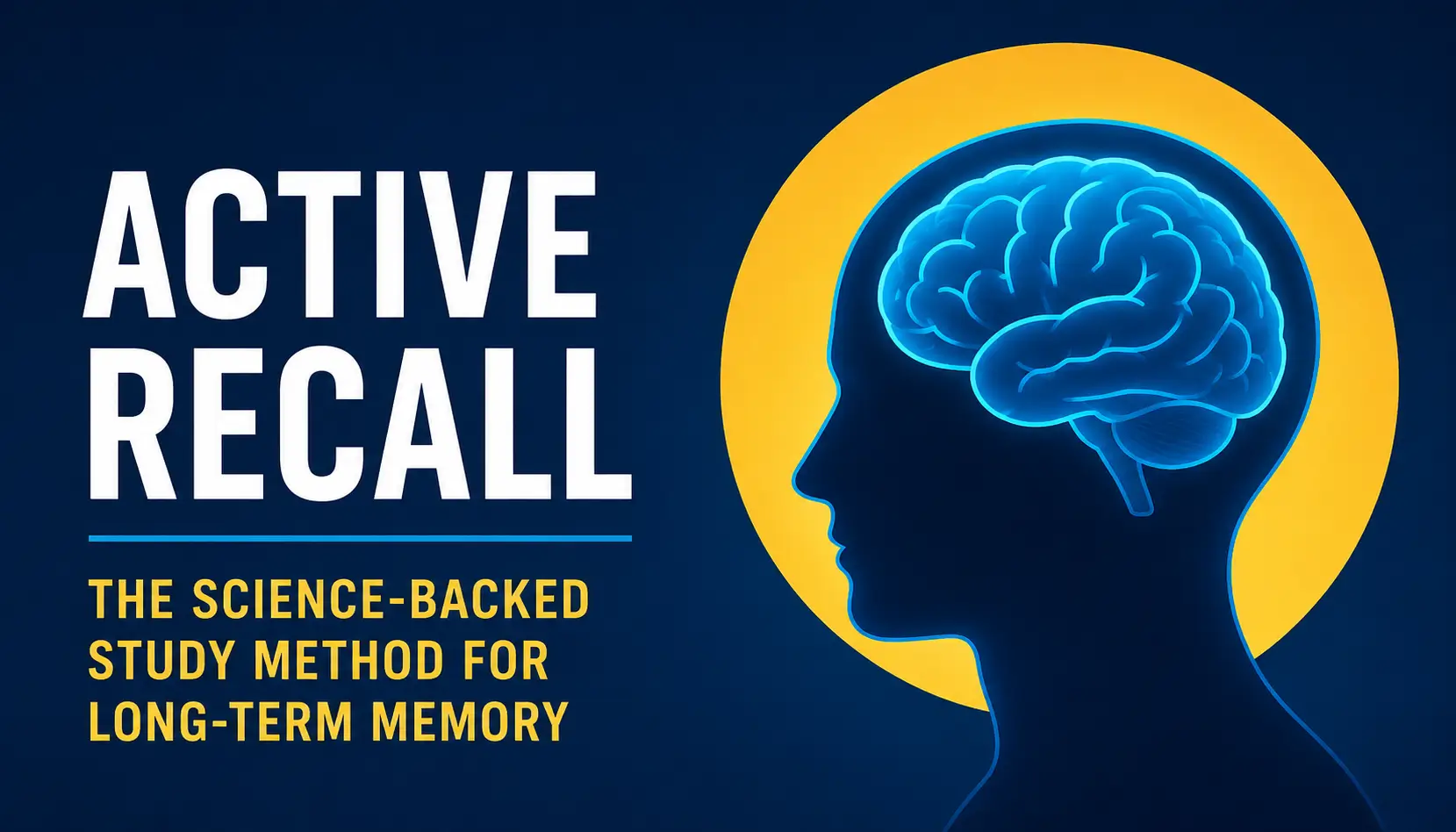
Imagine spending three hours studying for an exam, feeling confident when you close your notebook, and then forgetting half of the material a week later.
Unfortunately, this experience is extremely common.
Most people learn using methods that feel productive but do surprisingly little to build long-term memory. Rereading notes, highlighting textbooks, and reviewing slides repeatedly can create a sense of familiarity. The information looks recognizable, so it feels learned.
But there is a big difference between recognizing information and actually remembering it.
This is where active recall changes everything.
Instead of repeatedly exposing yourself to information, active recall requires you to retrieve information from memory without looking at the answer first. That simple shift activates powerful learning mechanisms inside the brain and strengthens memory far more effectively than passive review.
Whether you’re a student, professional, lifelong learner, or simply someone interested in improving memory performance, active recall is one of the most valuable learning skills you can develop.
What Is Active Recall?
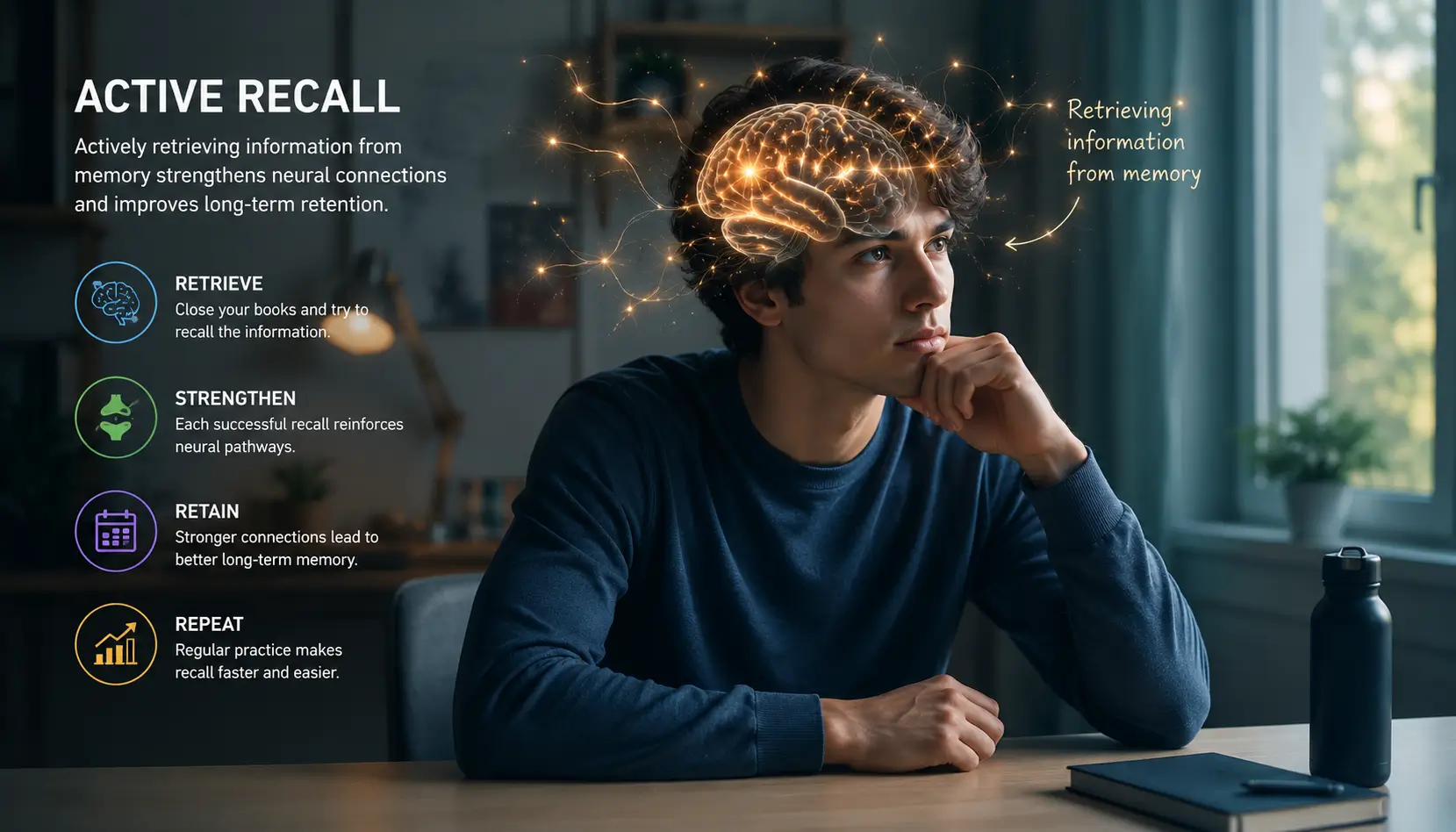
Active recall is a learning technique that involves retrieving information from memory rather than reviewing it repeatedly.
Instead of reading a definition five times, you read it once and then attempt to recall it without looking.
Instead of reviewing your notes again, you close them and try to explain the topic from memory.
The goal is not exposure to information.
The goal is retrieval.
Examples of active recall include:
- Using flashcards
- Answering practice questions
- Writing summaries from memory
- Explaining concepts aloud
- Taking practice tests
- Teaching a topic to someone else
Each successful retrieval strengthens the memory itself.
This idea is closely related to retrieval practice, one of the most researched learning strategies in cognitive psychology.
Why Most Study Methods Feel Effective
Humans naturally prefer easy tasks.
Rereading notes feels comfortable because the information is right in front of you. Highlighting text feels productive because you’re interacting with the material.
Unfortunately, comfort and learning are not the same thing.
Psychologists often refer to this as the illusion of competence.
The material looks familiar, so you assume you know it.
Then reality arrives.
An exam question appears.
A client asks a question.
You try to explain a concept to a colleague.
Suddenly, the information is much harder to access than expected.
Active recall eliminates this illusion because it forces you to test your memory directly.
The Difference Between Recognition and Recall
This distinction is explored more deeply in Recognition Memory and Recall Memory, which explain two different ways the brain accesses stored information One of the most important concepts in learning science is understanding the difference between recognition and recall.
Recognition happens when information is presented to you.
For example:
- You recognize a face.
- You recognize a vocabulary word.
- You recognize a sentence in your notes.
Recall is different.
Recall requires you to produce information without being shown the answer.
For example:
- Remembering someone’s name.
- Explaining a concept from memory.
- Answering an exam question.
- Speaking a foreign language in conversation.
Most real-world situations require recall, not recognition.
That’s why active recall is so powerful.
🔬 The Science Behind Active Recall
Active recall isn’t just a popular productivity trend. It is supported by decades of scientific research.
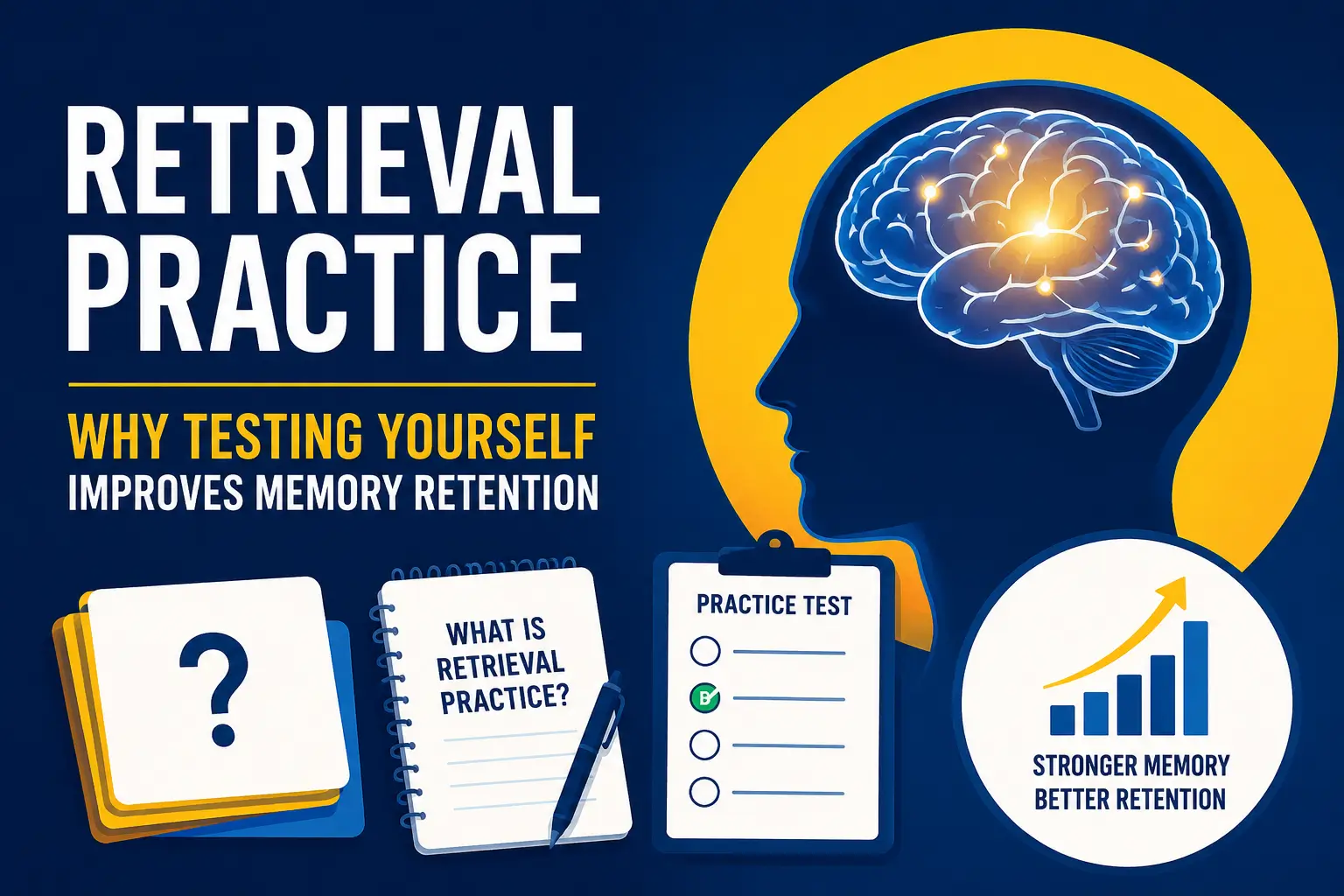
Researchers often call this phenomenon the testing effect.
The testing effect refers to the finding that retrieving information improves long-term retention more effectively than simply reviewing information again.
A major review of evidence published in Psychological Science in the Public Interest identified practice testing as one of the highest-impact learning strategies available.
Source: https://journals.sagepub.com/doi/10.1177/1529100612453266
Another influential study demonstrated that retrieval practice often produces greater long-term learning gains than additional studying.
Source: https://www.pnas.org/doi/10.1073/pnas.101488998
The conclusion is remarkably consistent:
The act of remembering strengthens memory.
This principle forms the foundation of active recall.
How Memory Changes During Retrieval
Many people think memory works like a computer hard drive.
Information goes in, stays there, and can be accessed whenever needed.
Human memory doesn’t work that way.
Memory is dynamic.
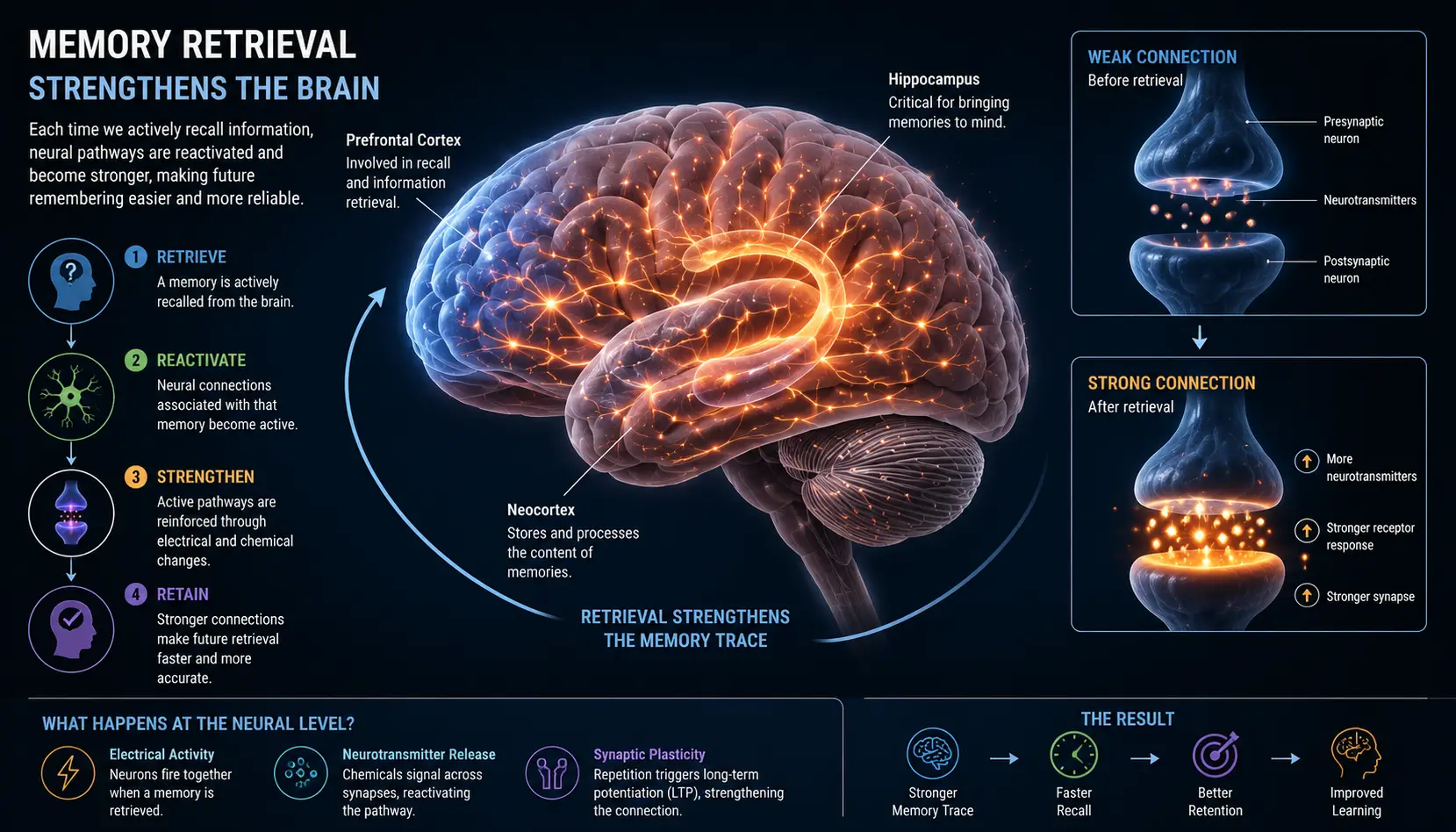
Every time you retrieve information, you modify the memory itself.
Successful retrieval strengthens neural pathways associated with that memory, making future recall faster and easier.
You can think of memory like a path through a forest.
The first trip is difficult.
The path is narrow and unclear.
Each time you walk it, the route becomes more visible.
Active recall repeatedly walks those pathways.
This process also supports memory consolidation, the biological process that transforms temporary learning into more stable long-term memory.
Why Active Recall Feels Difficult
If active recall is so effective, why don’t more people use it?
Because it feels harder.
When you attempt to remember information without looking, you experience mental effort.
That effort often feels uncomfortable.
Ironically, that discomfort is exactly why the technique works.
Researchers refer to this concept as a desirable difficulty.
A learning activity that requires effort often produces stronger retention than one that feels easy.
The challenge signals to your brain that the information matters.
Instead of avoiding difficulty, active recall uses it as a learning tool.
Active Recall and Long-Term Memory
Active recall is only one part of the broader memory system. Readers who want a complete understanding of how memory works, why forgetting occurs, and which learning techniques improve retention should also explore The Complete Guide to Memory.
Many study techniques can help you remember information for a day or two.
Far fewer techniques reliably improve retention weeks or months later.
Active recall excels because it trains the exact skill required for long-term retention: retrieval.
Every time you successfully retrieve information, you increase the probability that you will retrieve it again in the future.
This is one reason active recall is widely used by:
- Medical students
- Language learners
- Law students
- Engineers
- Competitive exam candidates
- Knowledge workers
These groups often need to remember large amounts of information for extended periods.
Passive review simply isn’t efficient enough.
How Active Recall Improves Learning Efficiency
Many people assume active recall requires more study time.
In reality, the opposite is often true.
Because retrieval reveals knowledge gaps quickly, learners spend less time reviewing material they already know.
Instead of rereading an entire chapter, they focus on weak areas.
This targeted approach improves efficiency and reduces wasted effort.
When combined with spaced repetition, active recall becomes even more powerful.
Rather than reviewing information every day, learners review at carefully chosen intervals, strengthening memory while minimizing unnecessary repetition.
Practical Ways to Use Active Recall
Many learners combine active recall with retrieval practice and the testing effect because all three strategies strengthen memory through repeated retrieval.
The biggest mistake people make with active recall is assuming they need complicated systems or expensive software to get started.
You don’t.
In fact, some of the most effective active recall techniques require nothing more than a blank piece of paper and a willingness to test yourself.
The key is simple:
Attempt to retrieve information before looking at the answer.
Everything else is simply a variation of that principle.
1. The Blank Page Method
This is one of the simplest active recall exercises available.
Study a topic for a short period of time, close your notes, and grab a blank sheet of paper.
Write down everything you can remember.
Don’t worry about perfection.
Don’t worry about organization.
The goal is retrieval.
Once you’ve finished, compare your notes against the original material and identify the information you missed.
This process immediately exposes weak areas while strengthening what you remembered correctly.
2. Question-Based Learning
Instead of taking traditional notes, try turning headings into questions.
For example:
- What is active recall?
- Why does retrieval strengthen memory?
- How is active recall different from rereading?
- What does research say about the testing effect?
Later, answer those questions without looking at your notes.
This transforms passive information into active learning.
3. Practice Testing
One reason active recall works so well is that it resembles real-world memory demands.
Exams don’t ask whether information looks familiar.
They require retrieval.
Practice testing allows you to train under conditions similar to the final challenge.
This is one reason researchers frequently connect active recall with the testing effect.
The act of testing becomes part of the learning process itself.
[prompt]Student taking a practice exam without notes, focused expression, realistic classroom environment, educational psychology concept, professional blog illustration, highly detailed, 1400×800[/prompt]
Using Flashcards the Right Way
Flashcards are one of the most popular active recall tools available.
Unfortunately, many people use them incorrectly.
A flashcard should force retrieval.
If the answer is obvious from the question, or if you can guess without thinking, the learning value decreases significantly.
Strong flashcards:
- Require effort
- Focus on one concept
- Use clear wording
- Encourage recall instead of recognition
For many learners, digital flashcard systems provide additional advantages because they can automatically schedule reviews.
This is where tools like Anki Flashcards become extremely useful.
Anki combines active recall with intelligent review scheduling, helping learners retain information for much longer periods.
Combining Active Recall with Spaced Repetition
If active recall is one of the most effective learning techniques available, spaced repetition is one of the most effective scheduling systems.
Together, they form a remarkably powerful combination.
Active recall answers the question:
How should I study?
Spaced repetition answers the question:
When should I review?
Rather than reviewing information every day, spaced repetition increases the interval between successful reviews.
Easy information appears less frequently.
Difficult information appears more frequently.
This approach reduces wasted study time while strengthening long-term retention.
You can learn more in our complete guide to Spaced Repetition.
Many learners also use systems such as the Leitner System to organize physical flashcards using a similar principle.
Active Recall and the Feynman Technique
Another highly effective strategy involves teaching what you’ve learned.
This approach is commonly known as the Feynman Technique.
The method is simple:
- Choose a topic.
- Explain it in plain language.
- Identify areas where you struggle.
- Review those weak areas.
- Repeat the explanation.
Teaching forces retrieval.
If you cannot explain an idea simply, there is often a gap in your understanding.
This makes the Feynman Technique an excellent companion to active recall.
Common Active Recall Mistakes
Looking at the Answer Too Quickly
The brain needs time to search.
If you check the answer immediately, you remove much of the retrieval process.
Allow yourself to struggle briefly before revealing the solution.
Confusing Recognition with Recall
Reading information and thinking “I know this” is not the same as proving you can retrieve it.
Always test yourself without looking.
Using Active Recall Only Before Exams
Active recall works best when used consistently.
Waiting until the final days before an exam limits its effectiveness.
Ignoring Sleep
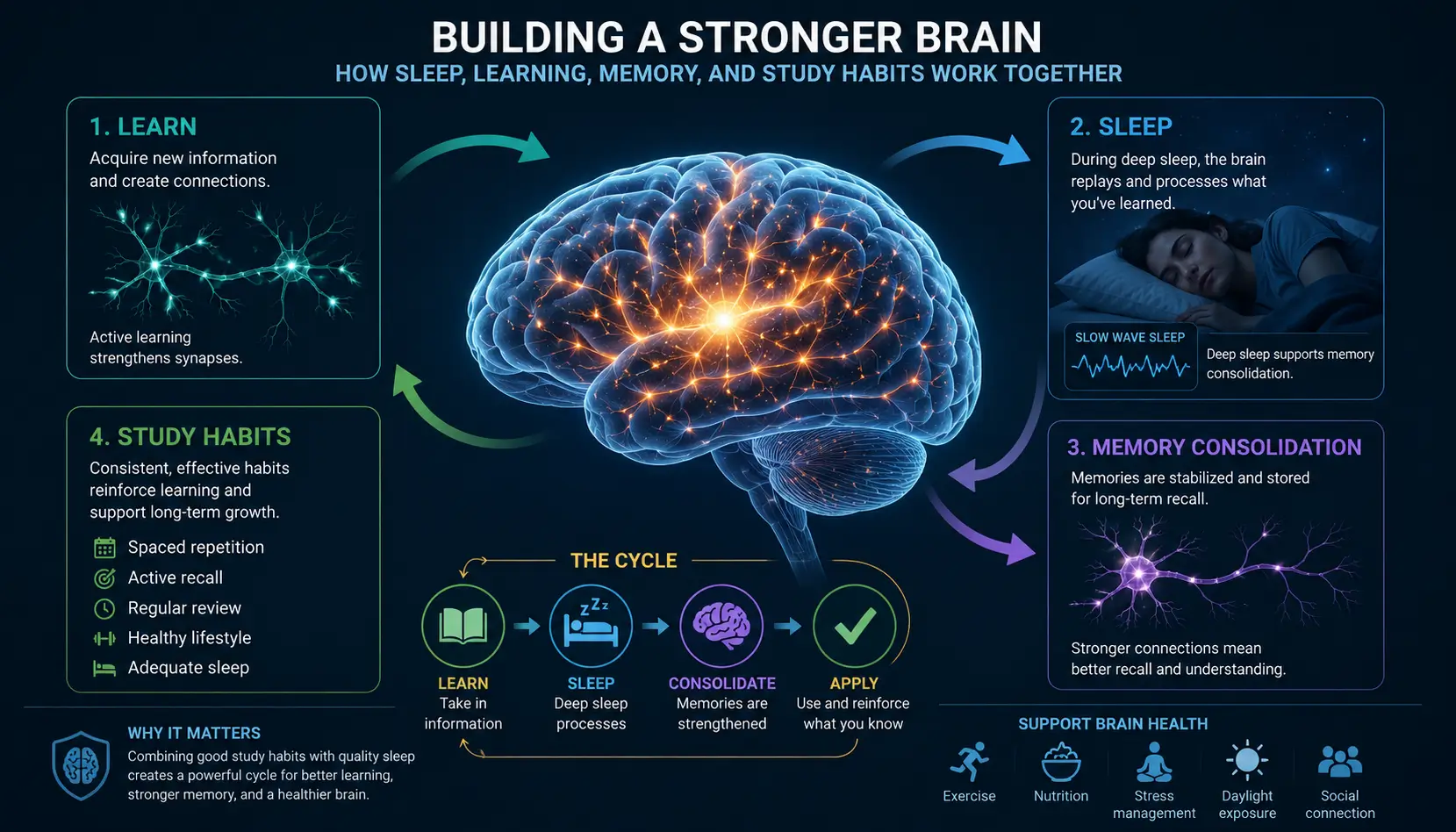
Memory formation doesn’t stop when studying ends.
During sleep, the brain continues processing and stabilizing information.
This process is discussed in greater detail in our guide to Sleep and Memory Consolidation.
Can Active Recall Improve Everyday Memory?
Absolutely.
Although active recall is often associated with students, the benefits extend far beyond academics.
You can use active recall to remember:
- Names
- Languages
- Presentations
- Work procedures
- Books
- Professional certifications
- Technical knowledge
Any situation that requires remembering information can benefit from retrieval practice.
The underlying principle remains the same:
The more successfully you retrieve information, the easier it becomes to retrieve it again later.
Supporting Long-Term Cognitive Performance
Learning techniques play an important role in memory performance, but they are only one part of the equation.
Sleep quality, physical activity, nutrition, stress management, and consistent mental engagement all contribute to healthy cognitive function.
Many people focus exclusively on study methods while ignoring these broader factors.
The most successful learners tend to combine effective learning strategies with healthy daily habits.
Some individuals also explore evidence-based nutritional approaches designed to support memory and cognitive wellness.
For readers interested in learning more, Advanced Memory Formula provides additional information about nutritional support for healthy memory function.
Final Takeaway
If you remember only one thing from this article, remember this: Learning happens not only when information enters your brain, but also when you successfully pull it back out.
That simple idea explains why active recall consistently outperforms many traditional study methods.
The technique is simple, evidence-based, and adaptable to almost any learning goal.
You don’t need perfect notes.
You don’t need expensive courses.
You don’t need complicated systems.
You simply need to practice remembering.
The more often you do, the stronger your memory becomes.