
Now Reading: Memory Encoding: How Information Becomes a Lasting Memory
-
01
Memory Encoding: How Information Becomes a Lasting Memory
Memory Encoding: How Information Becomes a Lasting Memory
Every day, your brain is exposed to an enormous amount of information.
Conversations, books, videos, experiences, sounds, faces, and ideas constantly compete for attention.
Yet only a small portion of that information becomes a lasting memory.
Why do some experiences remain vivid for years while others disappear within minutes?
The answer begins with a process known as memory encoding.
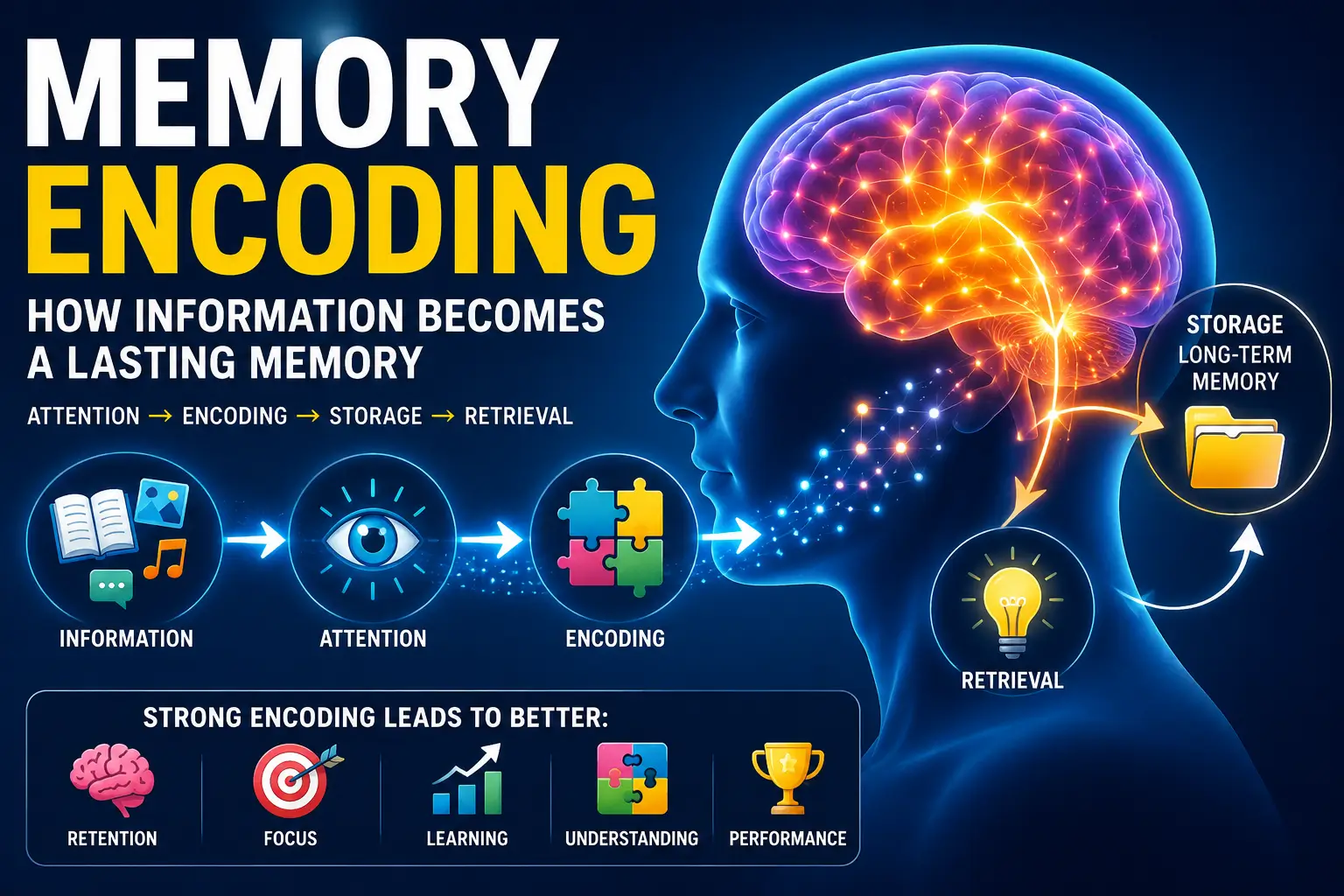
Memory encoding is the first major step in creating a memory.
Before information can be stored, consolidated, or retrieved, it must first be encoded.
Without successful encoding, learning cannot progress to long-term retention.
Understanding how encoding works can help explain why some study methods are highly effective while others produce little lasting benefit.
What Is Memory Encoding?
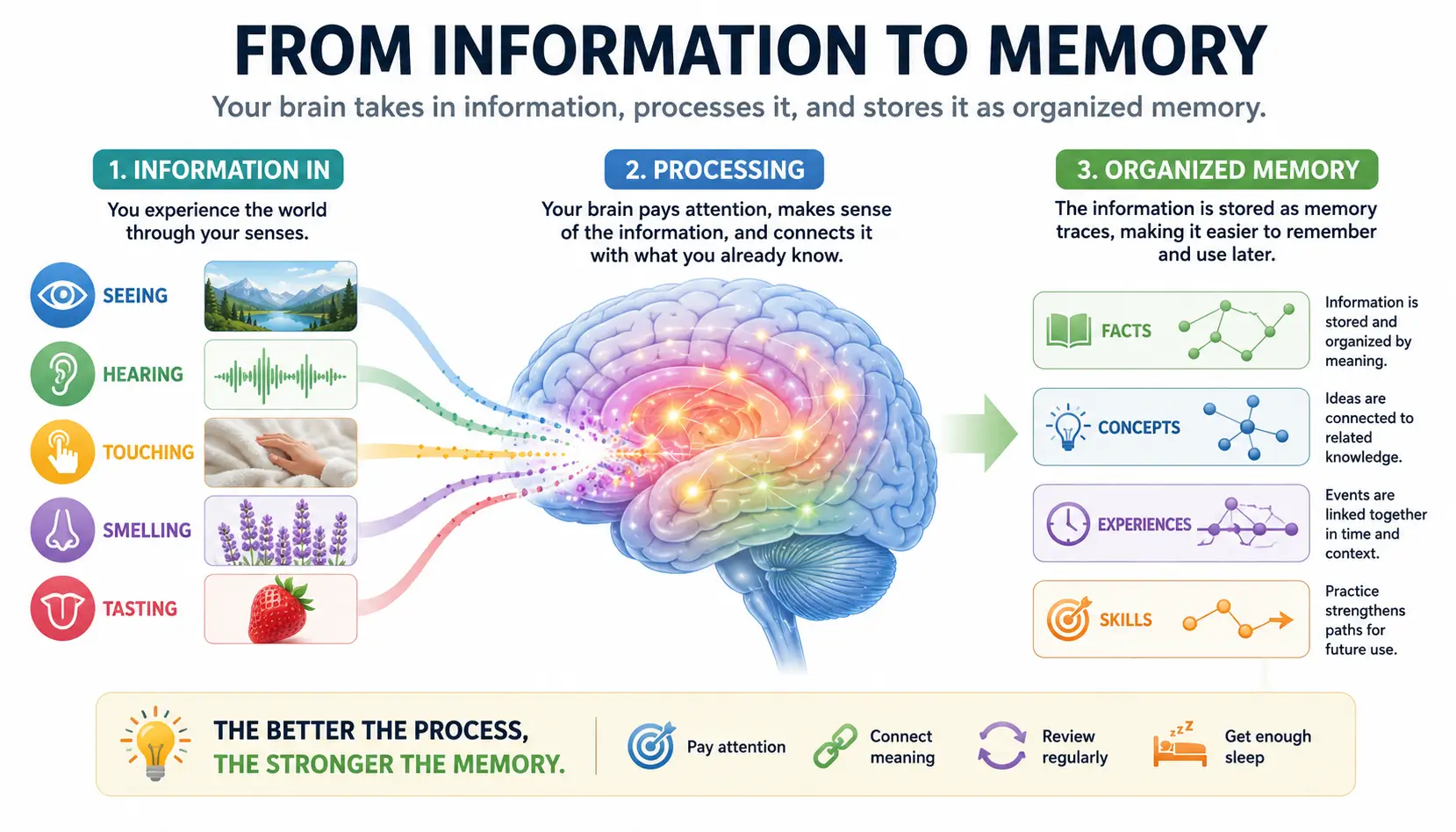
Memory encoding is the process through which information is transformed into a format that the brain can store and use later.
It represents the first stage of memory formation.
Before information can enter Long-Term Memory, it must first be encoded.
Encoding allows experiences, facts, concepts, and skills to become part of the brain’s memory systems.
Without encoding, information remains temporary and is often quickly forgotten.
Why Encoding Matters
Many people assume forgetting occurs because memories disappear.
In reality, the problem often begins earlier.
If information is encoded poorly, it may never become a strong memory in the first place.
Strong retention depends on strong encoding.
The quality of encoding frequently determines how easily information can be retrieved in the future.


🔬 The Science Behind Memory Encoding
Cognitive scientists describe encoding as the process that converts incoming information into mental representations.
The brain does not store experiences exactly as they occur.
Instead, information is processed, organized, interpreted, and integrated into existing knowledge structures.
The depth and quality of this processing often influence how well information is remembered later.
Source: https://www.ncbi.nlm.nih.gov/books/NBK559316/
A memory cannot be stored until it has first been encoded.
The Three Stages of Memory
The final stage in this sequence is memory retrieval, where stored information is accessed and brought back into use.
Memory is often described as involving three major stages:
- Encoding
- Storage
- Retrieval
Encoding creates the memory.
Storage preserves it.
Retrieval allows access to it later.
If encoding fails, the remaining stages become impossible.
This is why encoding is often considered the foundation of learning.
How Information Enters Memory
That flow starts even earlier with sensory memory, which briefly registers incoming information before deeper processing begins.
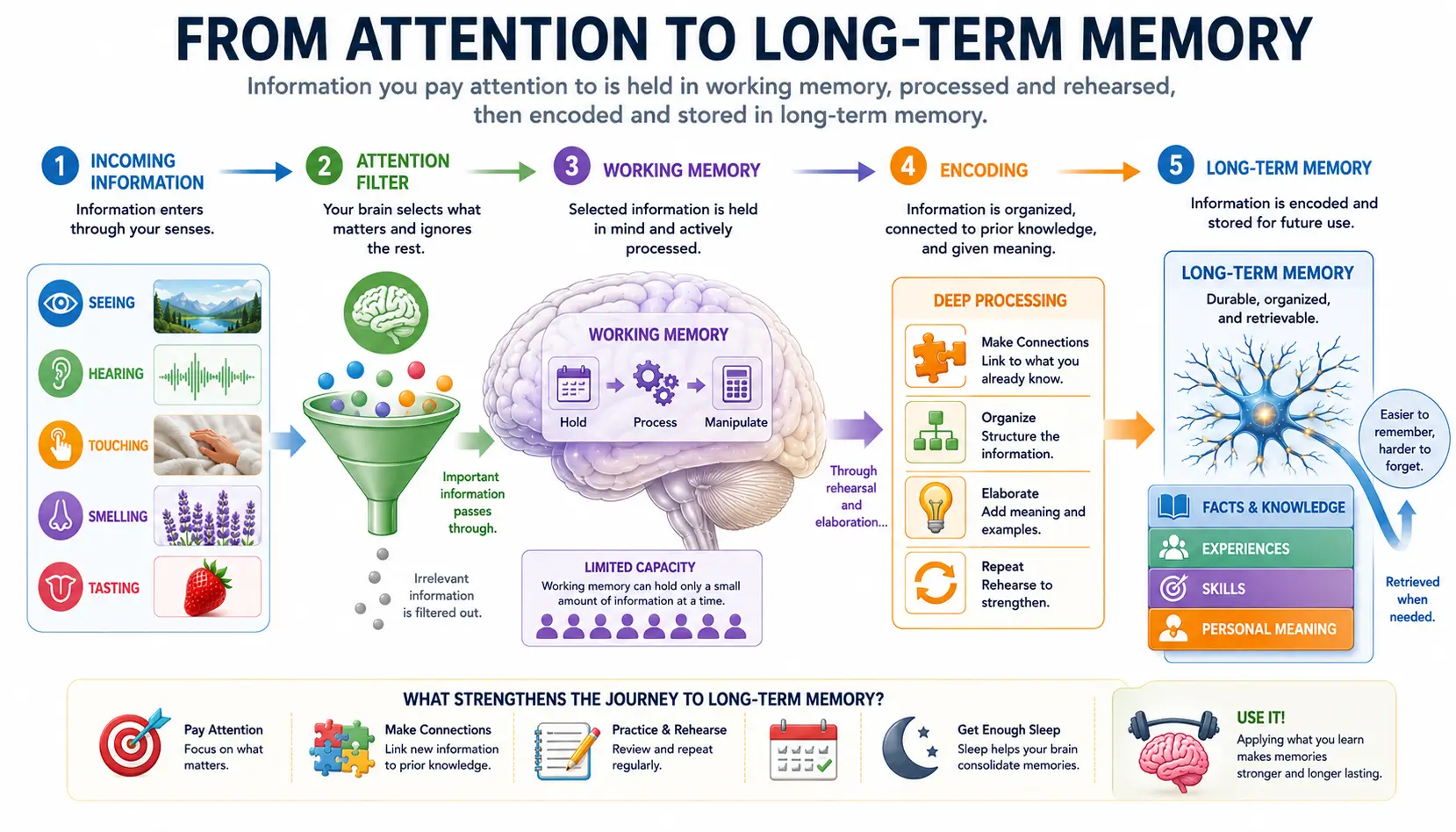
Information typically begins by passing through attention systems.
Only a small portion of the information surrounding us receives sufficient attention to be processed deeply.
Once attention is directed toward information, encoding can begin.
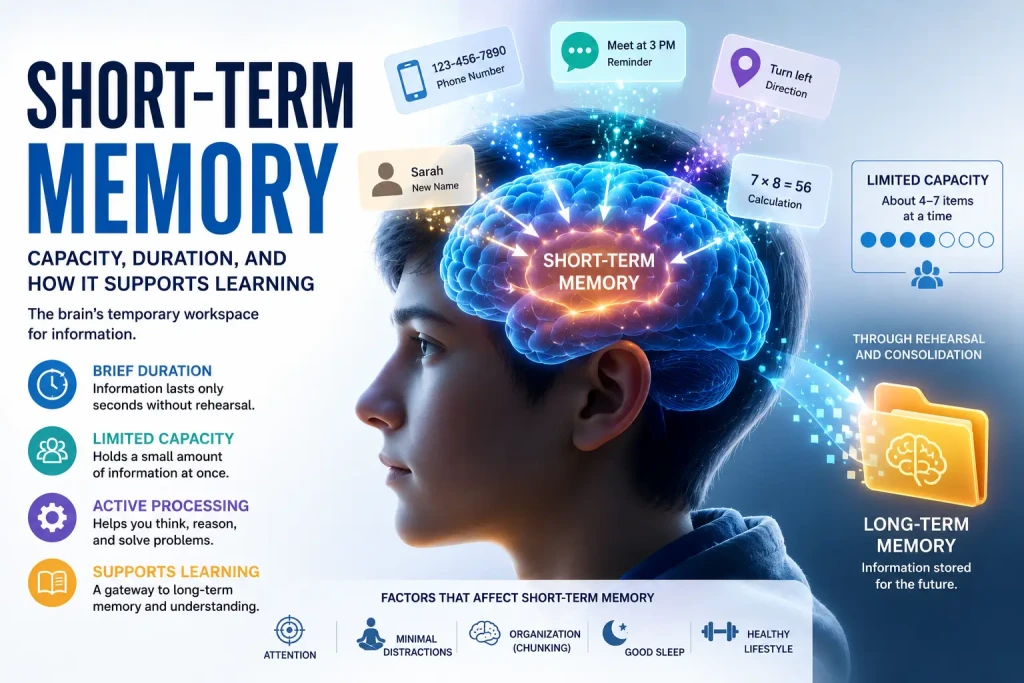
The information may then pass through Short-Term Memory and Working Memory before becoming eligible for long-term storage.
This sequence helps explain why attention is such an important part of learning.
Types of Memory Encoding
Researchers often describe several forms of encoding.
Visual Encoding
Visual encoding involves processing images, shapes, colors, and visual patterns.
Many learners benefit from diagrams, charts, and illustrations because visual information can strengthen encoding.
Acoustic Encoding
Acoustic encoding involves processing sounds and auditory information.
Language learning frequently relies on this type of encoding.
Semantic Encoding
Semantic encoding involves processing meaning.
It is generally considered one of the most powerful forms of encoding because meaningful information is often remembered more effectively than information processed superficially.
This concept connects closely with Semantic Memory.
Why Meaning Improves Encoding
Encoding often becomes stronger when material connects to the self, which is why the self-reference effect can improve later recall.
The brain tends to remember meaningful information more effectively than random information.
When learners connect new information to existing knowledge, encoding becomes stronger.
This is one reason techniques such as Elaborative Rehearsal are so effective.
Creating explanations, associations, and examples helps information become easier to encode and later retrieve.
Meaning creates stronger memory pathways.
Memory Encoding and Attention
Attention is one of the most important factors affecting encoding.
Information that receives little attention is often encoded weakly or not at all.
Distractions compete for limited cognitive resources.
This is one reason multitasking often reduces learning efficiency.
The more focused attention becomes, the stronger encoding can often be.
Encoding and Learning Efficiency
Many learning strategies are effective because they improve encoding quality.
Rather than simply exposing learners to information, these methods encourage deeper processing.
Examples include:
- Active Recall
- Retrieval Practice
- Dual Coding
- Elaborative Rehearsal
- The Feynman Technique
Each strategy encourages learners to engage more actively with information, which often strengthens encoding.
How Active Recall Strengthens Encoding
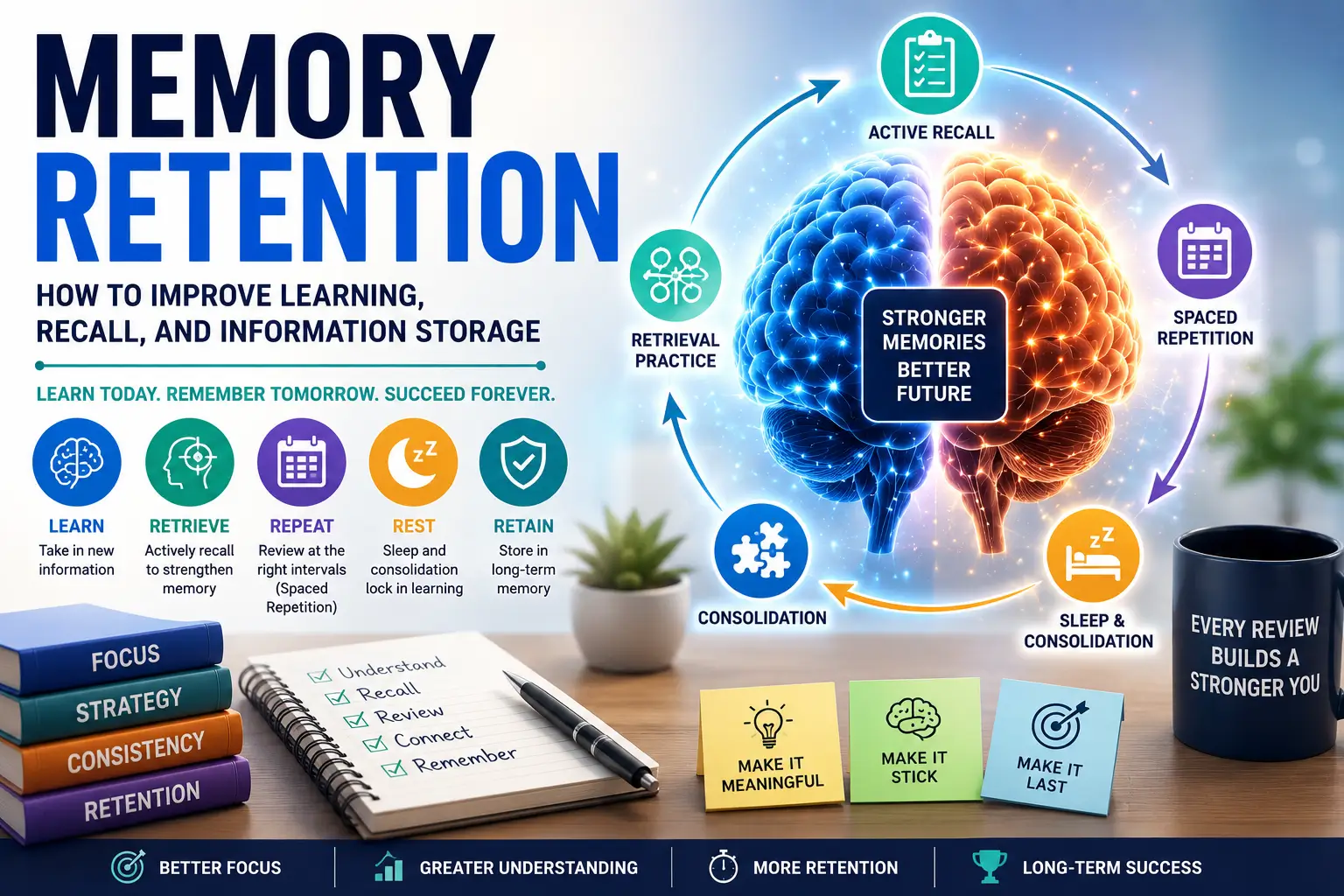
One of the most effective ways to improve encoding is through Active Recall.
Many learners assume that encoding occurs only when information is first encountered.
However, retrieval itself can strengthen and refine memory representations.
Each time information is recalled, the brain reactivates important memory pathways.
This process often creates stronger encoding and improves future recall.
Learning becomes more durable when information is actively retrieved rather than passively reviewed.
Retrieval Practice and Encoding
Retrieval Practice builds upon the same principle.
Instead of repeatedly rereading information, learners challenge themselves to remember it.
This effort encourages deeper processing and stronger encoding.
The brain treats successfully retrieved information as valuable, making it more likely to remain accessible later.
Encoding and retrieval work together rather than operating as separate processes.
How Dual Coding Improves Encoding
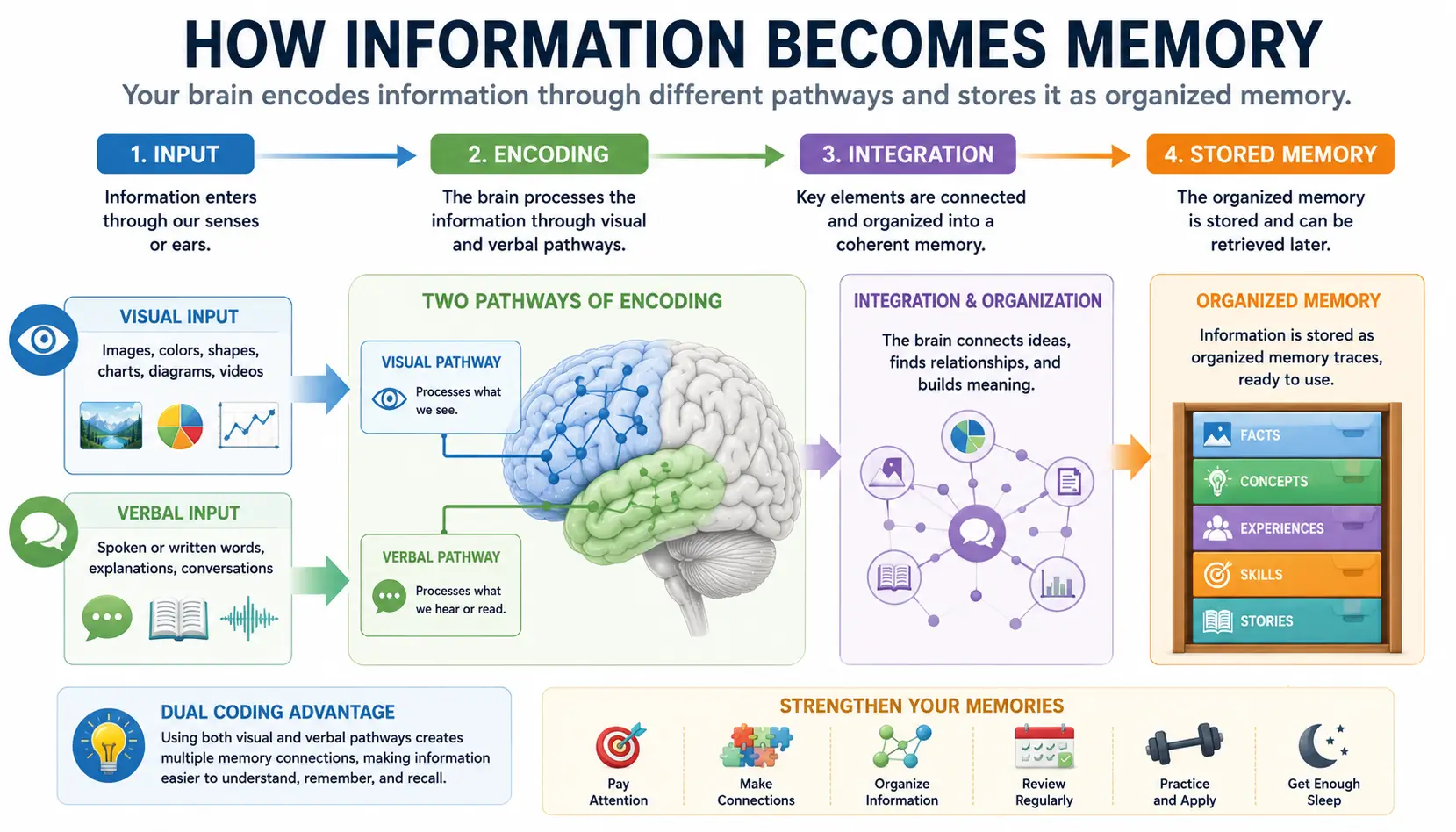
Dual Coding improves encoding by combining verbal and visual information.
When information is represented in multiple forms, the brain gains additional retrieval pathways.
For example, a concept explained through both words and diagrams may be easier to encode than words alone.
Multiple representations often create stronger memory traces.
This is one reason visual learning aids can be highly effective.
Memory Encoding and Long-Term Memory
Successful encoding is necessary for information to enter Long-Term Memory.
However, encoding alone is not enough.
After information has been encoded, it must be stabilized through Memory Consolidation.
Consolidation helps transform newly encoded information into durable memory traces.
Together, encoding and consolidation form the foundation of long-term learning.
Common Encoding Mistakes
Passive Reading
Reading information without actively engaging with it often produces weak encoding.
Multitasking
Divided attention reduces the quality of encoding and makes later retrieval more difficult.
Surface-Level Processing
Focusing only on appearance or repetition without understanding meaning can limit retention. This distinction is explained in greater detail by Levels of Processing Theory, which emphasizes the importance of meaningful processing for stronger memory formation.
Information Overload
Excessive cognitive demands can interfere with effective encoding.
This concept relates closely to Cognitive Load Theory.
Can Memory Encoding Be Improved?
Yes.
Although some aspects of memory vary between individuals, effective learning strategies can significantly improve encoding quality.
Helpful approaches include:
- Paying focused attention
- Using active recall
- Applying retrieval practice
- Creating meaningful associations
- Using dual coding techniques
- Reducing distractions
- Connecting new knowledge to existing knowledge
These methods encourage deeper processing and stronger memory formation.
Encoding and Different Types of Memory
Encoding contributes to multiple forms of memory.
For example, encoding helps create:
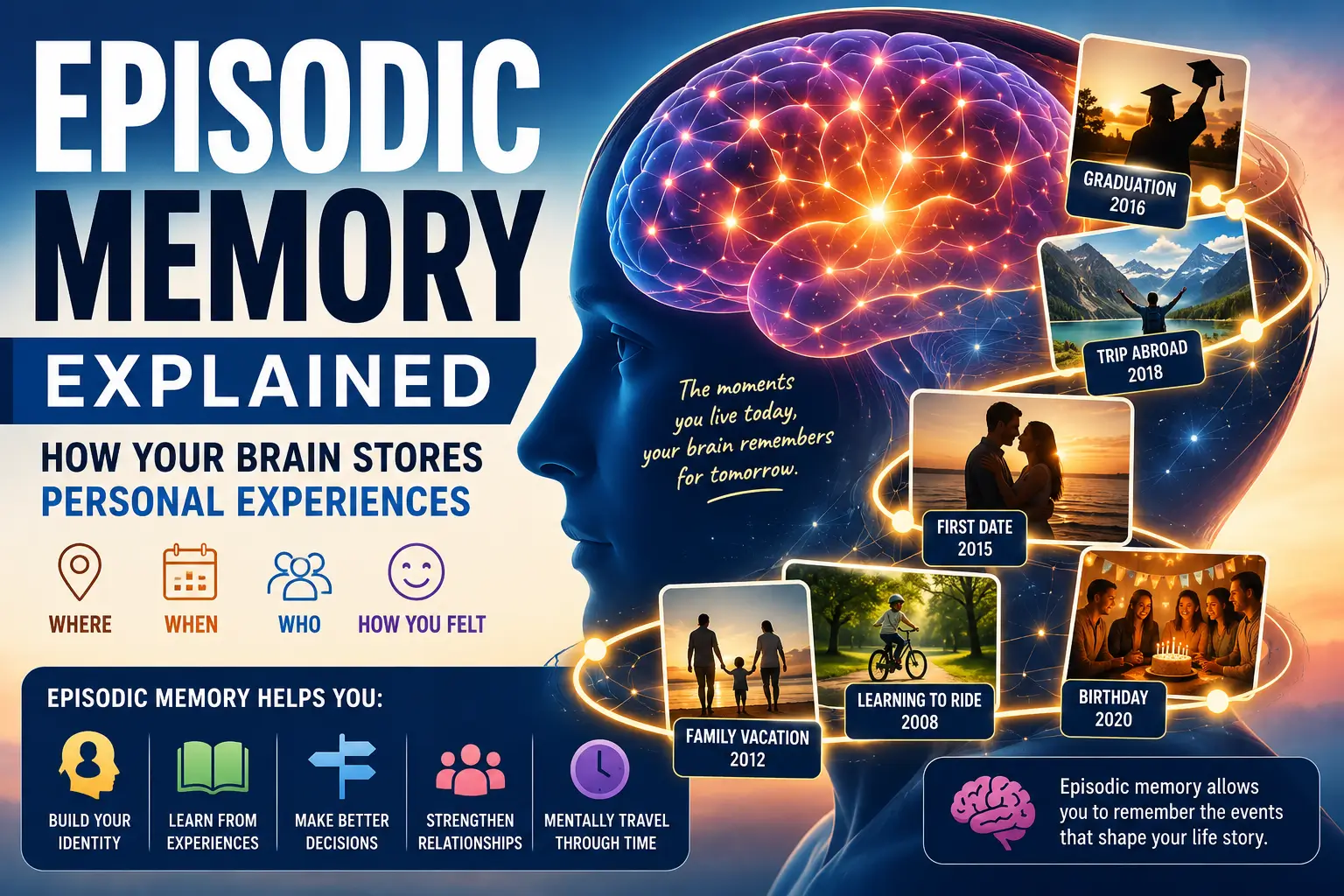
- Episodic Memory for personal experiences
- Semantic Memory for facts and knowledge
- Procedural memory for skills and habits
Although these systems serve different functions, they all depend on successful encoding at the beginning of the learning process.
Encoding Is the Beginning of Every Memory
Every memory starts with encoding.
Before information can be stored, consolidated, or retrieved, it must first be transformed into a form the brain can use.
The quality of this process often determines whether information survives long enough to become lasting knowledge.
Effective learning is therefore not simply about exposure to information.
It is about encoding information in ways that make future retrieval possible.
Supporting Memory Beyond Encoding
Although encoding is essential, memory performance depends on many additional factors.
Sleep quality, memory consolidation, retrieval practice, stress management, and overall cognitive health all contribute to long-term retention.
Many learners combine evidence-based learning strategies with broader approaches that support healthy brain function.
Readers interested in memory-supportive nutritional strategies can learn more about Advanced Memory Formula.
From Information to Knowledge
For a broader walkthrough of how encoding fits with storage, forgetting, and improvement strategies, see the complete guide to memory.
Memory encoding is the first step in transforming information into knowledge.
It determines whether experiences, facts, concepts, and skills have an opportunity to become lasting memories.
By understanding how encoding works and applying effective learning strategies, learners can dramatically improve retention and long-term recall.
Every lasting memory begins with successful encoding.
The better information is encoded, the greater the chance it will remain available when it matters most.