
Now Reading: Context-Dependent Memory: Why You Remember Better in the Right Environment
-
01
Context-Dependent Memory: Why You Remember Better in the Right Environment
Context-Dependent Memory: Why You Remember Better in the Right Environment
Have you ever returned to a place and suddenly remembered something you had forgotten?
Perhaps a familiar classroom, a childhood home, or a favorite coffee shop triggered memories that seemed inaccessible moments earlier.
This phenomenon is known as context-dependent memory.
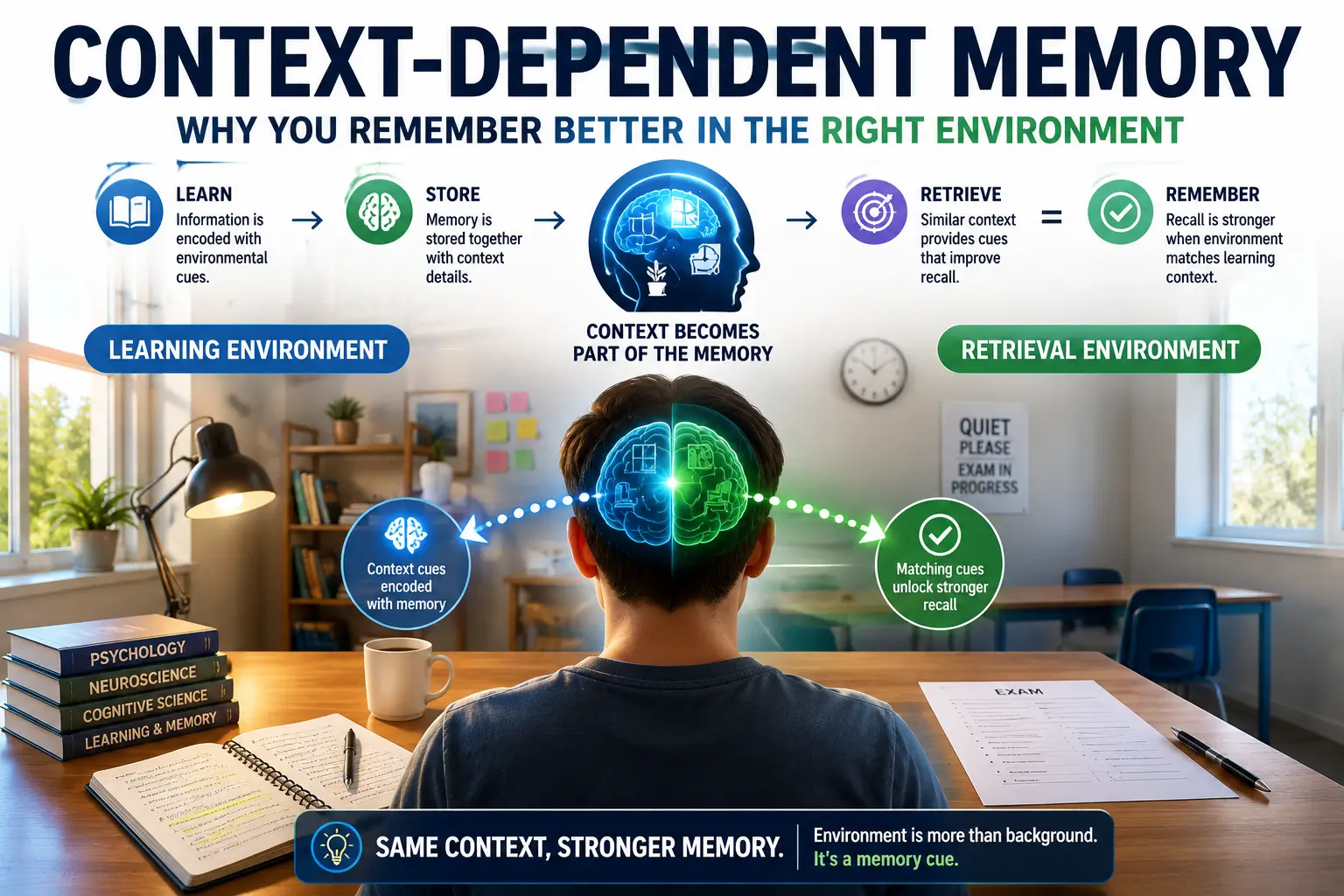
Context-dependent memory describes the tendency to recall information more effectively when retrieval occurs in the same environment where learning originally took place.
Researchers have studied this effect for decades, and the findings reveal how strongly our surroundings influence memory performance.
Understanding context-dependent memory can help students learn more efficiently and improve long-term recall.
What Is Context-Dependent Memory?
Context-dependent memory is a memory phenomenon in which recall improves when the learning environment and retrieval environment are similar.
The brain stores not only information itself but also details about the surrounding environment.
These environmental cues can later assist retrieval.
As a result, information may be easier to remember when the original context is recreated.
Context acts as a retrieval cue that helps access stored memories.
The Famous Underwater Diver Study
One of the most well-known demonstrations of context-dependent memory came from a study involving scuba divers.
Researchers asked divers to learn lists of words either underwater or on land.
Later, participants were tested in both environments.
The results showed that recall was significantly better when learning and testing occurred in the same context.
This experiment provided powerful evidence that environmental context influences memory retrieval.
Source: https://www.simplypsychology.org/context-and-state-dependent-memory.html


Why Context Matters for Memory
Memory retrieval depends heavily on cues.
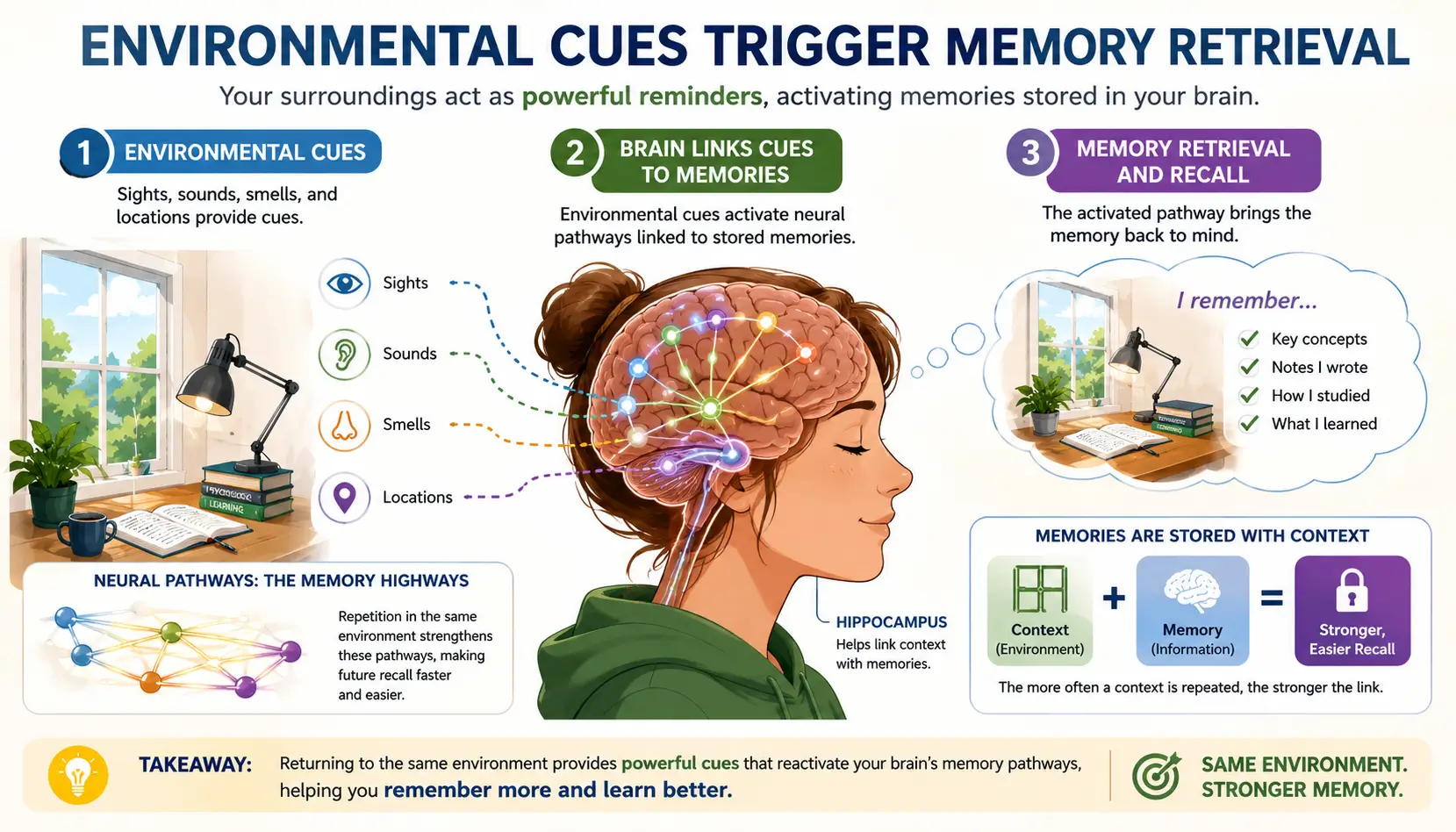
When information is stored, the brain encodes many details beyond the primary content.
Sounds, smells, lighting, locations, and other environmental features may become associated with the memory.
Later, these cues can help reactivate the stored information.
The more closely retrieval conditions match learning conditions, the stronger recall may become.
Context and Memory Retrieval
Context-dependent memory is closely connected to Memory Retrieval.
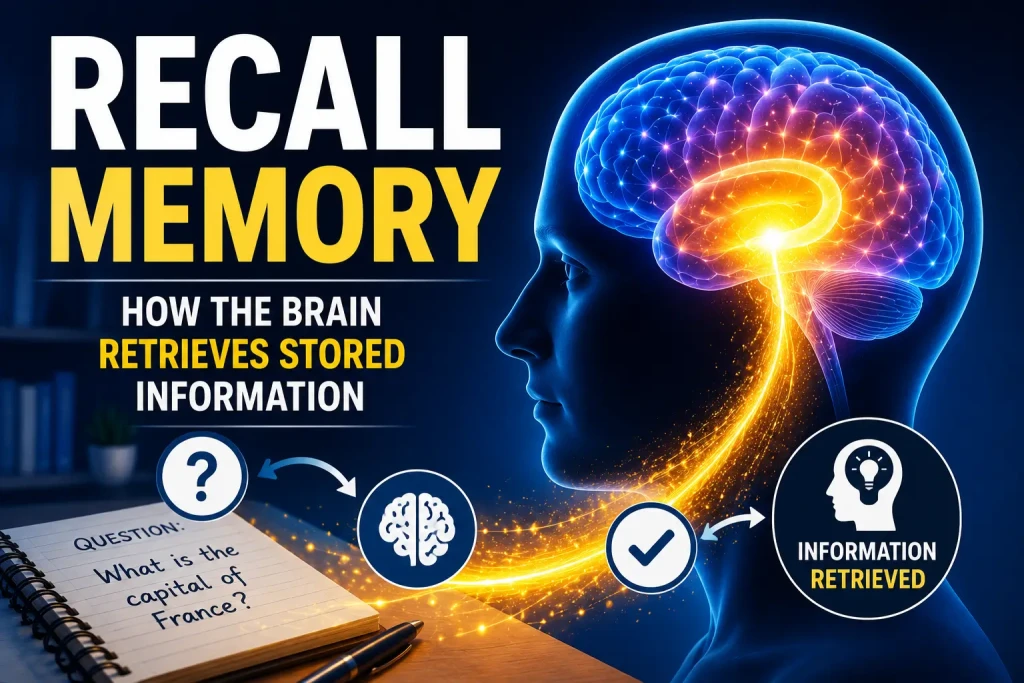
Retrieval cues help the brain access information stored in long-term memory.
Environmental context is one type of retrieval cue.
When important cues are present, retrieval often becomes easier and more accurate.
This helps explain why certain memories seem tied to specific locations.
Environmental Cues and Recall
Many everyday experiences demonstrate context-dependent memory.
- Returning to a room and remembering why you entered it
- Recalling information while sitting in the same classroom where it was learned
- Remembering a conversation when revisiting the location where it occurred
- Experiencing memories triggered by familiar smells or sounds
These examples illustrate how context can influence access to stored information.
The Encoding Specificity Principle
This idea connects directly with the Encoding Specificity Principle, which explains why recall improves when retrieval conditions match the cues present during learning.
Context-dependent memory is often explained through the encoding specificity principle.
This theory suggests that retrieval works best when cues available during recall match cues present during encoding.
The more overlap between learning and retrieval conditions, the easier memory access becomes.
Encoding and retrieval are closely linked processes.
Memory performance improves when those processes share common cues.
Context and Long-Term Memory
Context effects are most noticeable in long-term memory tasks.
Memories stored over extended periods often contain numerous contextual associations.
These associations create additional retrieval pathways.
Environmental cues can activate those pathways and facilitate recall.
Learn more in Long-Term Memory: How Information Is Stored, Retained, and Retrieved.
Context-Dependent Memory and Studying
To turn this idea into a practical learning system, read How to Study Effectively, which shows how retrieval strategies and study design matter more than context alone.
Students frequently wonder whether studying in the same location where they will take an exam improves performance.
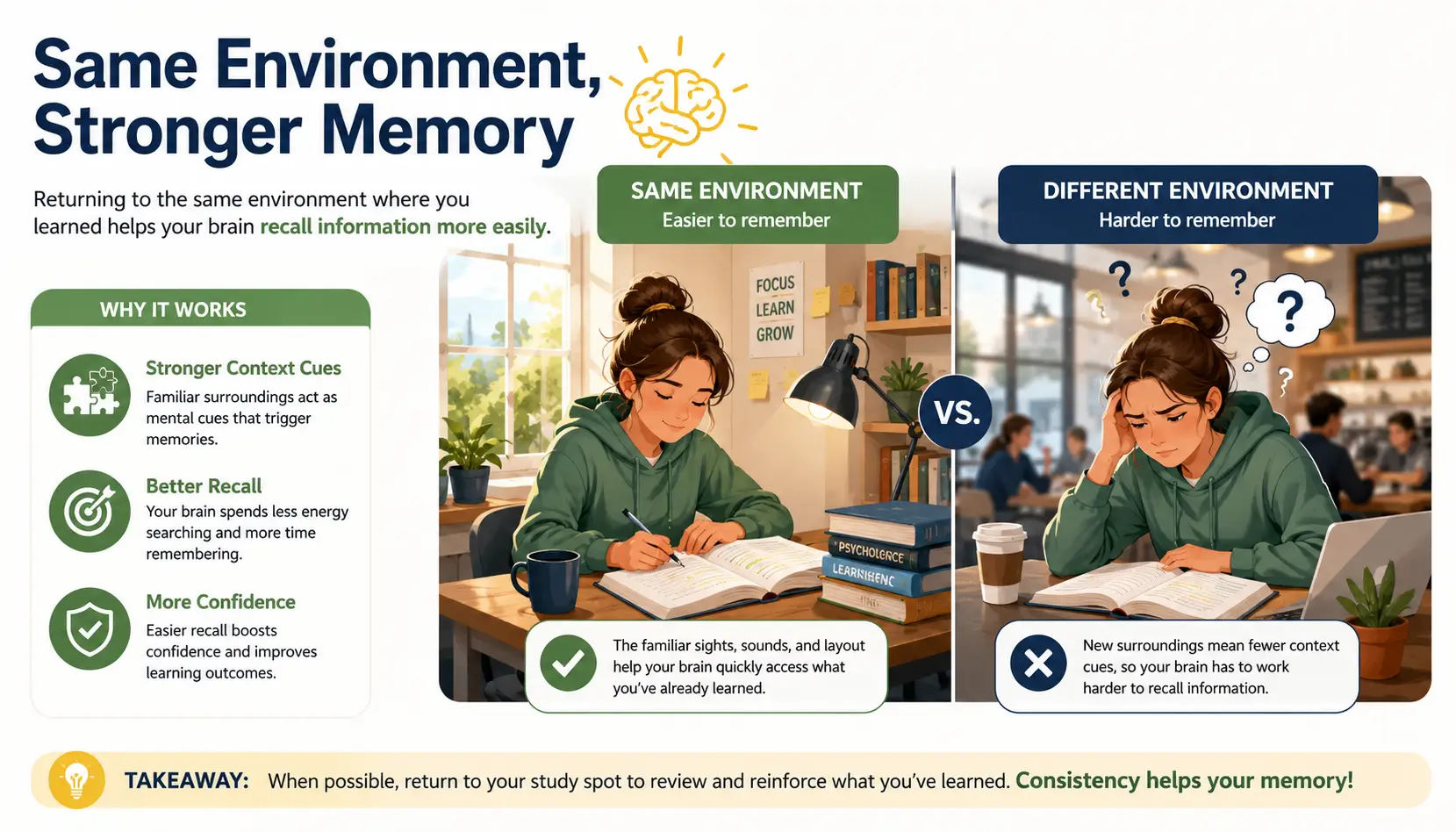
Research suggests that matching learning and testing environments can sometimes provide a modest advantage.
However, strong understanding remains more important than environmental matching alone.
Context can assist retrieval, but it cannot replace effective learning strategies.
The best results typically combine strong learning methods with useful retrieval cues.
How Context Becomes Part of a Memory
During learning, the brain does not store information in isolation.
Instead, memories become connected to surrounding experiences and environmental details.
These details create a rich network of associations.
Later, encountering part of that network may trigger retrieval of the original memory.
This explains why memories often feel connected to specific places and situations.
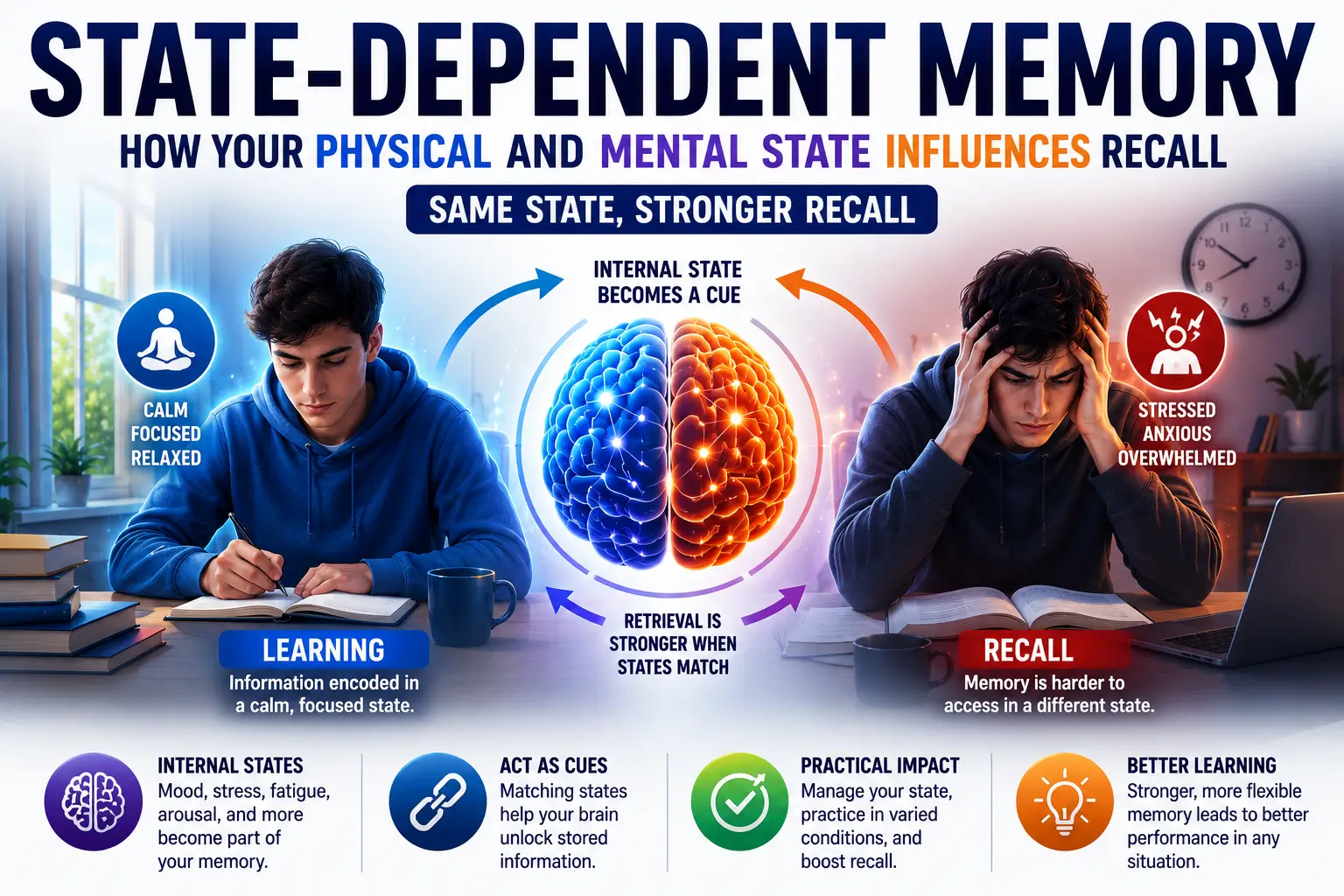
Context-Dependent Memory vs State-Dependent Memory
Context-dependent memory and state-dependent memory are closely related but distinct concepts.
Context-dependent memory focuses on external environmental conditions.
State-dependent memory focuses on internal physical or psychological conditions.
For example:
- Studying in the same classroom where an exam is taken involves context-dependent memory.
- Recalling information more effectively when in the same emotional state involves state-dependent memory.
Both phenomena demonstrate the importance of retrieval cues.
Learn more in State-Dependent Memory: How Your Physical and Mental State Influences Recall.
What Is Context Reinstatement?
Context reinstatement is the process of mentally recreating the original learning environment during retrieval.
Even when physical access to the original environment is impossible, people can often benefit from imagining relevant contextual details.
Researchers have found that mentally reconstructing a learning context may improve recall performance.
This technique is sometimes used in educational and investigative settings.
The brain appears capable of using both physical and mental context cues during retrieval.
Context Reinstatement and Memory Recall
When a person mentally recreates the sights, sounds, and circumstances of a learning experience, retrieval pathways may become easier to access.
This process activates associations connected to the original memory.
As a result, previously inaccessible information may become easier to recall.
Context reinstatement demonstrates the powerful connection between memory and environmental cues.
Memories rarely exist in isolation.
Why Retrieval Cues Are So Powerful
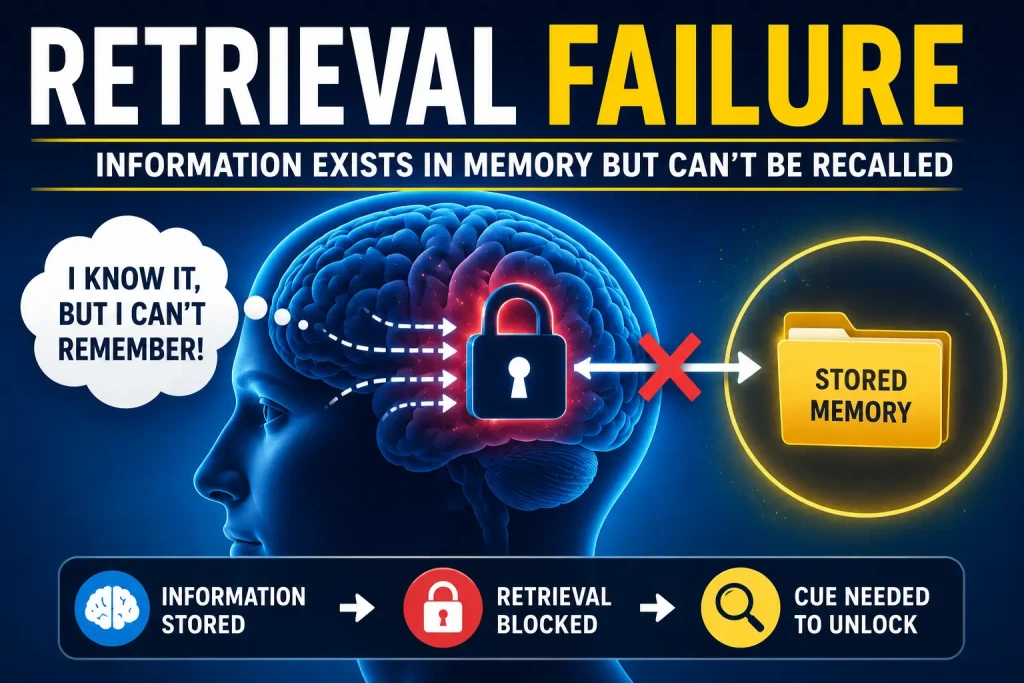
Environmental context is only one type of cue. For a broader explanation of how prompts and associations trigger recall, see What Are Retrieval Cues?.
Retrieval cues act as triggers that help the brain locate stored information.
Environmental context is one of the most effective cue categories.
Other examples include:
- Smells
- Music
- Visual surroundings
- Specific locations
- Social situations
The more strongly a cue is associated with learning, the more useful it may become during retrieval.
Can Context Improve Academic Performance?
Researchers generally agree that context can influence recall, but its effects are often smaller than many people assume.
Strong understanding, retrieval practice, and effective learning strategies remain the primary drivers of academic success.
However, context cues can provide additional support during retrieval.
For this reason, some learners benefit from occasionally reviewing information in environments similar to testing conditions.
Context works best when combined with evidence-based study methods.
How Context Influences Everyday Memory
Context-dependent memory extends far beyond education.
Many everyday experiences involve contextual retrieval.
Examples include remembering where an object was placed, recalling conversations, or retrieving information associated with a familiar location.
Environmental cues constantly interact with long-term memory systems.
Most people experience context-dependent retrieval regularly without realizing it.
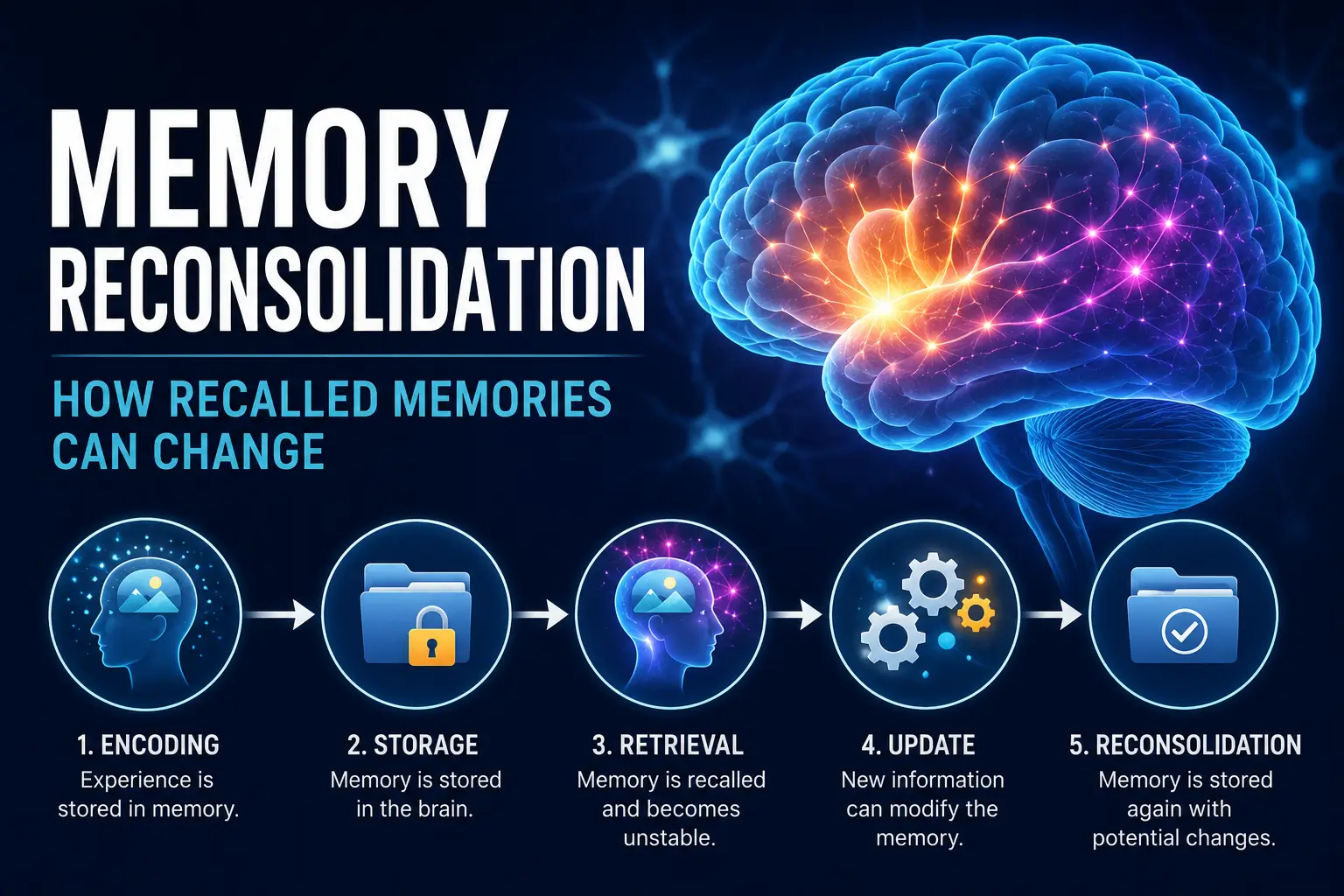
Context-Dependent Memory and Memory Reconsolidation
Context may also influence Memory Reconsolidation.
When memories are recalled in familiar environments, retrieval becomes more likely.
Once retrieved, memories may enter a reconsolidation process during which updating and strengthening can occur.
This illustrates how multiple memory systems work together.
Retrieval, context, and reconsolidation are closely interconnected.
Practical Ways to Use Context-Dependent Memory
Several strategies can help learners apply context principles effectively.
- Study in environments similar to testing conditions when possible
- Use consistent learning locations for important material
- Create meaningful retrieval cues
- Practice mental context reinstatement before exams
- Combine context cues with retrieval practice
These approaches can strengthen recall while supporting long-term retention.
The Bigger Picture of Memory Retrieval
Context-dependent memory demonstrates that recall depends on more than stored information alone.
The environment surrounding learning can become part of the memory itself.
When retrieval conditions resemble learning conditions, memory access often becomes easier.
This relationship highlights the importance of cues in human memory performance.
Sometimes remembering depends not only on what you learned, but also on where you learned it.
Supporting Better Learning and Recall
Context-dependent memory works best when combined with strong learning habits, retrieval practice, quality sleep, and effective memory strategies.
Understanding how retrieval cues influence recall can help learners build more efficient study systems and strengthen long-term retention.
Readers interested in memory-supportive nutritional strategies can learn more about Advanced Memory Formula.