
Now Reading: What Are Retrieval Cues? The Psychology Behind Memory Recall and Retrieval
-
01
What Are Retrieval Cues? The Psychology Behind Memory Recall and Retrieval
What Are Retrieval Cues? The Psychology Behind Memory Recall and Retrieval

Have you ever struggled to remember a person’s name, only for it to suddenly come back to you when someone mentions a familiar detail?
Perhaps a particular smell instantly reminds you of a childhood experience.
Maybe a song brings back memories you haven’t thought about for years.
These experiences occur because memories are often connected to specific retrieval cues.
Retrieval cues are pieces of information that help the brain locate and access stored memories.
They act as triggers that activate memory pathways and make recall easier.
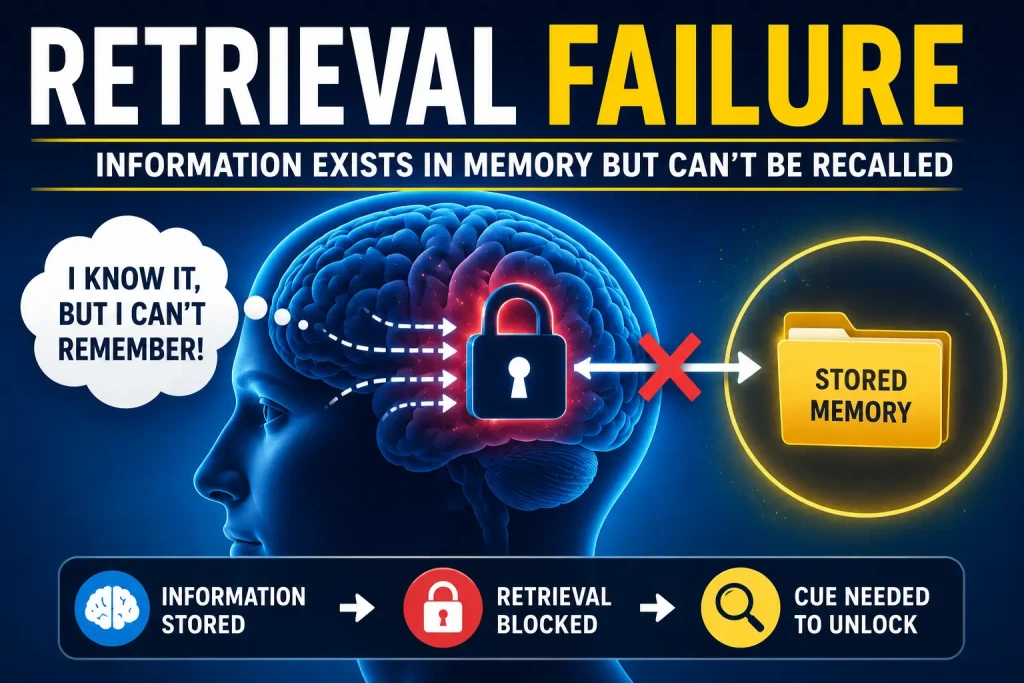
Without effective retrieval cues, information may remain stored in memory yet feel temporarily inaccessible.
Understanding retrieval cues is essential for improving learning, memory retention, and recall performance.

What Are Retrieval Cues?
Retrieval cues are stimuli that help reactivate information stored in long-term memory.
These cues may be external, such as locations, sounds, smells, or images.
They can also be internal, including emotions, thoughts, physiological states, or mental associations.
When a cue matches information connected to a stored memory, recall becomes easier.
The brain essentially uses these cues as access points to locate relevant information.
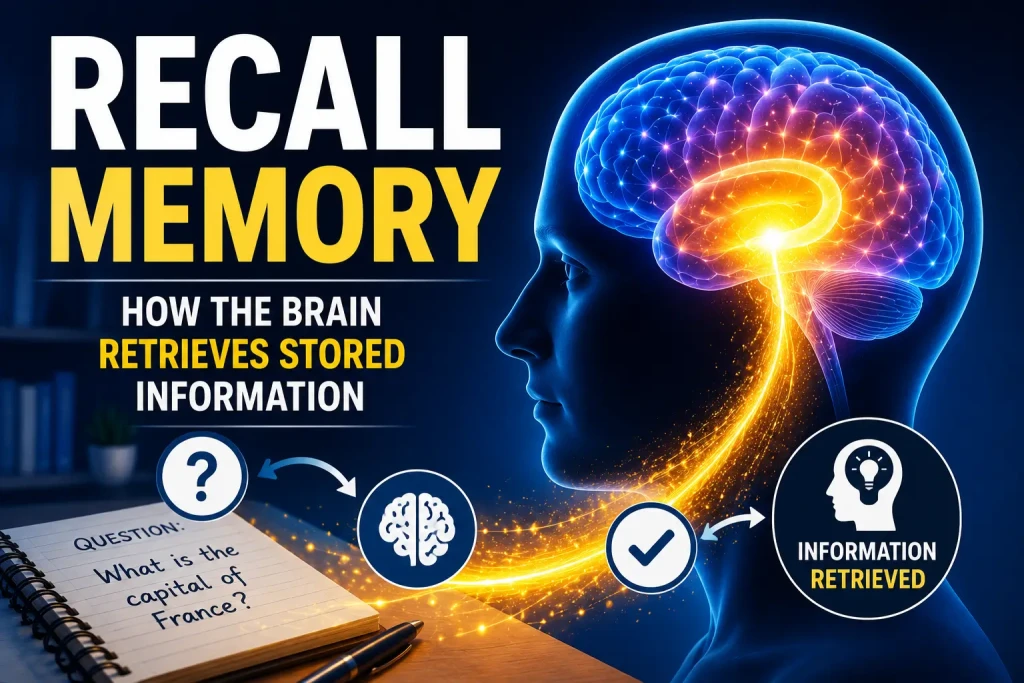
This concept is central to modern theories of Memory Retrieval.
Many apparent cases of forgetting are actually cases of retrieval failure rather than memory loss.
The information still exists, but the necessary cue is missing.
Why Retrieval Cues Matter
If you want the wider memory framework behind cue-based recall, the Complete Guide to Memory explains how encoding, storage, and retrieval work together.
Memory storage alone does not guarantee successful recall.
A person may learn information thoroughly yet struggle to retrieve it when needed.
Research in cognitive psychology consistently shows that retrieval cues play a major role in determining recall success.
Strong cues increase the probability that stored information can be accessed efficiently.
This explains why memories often seem easier to remember in certain situations.
A familiar environment, emotional state, or sensory experience may provide the cue needed to activate recall.
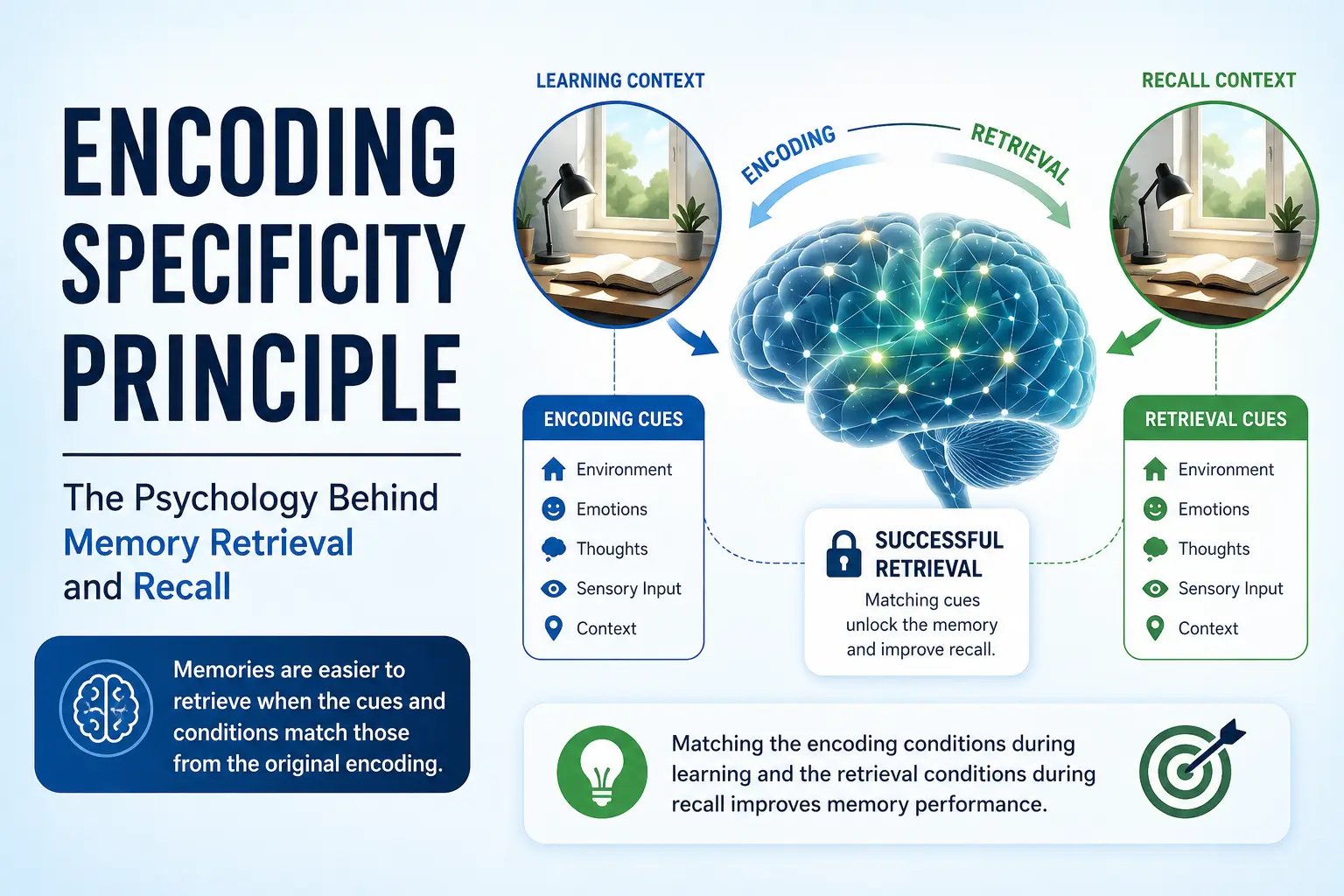
The relationship between learning conditions and retrieval cues is explained by the Encoding Specificity Principle.
This principle suggests that retrieval improves when cues available during recall match cues present during learning.


Types of Retrieval Cues
Retrieval cues can take many different forms.
Some of the most common categories include:
Contextual Cues
Environmental details associated with learning.
- Locations
- Classrooms
- Workspaces
- Background sounds
- Surroundings
These cues contribute to Context-Dependent Memory.
State-Based Cues
Internal psychological or physiological conditions.
- Mood
- Stress levels
- Alertness
- Fatigue
- Emotional states
These factors are closely connected to State-Dependent Memory.
Semantic Cues
Related concepts and knowledge structures.
For example, thinking about “planets” may help trigger recall of information about the solar system.
Memories often become linked through meaningful associations.
Sensory Cues
Information received through the senses.
- Smells
- Sounds
- Images
- Tastes
- Physical sensations
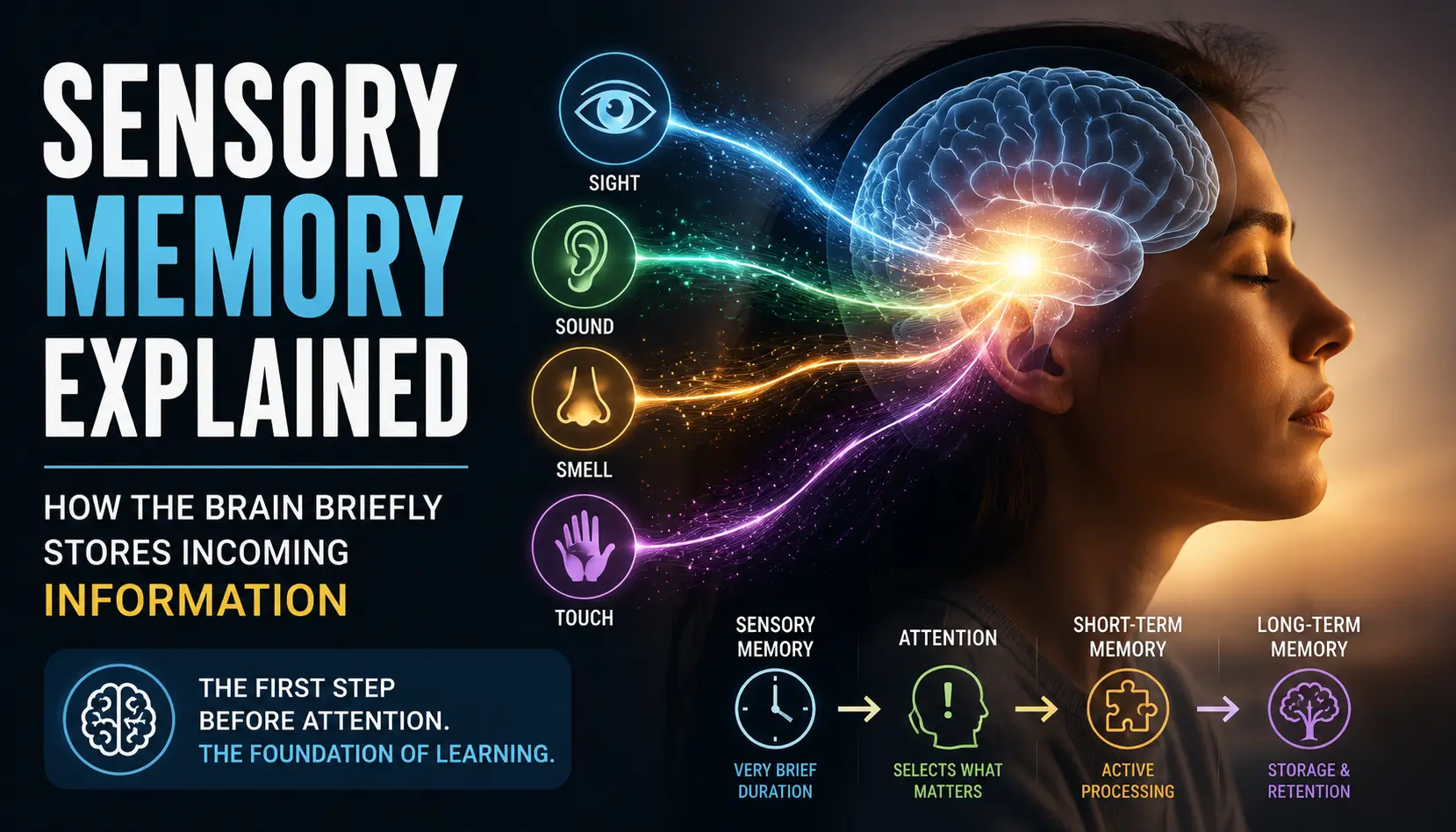
Sensory information can produce surprisingly powerful memory effects because it often becomes deeply integrated into memory traces.
Retrieval Cues and Long-Term Memory
Long-term memory depends heavily on effective retrieval pathways.
The more connections attached to a memory, the more opportunities exist for successful recall.
This is one reason why elaborative learning techniques are so effective.
Methods that encourage meaningful associations create additional retrieval cues.
Research discussed in Long-Term Memory suggests that memories become easier to access when they are connected to multiple concepts and experiences.
Each association becomes a potential retrieval route.
As a result, information is less likely to become inaccessible over time.
How Retrieval Cues Support Learning
Students frequently benefit from deliberately creating retrieval cues during study sessions.
Instead of relying on repetition alone, effective learners build meaningful associations.
Examples include:
- Creating visual imagery
- Using mnemonics
- Connecting concepts together
- Building memory palaces
- Generating personal examples
These strategies strengthen future recall because they increase the number of available retrieval pathways.
Techniques such as Mnemonics and Memory Palace Technique rely heavily on this principle.
Why Some Memories Feel Instantly Accessible
Not all memories require the same effort to retrieve.
Some information seems to appear effortlessly, while other memories remain frustratingly difficult to access.
One major reason is the number and quality of retrieval cues connected to the memory.
Memories with many associations typically have multiple access routes.
If one retrieval cue fails, another may still activate recall.
This helps explain why meaningful learning often produces stronger retention than simple repetition.
Information connected to personal experiences, emotions, images, or existing knowledge gains additional retrieval pathways.
The result is a more accessible and resilient memory trace.
The Relationship Between Retrieval Cues and Active Recall
Every time you actively retrieve information, the brain strengthens retrieval pathways.
This process does more than simply test memory.
It improves future access to the information.
Research on Active Recall shows that retrieval practice creates stronger memory performance than passive review methods.
Each successful retrieval reinforces connections between cues and stored information.
Over time, recall becomes faster, more reliable, and more flexible.
This is one reason why repeatedly testing yourself often outperforms re-reading notes.
The act of retrieval itself becomes part of the learning process.
Retrieval Failure vs Forgetting
For a deeper breakdown of why information can exist in memory yet still remain inaccessible, see Retrieval Failure.
People often assume that forgotten information has disappeared from memory.
However, cognitive psychologists frequently distinguish between true forgetting and retrieval failure.
In many situations, the memory still exists but cannot be accessed because the appropriate cue is unavailable.
A common example occurs during conversations.
You may know a word perfectly well but temporarily struggle to recall it.
Minutes later, the correct cue appears and the word suddenly comes to mind.
This phenomenon suggests that retrieval can fail even when storage remains intact.
Understanding this distinction helps explain many everyday memory experiences.

Practical Ways to Create Stronger Retrieval Cues
Anyone can improve recall by deliberately building stronger retrieval cues during learning.
Several evidence-based strategies are particularly effective.
1. Connect New Information to Existing Knowledge
The brain learns more effectively when new concepts become linked to familiar ideas.
These associations provide additional retrieval routes later.
2. Use Visual Imagery
Mental images often create powerful retrieval cues.
Visual information tends to be highly memorable because it activates multiple cognitive systems.
3. Create Personal Examples
Relating information to your own experiences increases meaning and improves retrieval potential.
4. Practice Retrieval Frequently
Every retrieval attempt strengthens cue-memory relationships.
Frequent testing helps make recall more automatic.
5. Learn Information in Multiple Contexts
Studying in different situations reduces dependence on a single cue and promotes flexible recall.
Retrieval Cues and Memory Improvement
Many of the most effective memory techniques work because they increase the number of available retrieval cues.
Instead of depending on a single pathway, the brain gains multiple routes back to the same information.
Methods such as memory palaces, mnemonic systems, chunking, and elaborative rehearsal all benefit from this principle.
By understanding how retrieval cues operate, learners can create study strategies that support stronger retention and more reliable recall.
The goal is not simply to store information.
The goal is to make information accessible when it matters most.
Retrieval cues provide the bridge between stored knowledge and successful remembering.
Related Topics
- Memory Retrieval Explained: How the Brain Accesses Stored Information
- Encoding Specificity Principle: The Psychology Behind Memory Retrieval and Recall
- Context-Dependent Memory: Why You Remember Better in the Right Environment
- State-Dependent Memory: How Your Physical and Mental State Influences Recall