
Now Reading: False Memory Explained: Why the Brain Sometimes Remembers Events Incorrectly
-
01
False Memory Explained: Why the Brain Sometimes Remembers Events Incorrectly
False Memory Explained: Why the Brain Sometimes Remembers Events Incorrectly
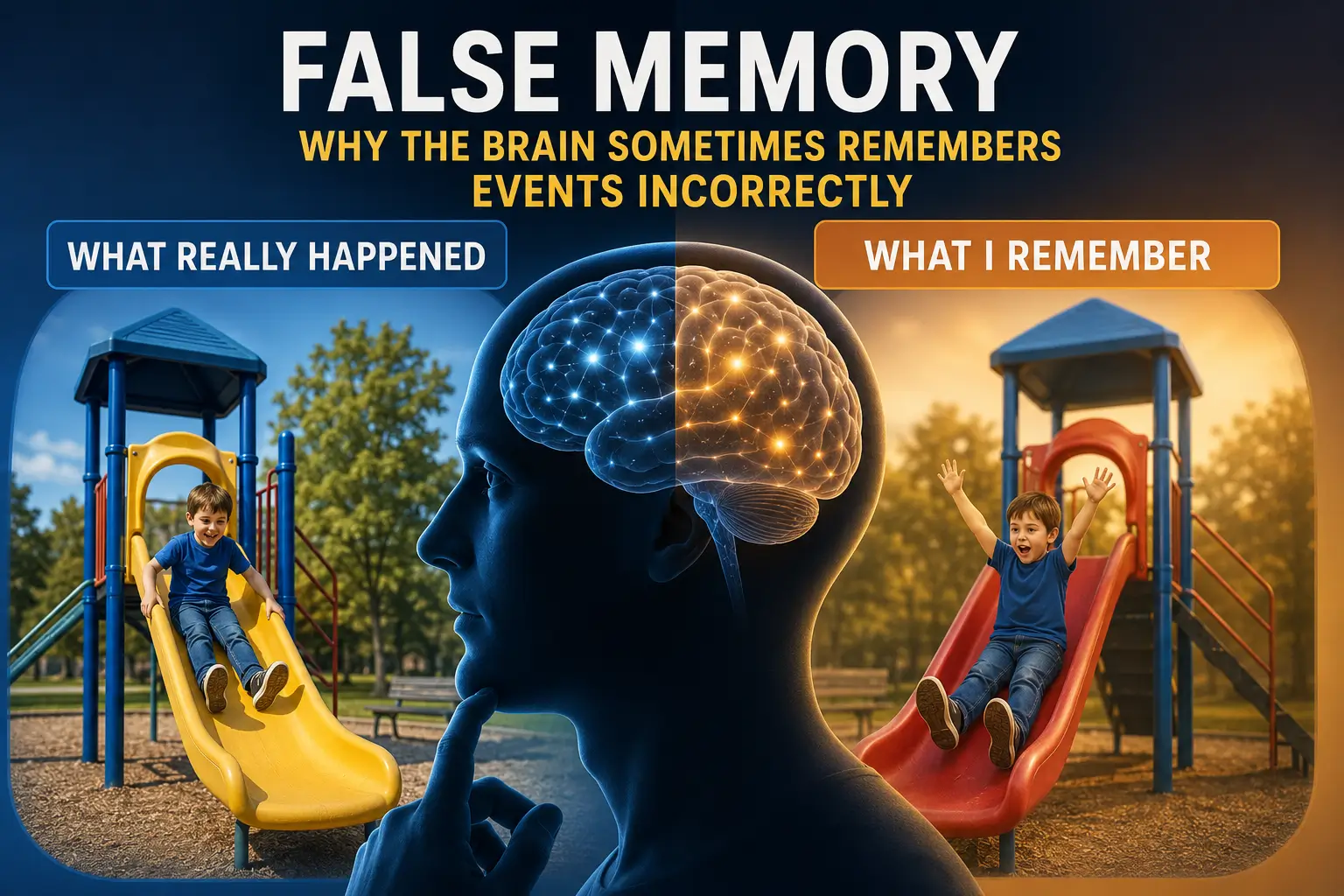
Have you ever felt completely certain that something happened, only to discover later that your memory was inaccurate?
Maybe you remembered a conversation differently than someone else, recalled details that never occurred, or became convinced that an event happened exactly as you remembered it.
These experiences can be explained by a fascinating psychological phenomenon known as false memory.
A false memory is a recollection of an event that differs from reality or, in some cases, describes an event that never actually happened. Although these memories may feel vivid and convincing, they can contain distortions, inaccuracies, or entirely fabricated details.
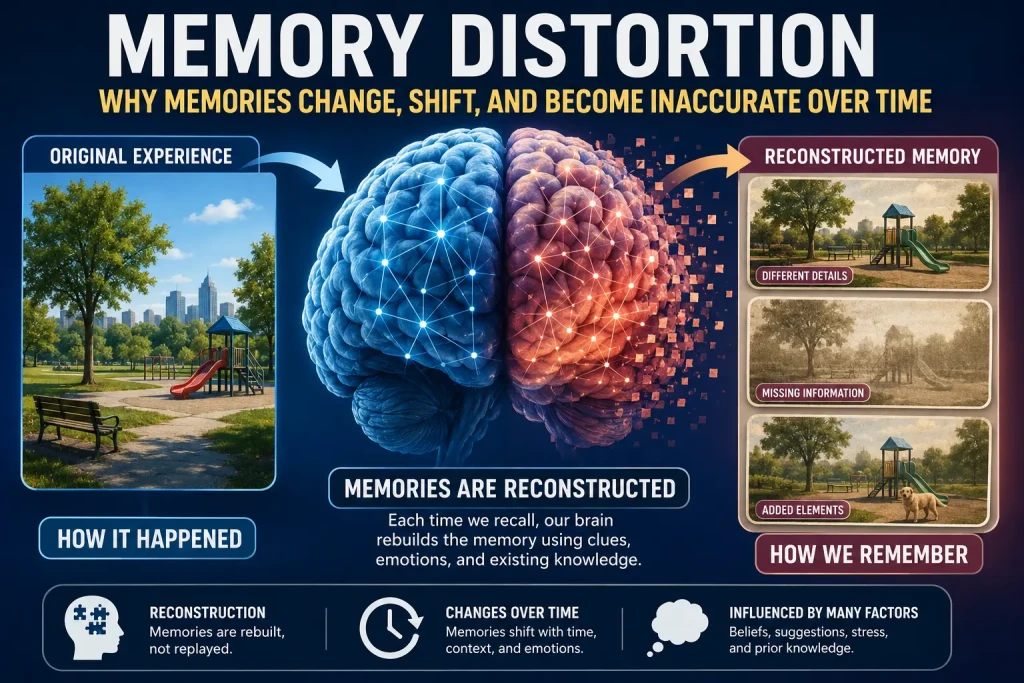
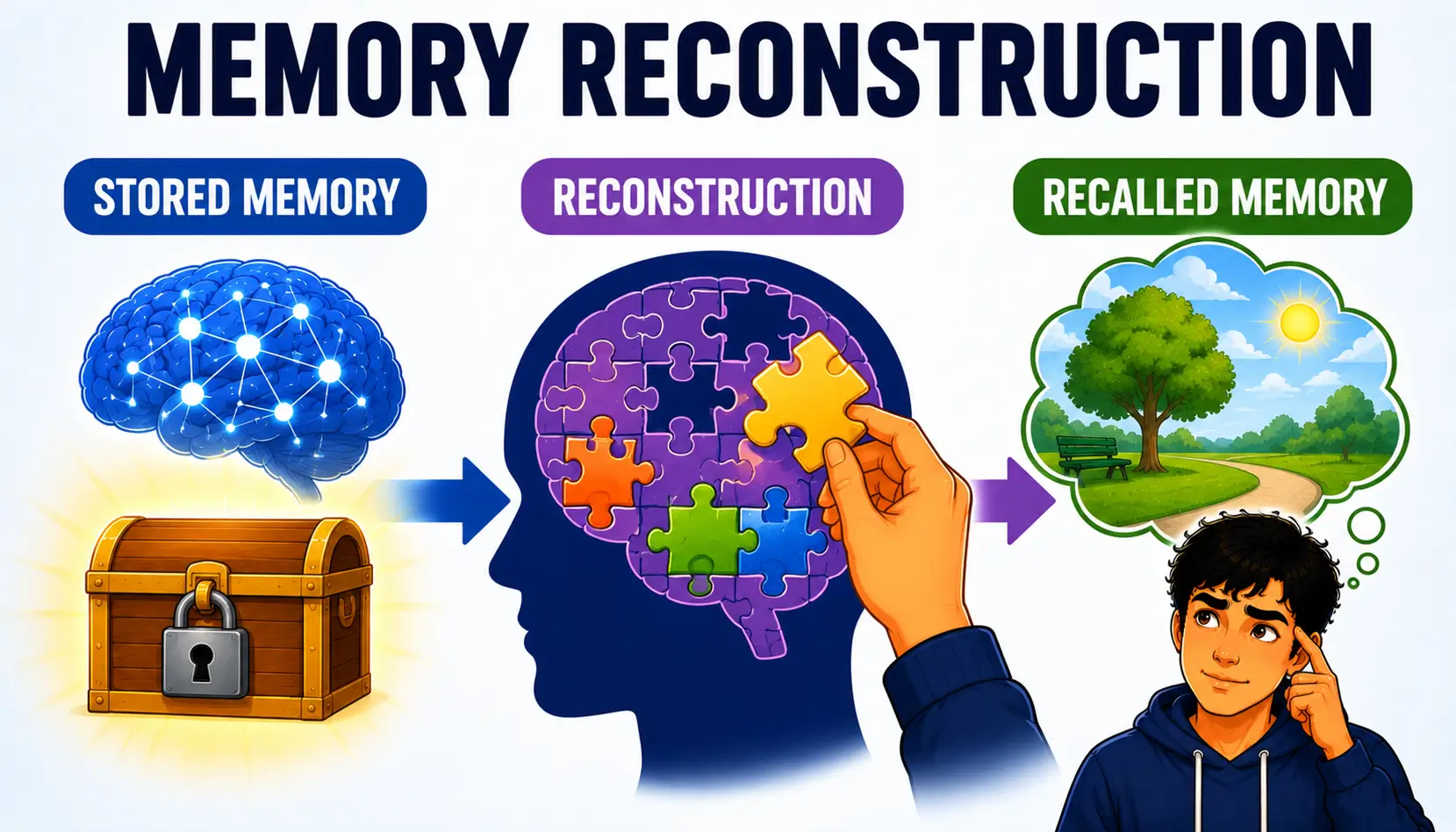
Modern cognitive psychology has shown that memory is not a perfect recording system. Instead, memories are reconstructed each time they are recalled, making them vulnerable to change over time.
Understanding false memories helps explain why people sometimes remember the past differently and why confidence does not always guarantee accuracy.
What Is a False Memory?
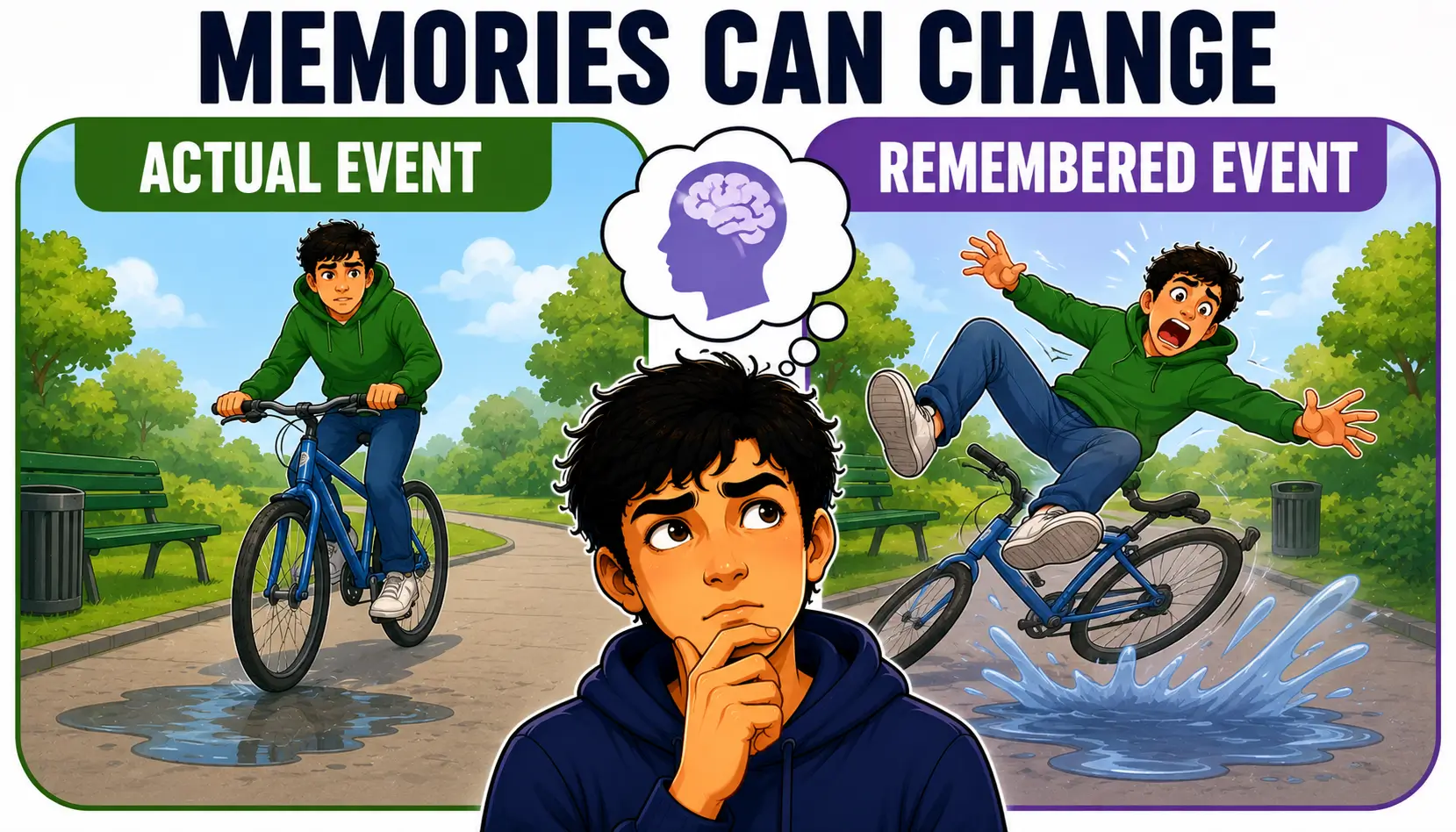
A false memory occurs when a person recalls information that is partially inaccurate or completely incorrect while believing it to be true.
Unlike intentional lying, false memories are genuine experiences. The individual sincerely believes the memory reflects reality.
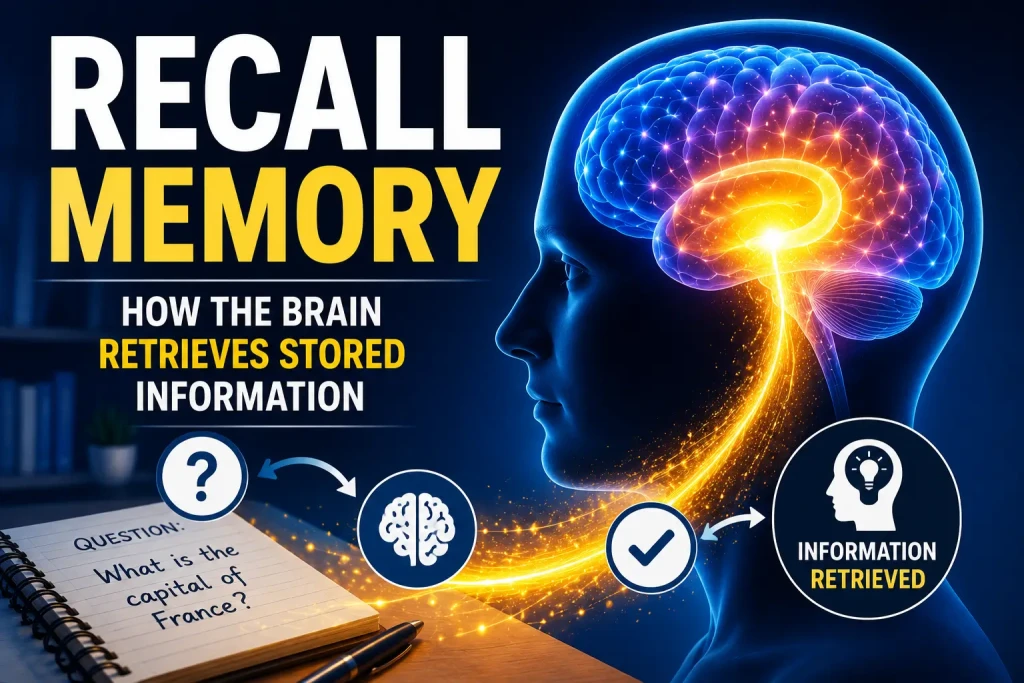
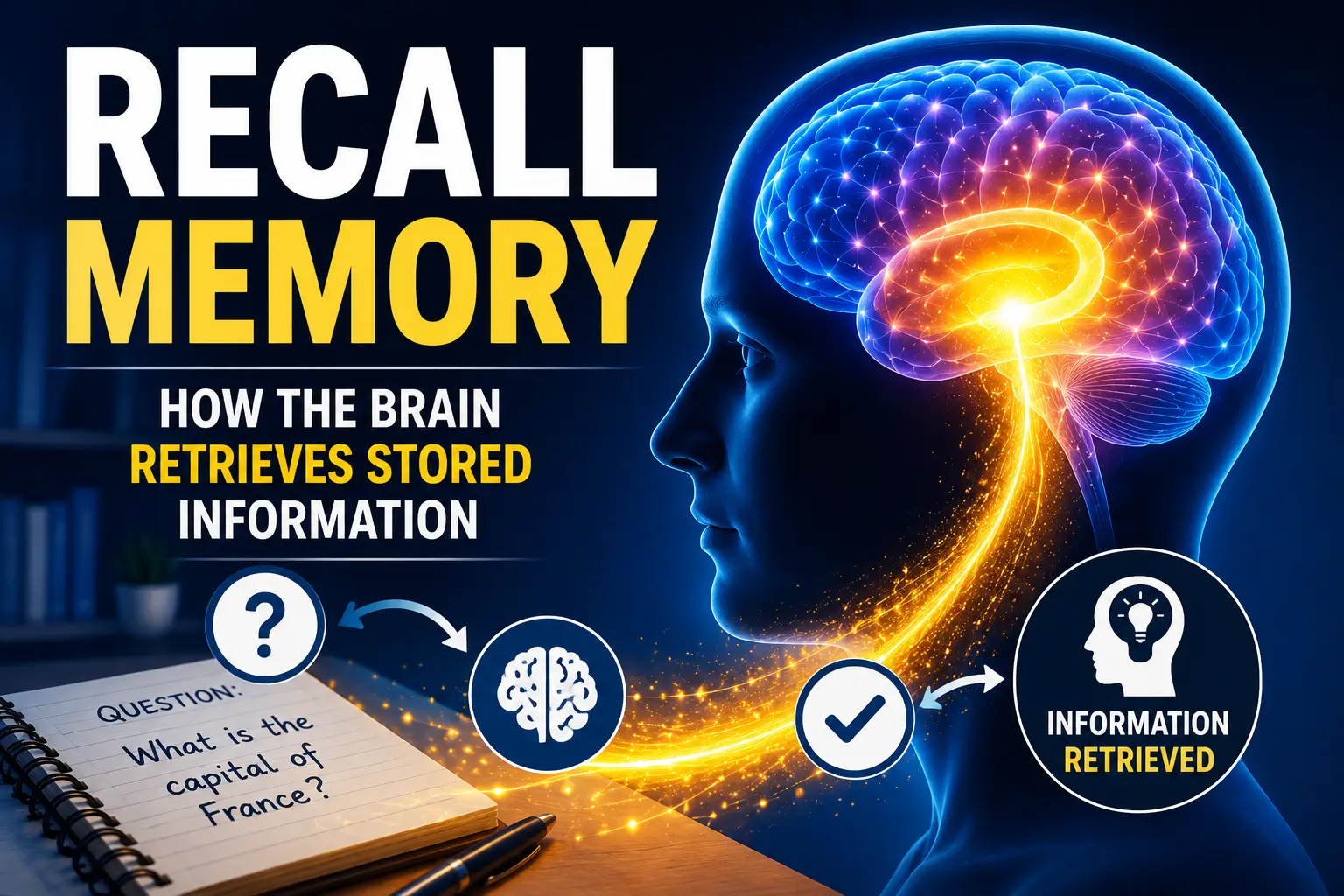
Researchers have found that memory retrieval is not a simple playback process. Instead, the brain reconstructs memories from stored fragments, prior knowledge, emotions, and expectations.
Because reconstruction is involved, errors can sometimes enter the memory.
This idea connects closely with Memory Retrieval and helps explain why recall is not always perfectly accurate.
Why False Memories Occur
False memories can develop for several reasons.
When information is recalled, the brain actively rebuilds the memory rather than replaying a complete recording.
During this reconstruction process, details may be altered, forgotten, or replaced.
Common causes of false memories include:
- Memory reconstruction.
- Suggestion from other people.
- Repeated imagination of events.
- Confusion between similar experiences.
- Interference from competing memories.
- Emotional influences on recall.
These factors can gradually change how an event is remembered without the individual realizing it.


The Reconstructive Nature of Memory
For a broader explanation of how memories are formed, retrieved, changed, and sometimes distorted, read the Complete Guide to Memory.
One of the most important discoveries in memory research is that memory is reconstructive rather than reproductive.
Instead of storing complete recordings, the brain stores pieces of information that are assembled during retrieval.
This process usually works remarkably well, but it also creates opportunities for distortion.
Each time a memory is recalled, it may be slightly modified before being stored again.
This phenomenon is closely related to Memory Reconsolidation, which explains how recalled memories can change over time.
False Memories and Everyday Life
False memories are surprisingly common.
People frequently remember details differently from family members, friends, or coworkers.
In many situations, these differences are not caused by dishonesty but by normal memory processes.
Examples include:
- Misremembering who said something.
- Recalling incorrect dates or locations.
- Remembering details that were suggested later.
- Combining multiple events into one memory.
- Confusing imagination with actual experience.
These everyday errors demonstrate how flexible and reconstructive memory can be.
The Role of Suggestion in False Memories
Research has shown that suggestion can significantly influence memory.
Questions, conversations, news reports, and repeated storytelling can sometimes introduce new details into existing memories.
Over time, these added details may become integrated into the memory itself.
This effect helps explain why eyewitness testimony is not always perfectly reliable and why memory researchers study false memories extensively.
The Mandela Effect and Collective False Memories
One of the most widely discussed examples of false memory is the Mandela Effect.
The Mandela Effect occurs when large groups of people remember the same event, phrase, or detail differently from reality.
The term originated after many individuals reported remembering the death of Nelson Mandela during the 1980s, despite the fact that he lived until 2013.
Other examples involve movie quotes, logos, product names, and historical events.
While the Mandela Effect is often discussed online, cognitive psychologists generally view it as a demonstration of normal memory reconstruction rather than evidence of alternate realities.
These examples highlight how memory can be influenced by assumptions, expectations, and shared cultural experiences.
False Memory vs Accurate Memory
Because personal experiences are especially vulnerable to reinterpretation over time, Autobiographical Memory is a useful related topic here.
False memories and accurate memories often feel remarkably similar.
Both can be vivid, emotionally meaningful, and accompanied by strong confidence.
This is one reason false memories can be difficult to detect.
Confidence alone is not a reliable indicator of memory accuracy.
Researchers have repeatedly found that people can feel highly confident about memories that contain substantial inaccuracies.
This finding has important implications for education, personal relationships, and legal testimony.
False Memories and Eyewitness Testimony
False memory research has had a major impact on the legal system.
Eyewitness testimony was once considered one of the strongest forms of evidence.
However, psychological studies have demonstrated that memory can be influenced by leading questions, stress, suggestion, and post-event information.
As a result, many legal professionals now recognize that memory is not always a perfectly reliable record of past events.
This does not mean eyewitness accounts are useless, but it does highlight the importance of understanding how memory works.

Can False Memories Be Prevented?
Completely preventing false memories is unlikely because memory reconstruction is a normal feature of human cognition.
However, several practices may reduce the likelihood of memory distortions.
- Recording important information soon after events occur.
- Avoiding repeated exposure to misleading information.
- Using multiple independent sources of verification.
- Distinguishing assumptions from direct observations.
- Reviewing information carefully before drawing conclusions.
These strategies cannot eliminate memory errors entirely, but they can improve accuracy and reduce susceptibility to distortion.
FAQ
What is a false memory?
A false memory is a recollection that differs from reality or describes an event that never actually occurred, despite being sincerely believed.
Are false memories common?
Yes. Research suggests that false memories are a normal part of human memory and can occur in everyday situations.
What causes false memories?
False memories can result from memory reconstruction, suggestion, interference, imagination, and the integration of inaccurate information during recall.
What is the Mandela Effect?
The Mandela Effect describes situations in which large groups of people remember the same event or detail differently from reality.
Why False Memories Matter
False memories reveal an important truth about human memory: remembering is not the same as replaying a recording.
The brain actively reconstructs experiences using stored information, context, emotions, and expectations.
Most of the time this process works extremely well, allowing people to learn, adapt, and navigate the world efficiently.
Occasionally, however, reconstruction introduces inaccuracies that create convincing but incorrect memories. This process is closely related to memory distortion, which explains how recollections can shift or become inaccurate over time.
Understanding false memories provides valuable insight into how memory works and why remembering is often more complex than it appears.
Readers interested in supporting memory performance and cognitive health can learn more about Advanced Memory Formula, a supplement designed to support healthy brain function as part of a broader memory-focused lifestyle.
Related Topics
- Memory Reconsolidation Explained: How Recalled Memories Can Change
- Episodic Memory Explained: How Your Brain Stores Personal Experiences
- Memory Retrieval Explained: How the Brain Accesses Stored Information
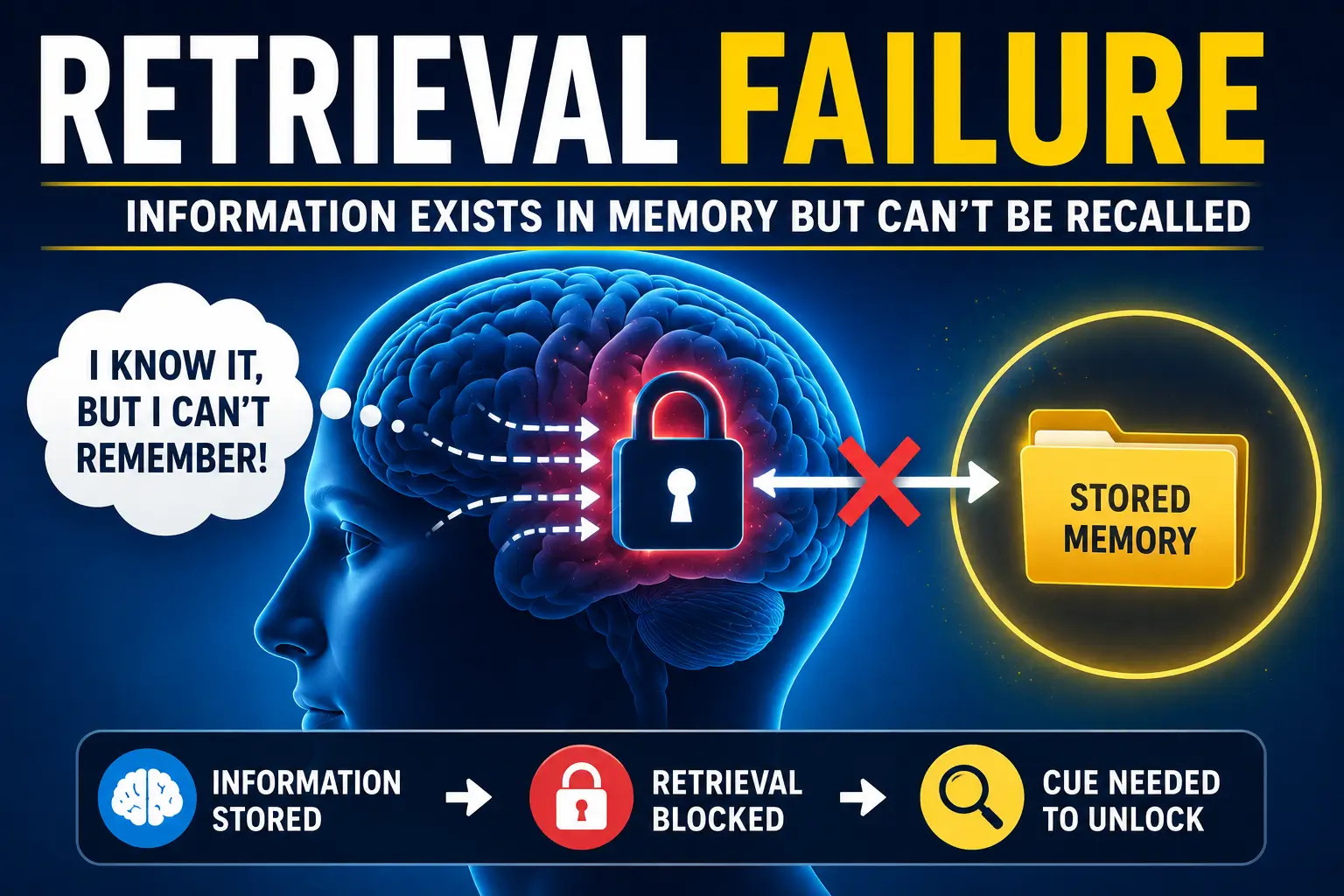
- Retrieval Failure Explained: Why Information Exists in Memory but Cannot Be Recalled
Sources
- https://dictionary.apa.org/false-memory
- https://www.britannica.com/science/false-memory
- https://www.simplypsychology.org/false-memory.html