
Now Reading: Recall Memory Explained: How the Brain Retrieves Stored Information
-
01
Recall Memory Explained: How the Brain Retrieves Stored Information
Recall Memory Explained: How the Brain Retrieves Stored Information
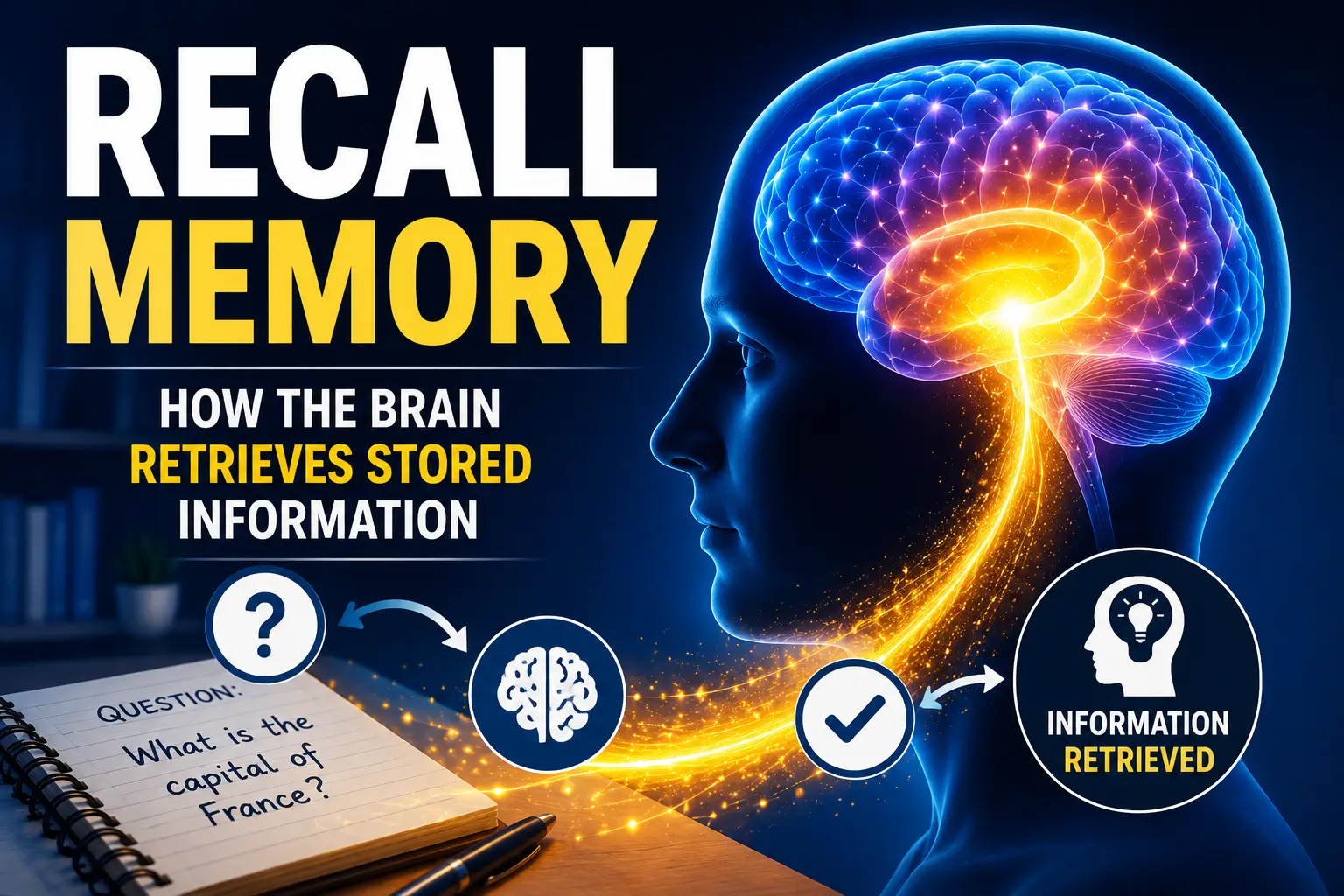
Have you ever known that information was stored somewhere in your mind but struggled to bring it into conscious awareness?
Perhaps you forgot a person’s name during a conversation but remembered it hours later, or you successfully answered an exam question without seeing any hints.
These situations involve a fundamental memory process known as recall memory.
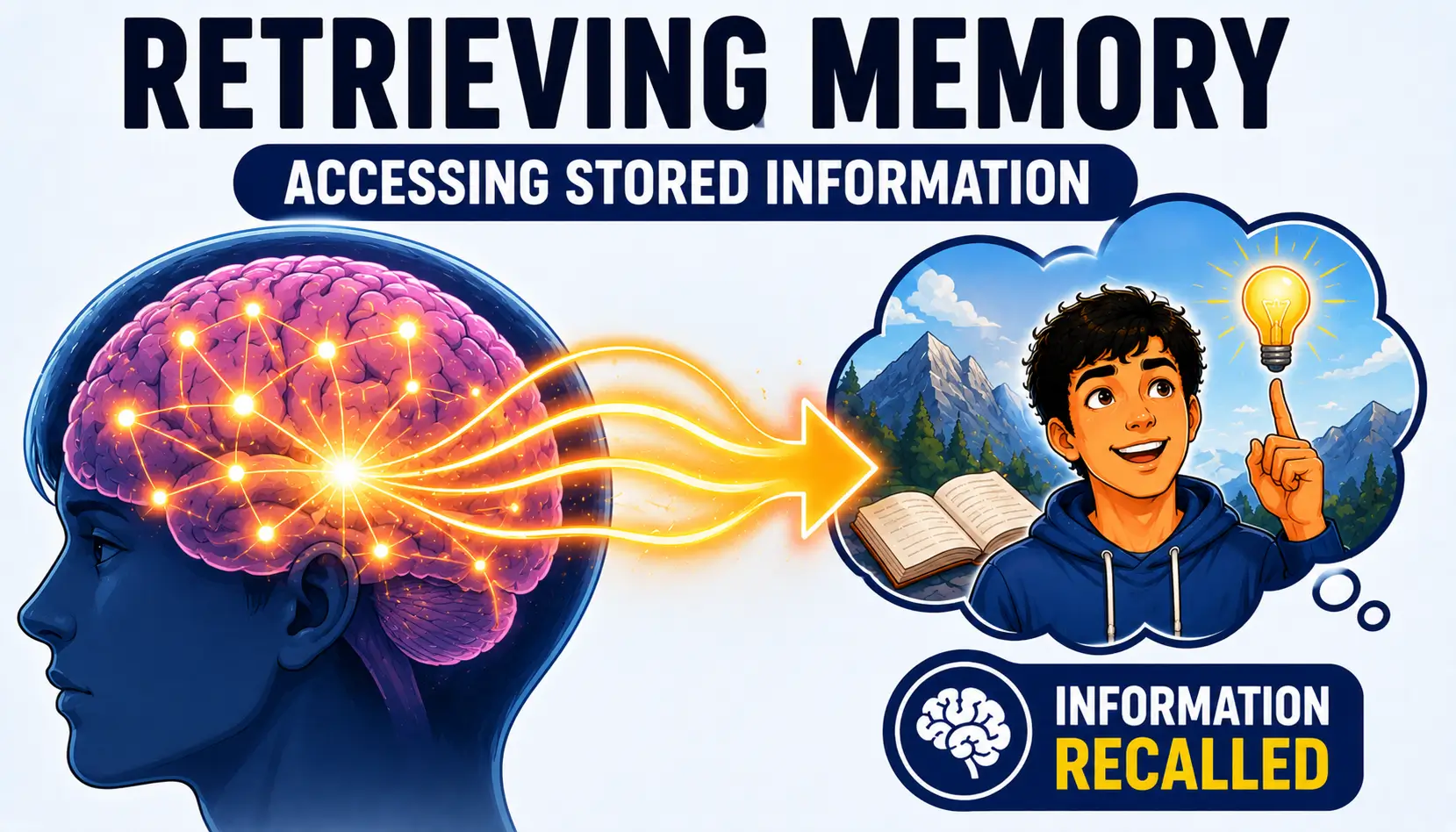
Recall memory is the ability to retrieve stored information from memory without being provided with the answer.
Unlike recognition, which involves identifying information when it is presented, recall requires the brain to actively search for and recover information from long-term memory.
Recall plays a central role in learning, academic performance, problem-solving, and everyday decision-making.
Understanding how recall works helps explain why some study methods produce stronger long-term learning than others.
What Is Recall Memory?
Recall memory refers to the ability to access information from memory without direct external cues.
When answering a question from memory, explaining a concept, or remembering a past experience, recall processes are involved.
The brain searches through stored information and reconstructs the memory needed to respond.
This process is one of the most important components of learning because successful recall strengthens future retrieval.
Researchers often view recall as a more demanding memory task than recognition because fewer external cues are available.
Recall vs Recognition Memory
For the broader context of how recall differs from other memory processes such as recognition, retrieval failure, and long-term storage, visit the Complete Guide to Memory.
Recall and recognition are closely related but different forms of memory retrieval.
Recall requires generating information from memory independently.
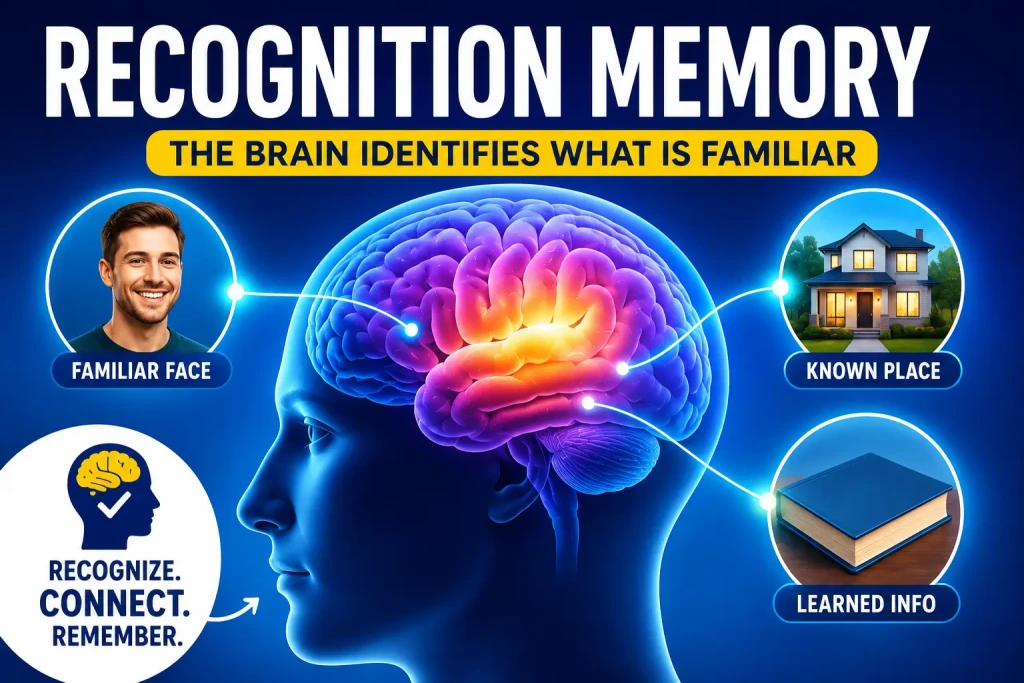
Recognition requires identifying information when it is presented.
For example, answering an essay question involves recall, while selecting the correct answer on a multiple-choice test relies more heavily on recognition.
Because recall requires greater mental effort, it often provides a stronger measure of learning.
This distinction connects directly with Recognition Memory, which explains how familiarity helps identify previously encountered information.


How Recall Memory Works
Recall begins when the brain receives a cue or goal that triggers retrieval.
Neural networks associated with the target information become activated.
The brain then reconstructs relevant details from stored memory traces.
Successful retrieval depends on several factors:
- Strength of the original memory.
- Quality of encoding.
- Availability of retrieval cues.
- Amount of interference from competing memories.
- Time elapsed since learning.
When these conditions are favorable, recall becomes faster and more accurate.
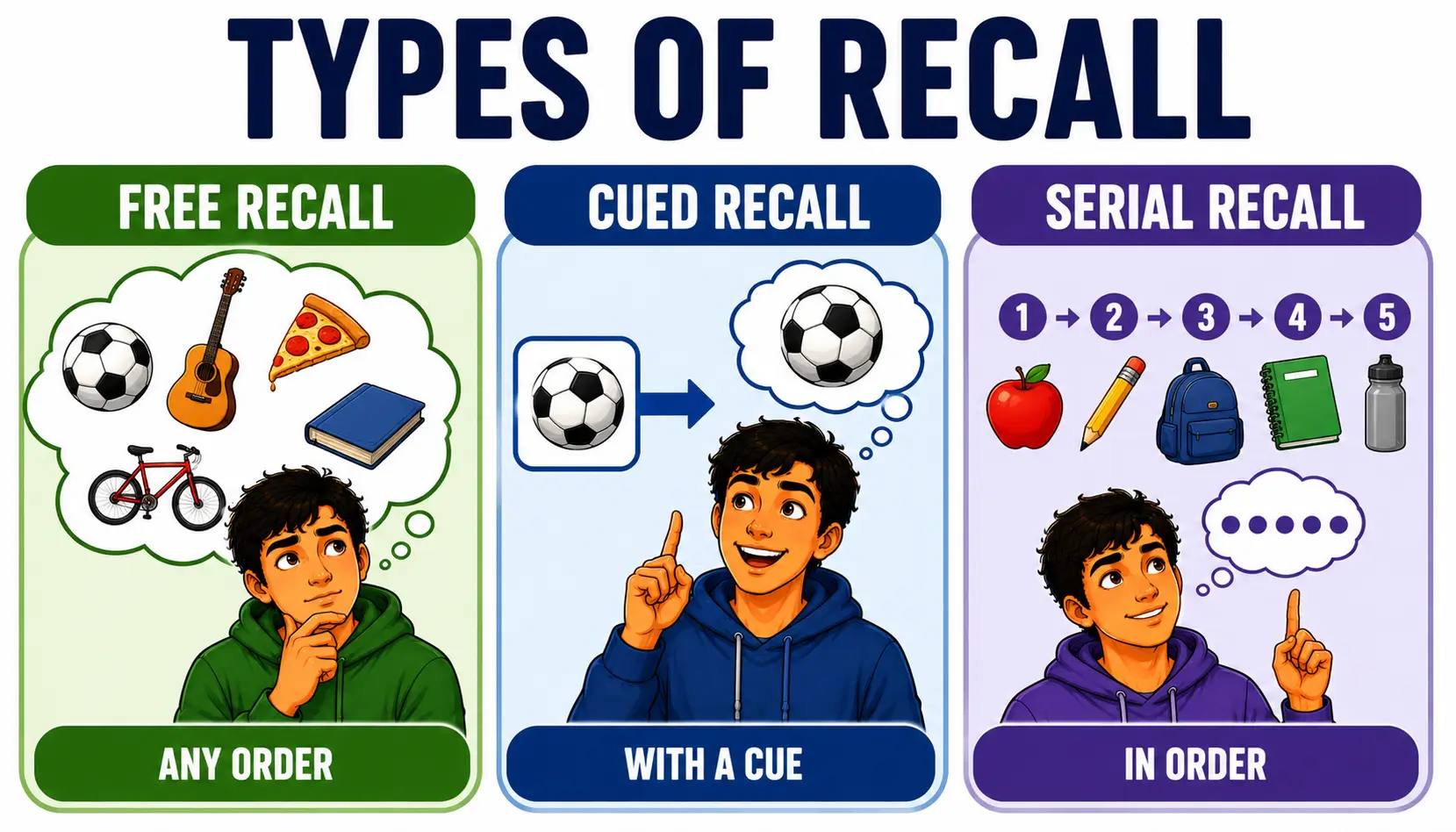
Free Recall, Cued Recall, and Serial Recall
Psychologists often divide recall into different categories.
Free recall occurs when information is retrieved without specific hints.
Cued recall occurs when prompts help trigger retrieval.
Serial recall requires remembering information in the correct order.
Each type relies on similar memory systems but places different demands on retrieval processes.
Why Recall Strengthens Learning
One of the most important findings in cognitive psychology is that retrieving information strengthens memory itself.
Each successful retrieval reinforces neural pathways associated with the memory.
This is why recall-based learning strategies often outperform passive review methods.
When students repeatedly recall information, they create stronger and more durable memory traces.
This principle forms the foundation of evidence-based learning techniques used throughout modern education.
The Connection Between Recall and Active Recall
Active recall is built directly on the science of recall memory.
Rather than simply reviewing notes, learners force themselves to retrieve information from memory.
Examples include self-testing, answering practice questions, teaching concepts, and writing summaries from memory.
Research consistently shows that these methods improve long-term retention more effectively than passive rereading.
This relationship explains why Active Recall has become one of the most recommended learning techniques for students and professionals.
Recall Memory and Retrieval Failure
Even when information exists in memory, recall is not always successful.
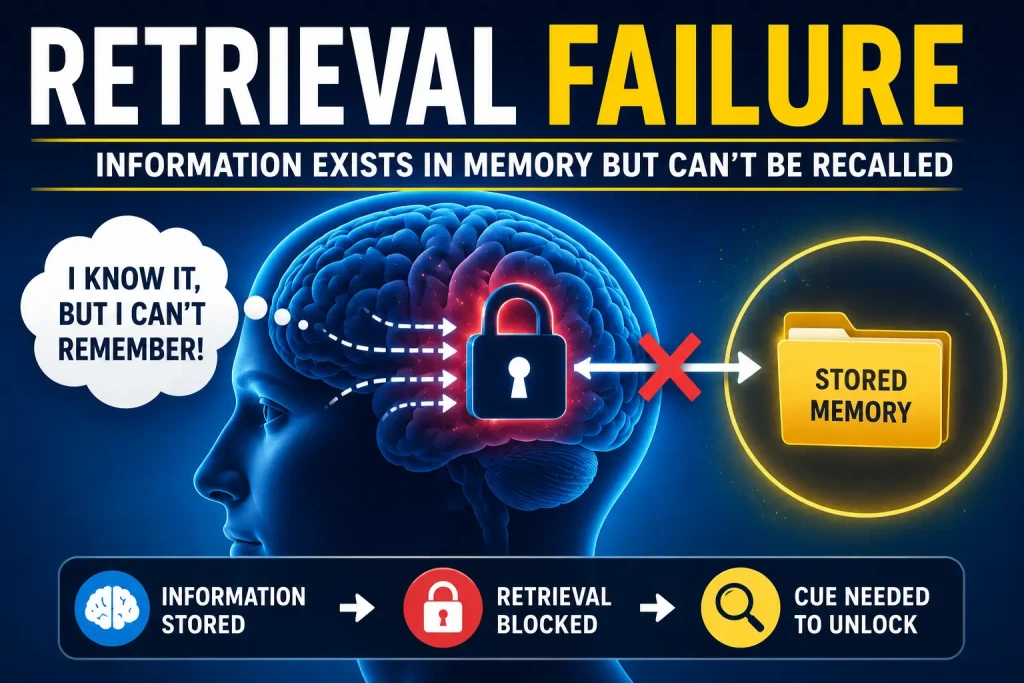
Many people have experienced the frustrating feeling of knowing that they know something while being unable to retrieve it.
This phenomenon is known as retrieval failure.
In many cases, the memory remains stored but cannot be accessed efficiently at that particular moment.
Stress, interference, insufficient retrieval cues, and weak encoding can all contribute to retrieval failure.
This concept is explored further in Retrieval Failure Explained.
Factors That Influence Recall Performance
Because successful recall often depends on the right prompt, retrieval cues are a key related concept for improving access to stored information.
Several variables affect how easily information can be recalled.
- Depth of processing during learning.
- Frequency of retrieval practice.
- Sleep quality and memory consolidation.
- Emotional significance of information.
- Availability of effective retrieval cues.
- Amount of competing information.
Memories that are deeply processed, frequently retrieved, and connected to meaningful experiences tend to be recalled more easily.
Conversely, weak encoding and limited retrieval opportunities often lead to forgetting.
Recall Memory in Everyday Life
Recall memory supports countless daily activities.
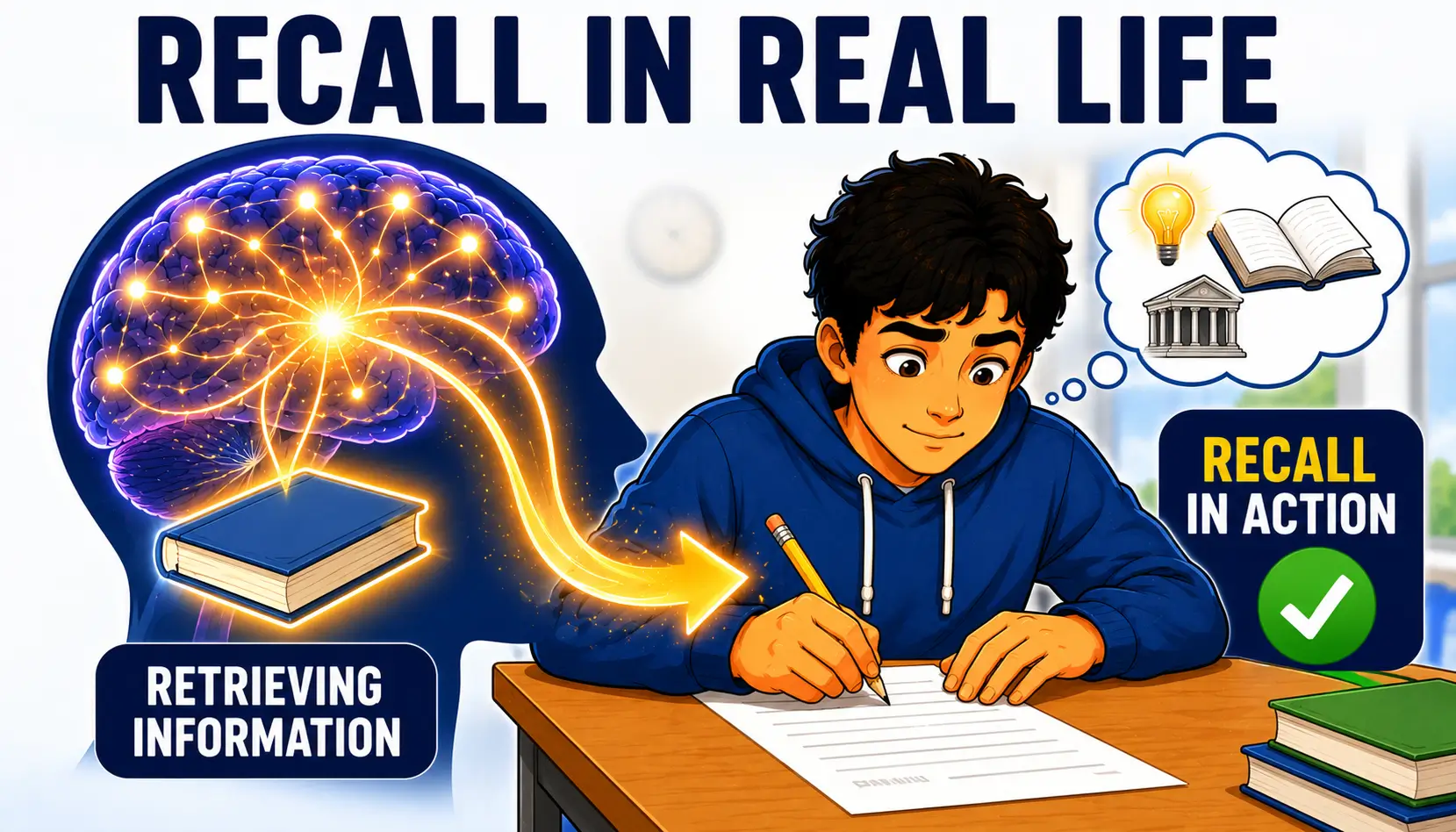
People rely on recall when remembering names, recalling directions, solving problems, participating in conversations, and making decisions.
Students depend on recall during exams, while professionals use recall when applying knowledge and expertise in real-world situations.
Without effective recall, stored information would have little practical value because it could not be accessed when needed.
How to Improve Recall Memory
Research suggests that recall can be strengthened through intentional practice.
Effective strategies include:
- Using active recall techniques.
- Practicing retrieval through self-testing.
- Applying spaced repetition.
- Connecting new information to existing knowledge.
- Using meaningful retrieval cues.
- Maintaining healthy sleep habits.
These methods strengthen retrieval pathways and improve the ability to access information when needed.
FAQ
What is recall memory?
Recall memory is the ability to retrieve stored information from memory without being provided with the answer.
How is recall different from recognition?
Recall requires generating information independently, while recognition involves identifying information when it is presented.
Why is recall important for learning?
Successful retrieval strengthens memory pathways, making information easier to access in the future.
Can recall memory be improved?
Yes. Active recall, retrieval practice, spaced repetition, and effective encoding strategies can significantly improve recall performance.
Final Thoughts
Recall memory is one of the most important functions of human cognition.
It allows people to access stored knowledge, apply what they have learned, and solve problems in everyday life.
Research shows that retrieval is not merely a way of measuring learning—it is a powerful mechanism for strengthening memory itself.
By understanding how recall works and using evidence-based learning techniques, individuals can improve memory performance, enhance long-term retention, and learn more effectively.
Readers interested in supporting memory performance and cognitive health can learn more about Advanced Memory Formula, a supplement designed to support healthy brain function as part of a broader memory-focused lifestyle.
Related Topics
- Recognition Memory Explained: How the Brain Identifies Familiar Information
- Memory Retrieval Explained: How the Brain Accesses Stored Information
- Retrieval Failure Explained: Why Information Exists in Memory but Cannot Be Recalled
- Active Recall: The Science-Backed Study Method for Long-Term Memory
Sources
- https://dictionary.apa.org/recall-memory
- https://www.britannica.com/science/memory-psychology
- https://www.simplypsychology.org/memory.html