
Now Reading: Retrieval Failure Explained: Why Information Exists in Memory but Cannot Be Recalled
-
01
Retrieval Failure Explained: Why Information Exists in Memory but Cannot Be Recalled
Retrieval Failure Explained: Why Information Exists in Memory but Cannot Be Recalled
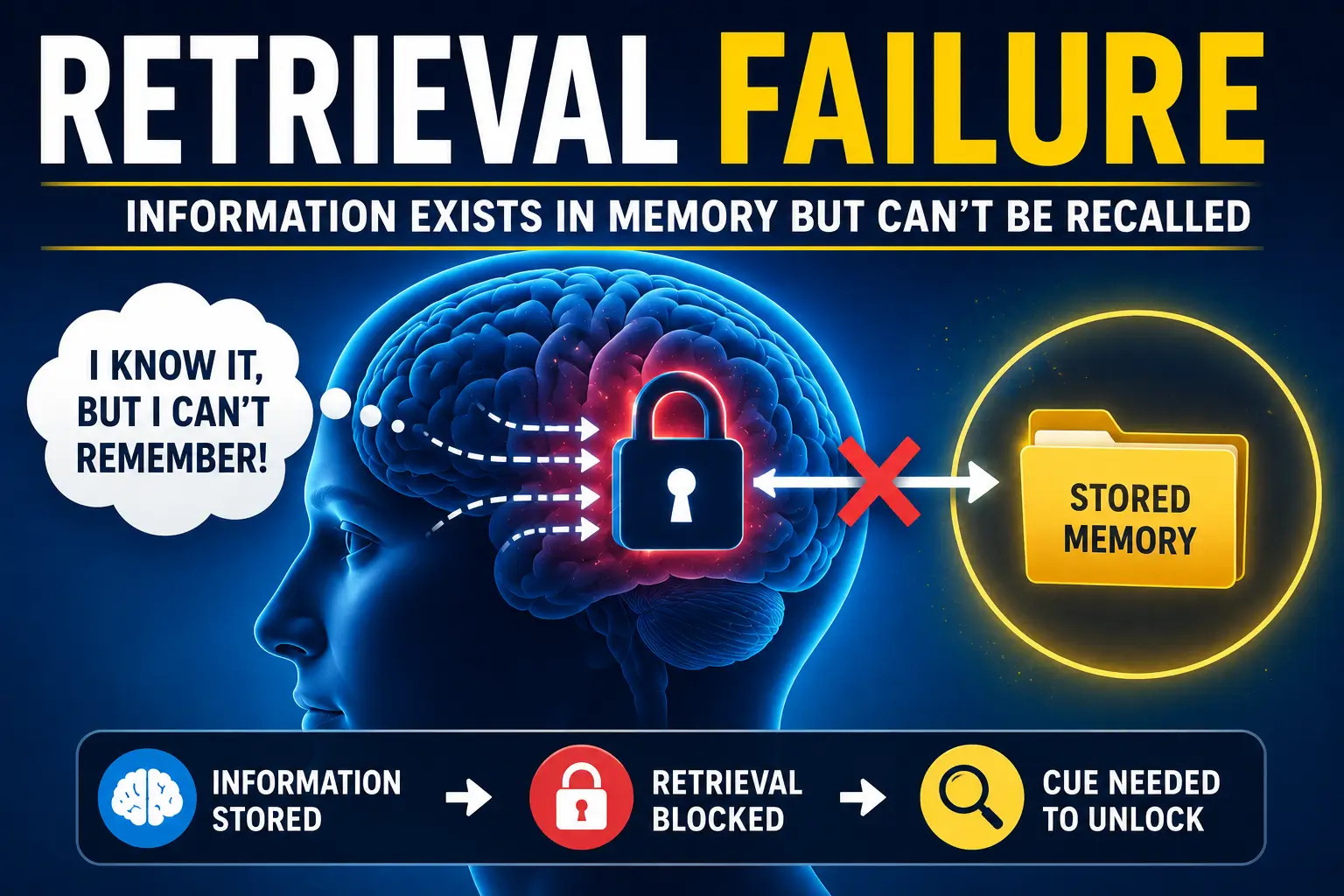
Have you ever known that you knew something but simply could not retrieve it at the moment you needed it?
Maybe a person’s name was on the tip of your tongue, or you recognized a fact but could not fully recall it.
These experiences are common examples of retrieval failure.
Retrieval failure occurs when information remains stored in memory but cannot be successfully accessed at a particular moment. The memory itself may still exist, yet the brain temporarily struggles to locate the correct retrieval pathway.
Retrieval failure is one of the most common explanations for everyday forgetting and plays an important role in learning, memory performance, and long-term recall.
Understanding retrieval failure helps explain why forgetting does not always mean information has been lost.
What Is Retrieval Failure?
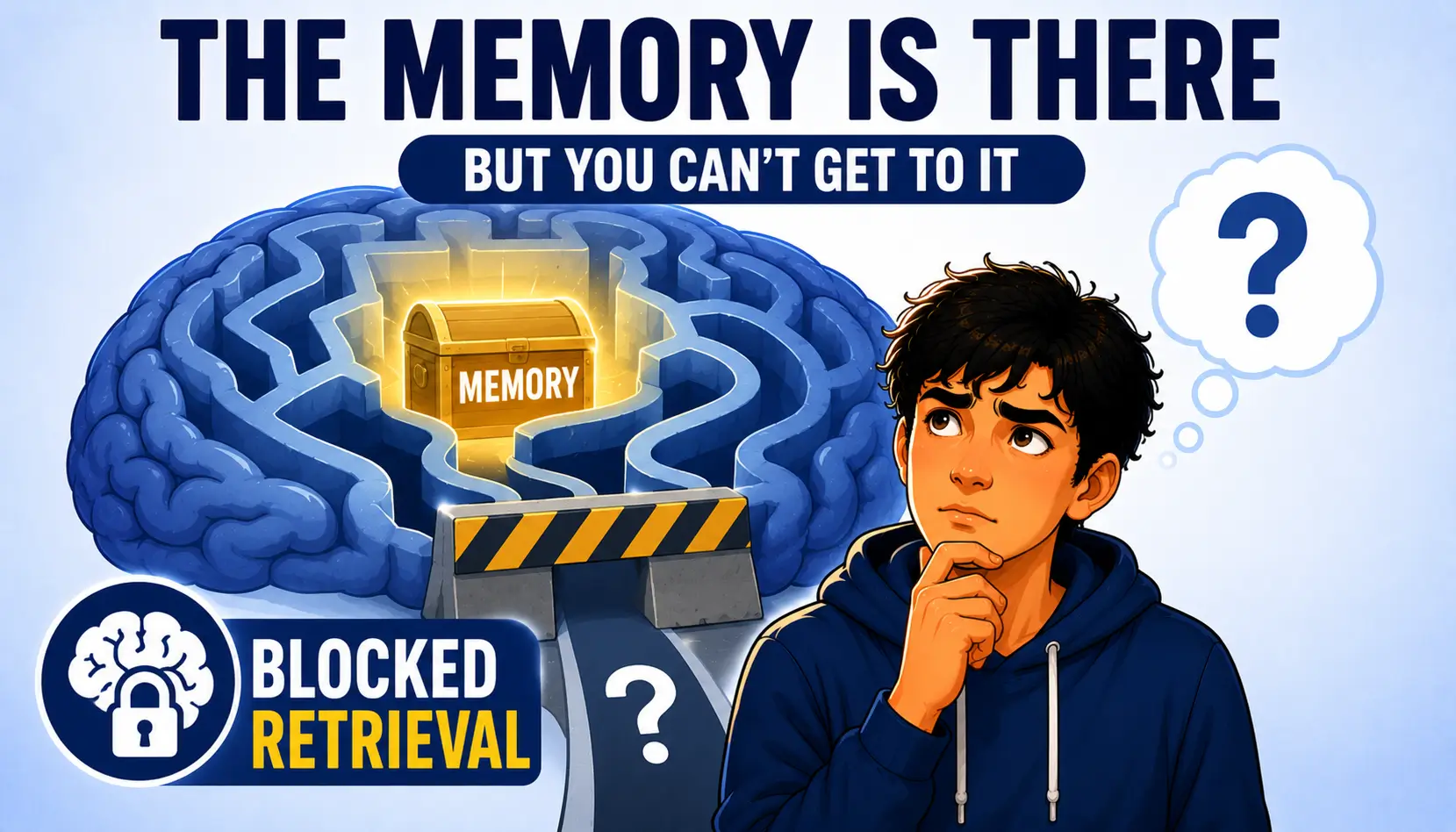
Retrieval failure refers to the inability to access information that is believed to remain stored in long-term memory.
Unlike memory loss caused by brain injury or disease, retrieval failure suggests that the memory still exists but cannot be successfully reached at a specific time.
This idea became influential in cognitive psychology because it challenged the assumption that forgetting always reflects permanent memory loss.
Researchers discovered that people often remember information later when the proper retrieval cue becomes available.
This suggests that many forgotten memories remain stored but temporarily inaccessible.
The concept is closely connected to Memory Retrieval, which examines how information is accessed from long-term memory.
The Tip-of-the-Tongue Phenomenon
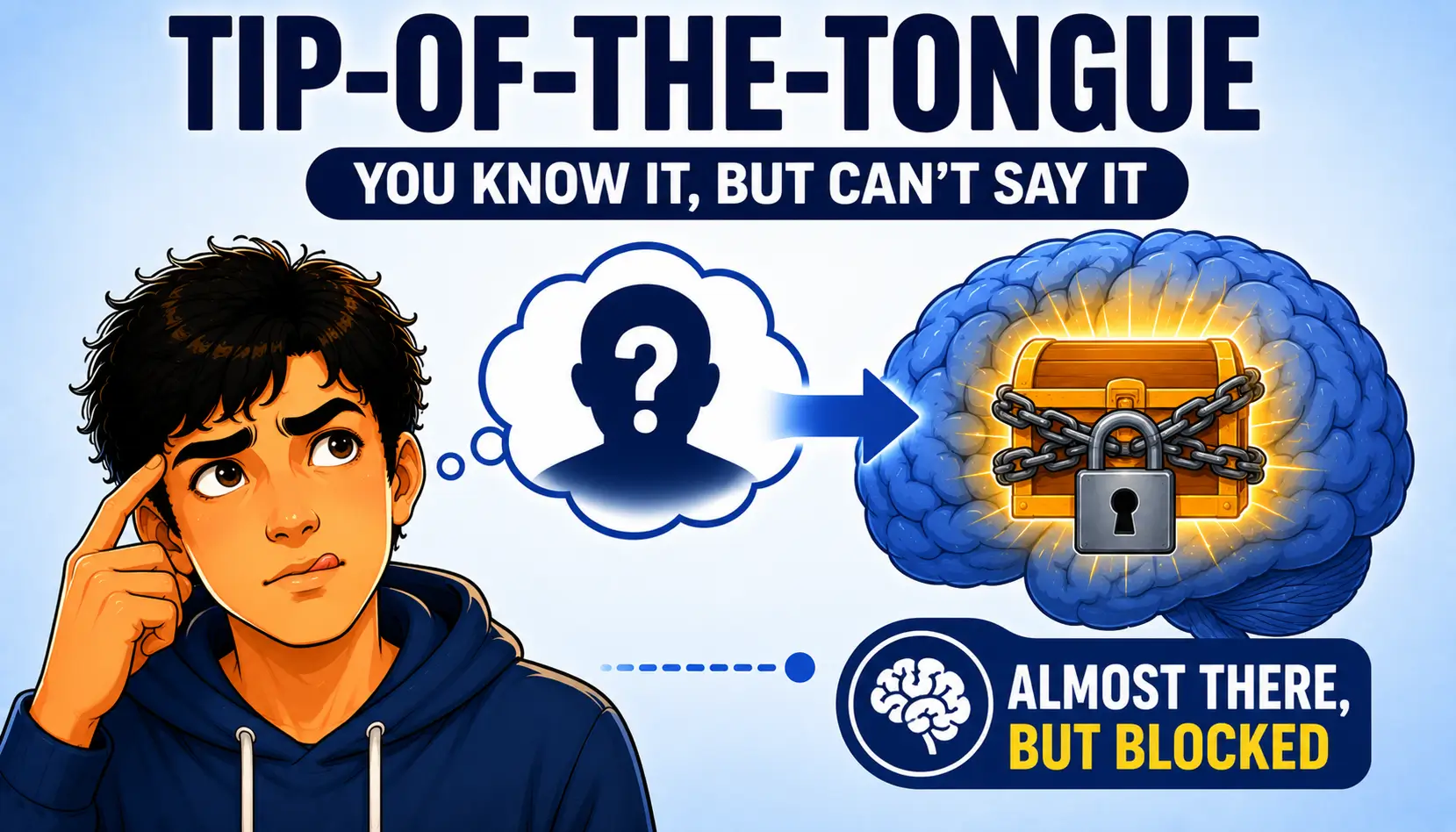
One of the most famous examples of retrieval failure is the tip-of-the-tongue experience.
During these moments, people feel certain that they know a word, name, or fact but cannot fully retrieve it.
They may remember partial details such as the first letter, the number of syllables, or related information.
Eventually, the missing information often appears suddenly, sometimes hours later.
This phenomenon provides strong evidence that information may remain stored even when retrieval temporarily fails.


Why Retrieval Failure Happens
Several factors can contribute to retrieval failure.
- Weak retrieval cues.
- Insufficient encoding during learning.
- Interference from competing memories.
- Changes in context or mental state.
- Long periods without retrieval practice.
In many situations, the information itself remains available, but access to it becomes more difficult.
This helps explain why a memory may seem completely forgotten one moment and suddenly return the next.
Retrieval Failure and Retrieval Cues
For the bigger picture of how encoding, storage, retrieval, and forgetting interact, see the Complete Guide to Memory.
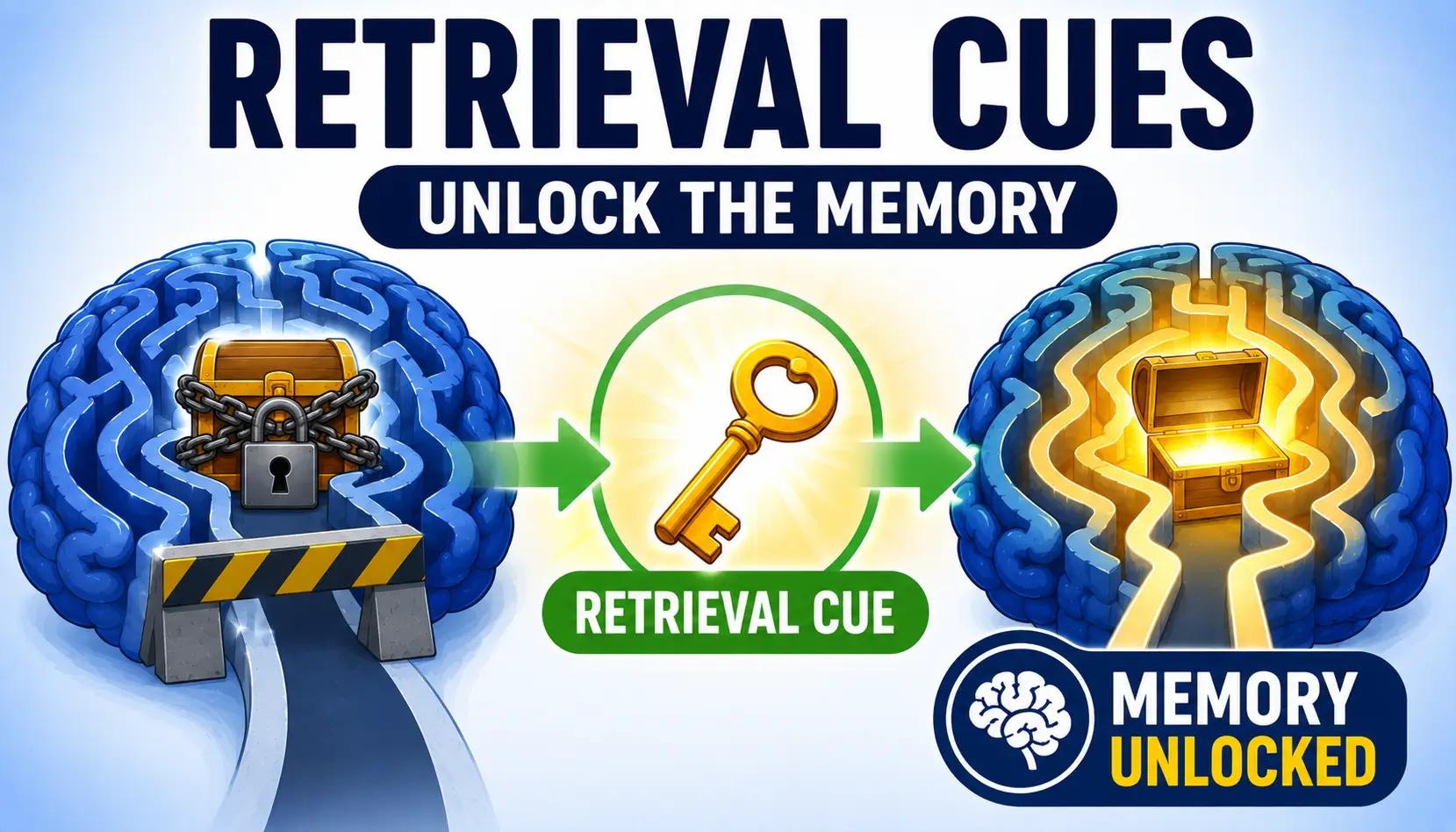
Retrieval cues are among the most important factors affecting successful recall.
A retrieval cue is any stimulus that helps activate stored information.
Examples include sounds, images, locations, emotions, smells, or related facts.
Research has shown that effective cues can dramatically improve recall performance.
This is one reason why Retrieval Cues play such an important role in memory psychology.
When the appropriate cue becomes available, previously inaccessible information often becomes easier to retrieve.
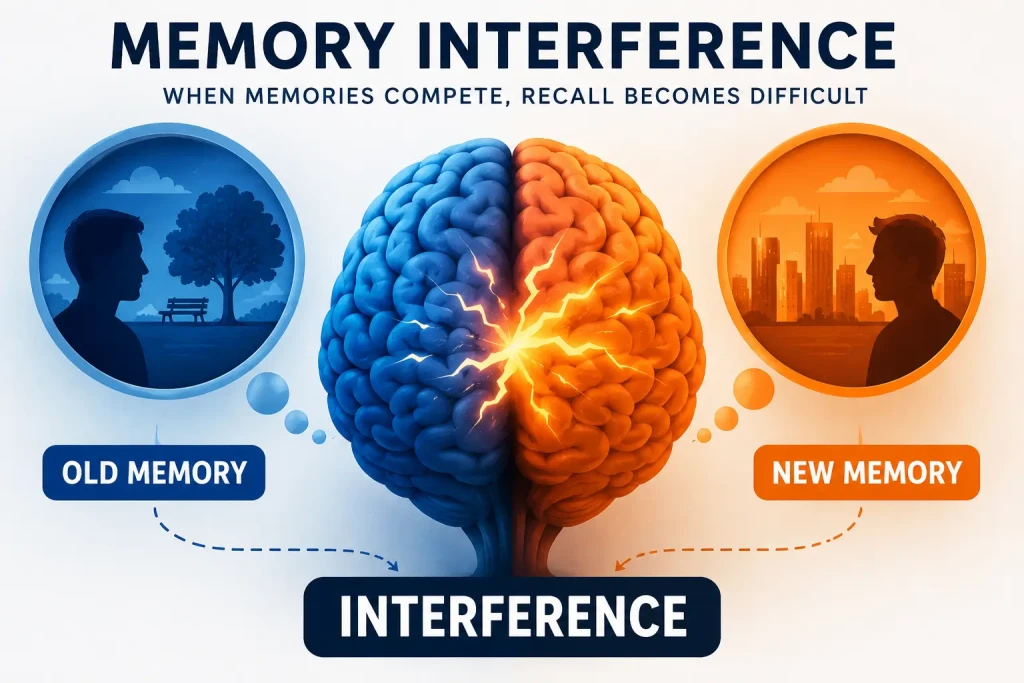
Retrieval Failure and Memory Interference
Retrieval failure is closely related to memory interference.
When multiple memories share similar characteristics, they may compete during recall.
This competition can temporarily block access to the desired information even though it remains stored in memory.
For example, a newly learned password may interfere with an older password, or vice versa.
Researchers studying Memory Interference have found that competing memories are a major contributor to retrieval problems.
Context, State, and Retrieval Success
If you want the practical side of successful remembering once a cue is available, Recall Memory explains how the brain retrieves stored information during active recall.
Recall often improves when retrieval conditions match the conditions present during learning.
This principle helps explain why people sometimes remember information more easily in familiar environments.
Similar effects can occur with emotional states, physical conditions, and mental contexts.
Research on Context-Dependent Memory and State-Dependent Memory demonstrates how matching cues can improve retrieval performance.
When important cues are absent, retrieval failure becomes more likely.
How to Reduce Retrieval Failure
Although retrieval failure is common, several evidence-based strategies can improve recall.
- Use active recall instead of passive review.
- Create multiple retrieval cues during learning.
- Practice spaced repetition.
- Study in different environments.
- Review information regularly.
- Connect new information to existing knowledge.
These techniques strengthen retrieval pathways and increase the likelihood that information can be successfully accessed when needed.
Research consistently shows that repeated retrieval practice improves long-term accessibility of stored memories.
Retrieval Failure and Learning
Students often mistake retrieval failure for a lack of learning.
However, difficulty recalling information does not necessarily mean the information was never learned.
In many cases, the memory exists but requires stronger retrieval cues or additional retrieval practice.
This distinction is important because it encourages learners to focus on improving retrieval rather than simply re-reading material.
Understanding retrieval failure can help students develop more effective study strategies and improve long-term retention.
FAQ
What is retrieval failure?
Retrieval failure occurs when information remains stored in memory but cannot be successfully accessed at a particular moment.
Does retrieval failure mean the memory is gone?
No. Retrieval failure suggests that the information may still exist in memory but is temporarily inaccessible.
What causes retrieval failure?
Common causes include weak retrieval cues, memory interference, insufficient encoding, and changes in context or mental state.
How can retrieval failure be reduced?
Active recall, spaced repetition, retrieval cues, and regular review can strengthen retrieval pathways and improve recall performance.
Readers interested in supporting cognitive performance and memory health can learn more about Advanced Memory Formula, a supplement designed to support healthy brain function and long-term memory performance.
Related Topics
- Memory Retrieval Explained: How the Brain Accesses Stored Information
- What Are Retrieval Cues? The Psychology Behind Memory Recall and Retrieval
- Memory Interference Explained: How Old and New Memories Compete During Recall
- Encoding Specificity Principle: The Psychology Behind Memory Retrieval and Recall
Sources
- https://dictionary.apa.org/retrieval-failure
- https://openstax.org/books/psychology-2e/pages/8-1-how-memory-functions
- https://www.simplypsychology.org/memory.html