
Now Reading: Recognition Memory Explained: How the Brain Identifies Familiar Information
-
01
Recognition Memory Explained: How the Brain Identifies Familiar Information
Recognition Memory Explained: How the Brain Identifies Familiar Information
Why is it often easier to recognize the correct answer on a multiple-choice test than to recall it from memory without any hints?
Why can you instantly recognize a familiar face in a crowd but struggle to remember the person’s name?
These common experiences highlight the power of recognition memory.
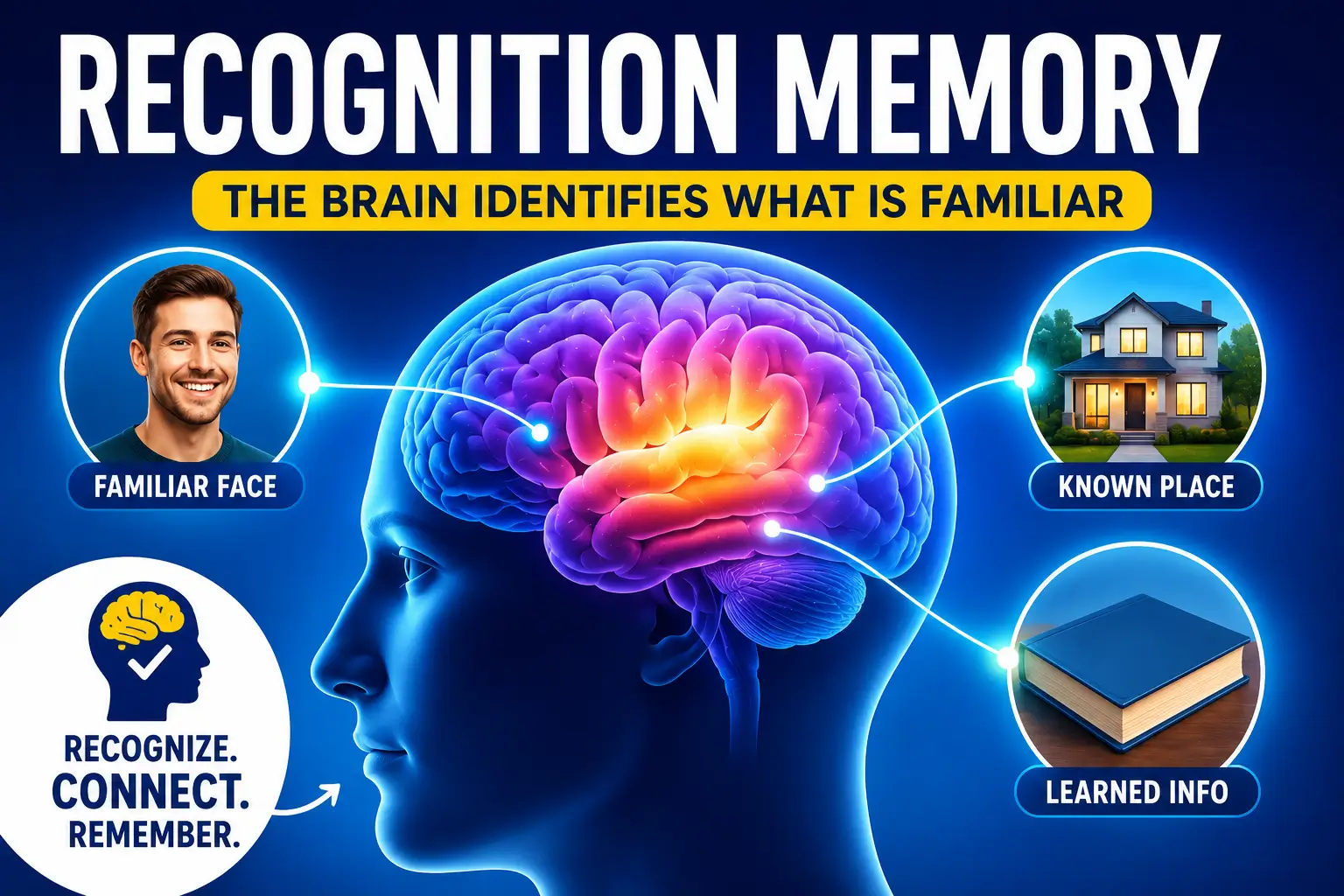
Recognition memory is the ability to identify information, people, objects, or experiences that have been encountered before. Unlike free recall, which requires generating information without assistance, recognition relies on detecting familiarity when the information is presented again.
Recognition memory plays a central role in learning, decision-making, social interactions, and everyday functioning. It allows people to navigate the world efficiently by quickly identifying what is known and what is new.
Understanding recognition memory helps explain how information is stored, retrieved, and used throughout daily life.
What Is Recognition Memory?
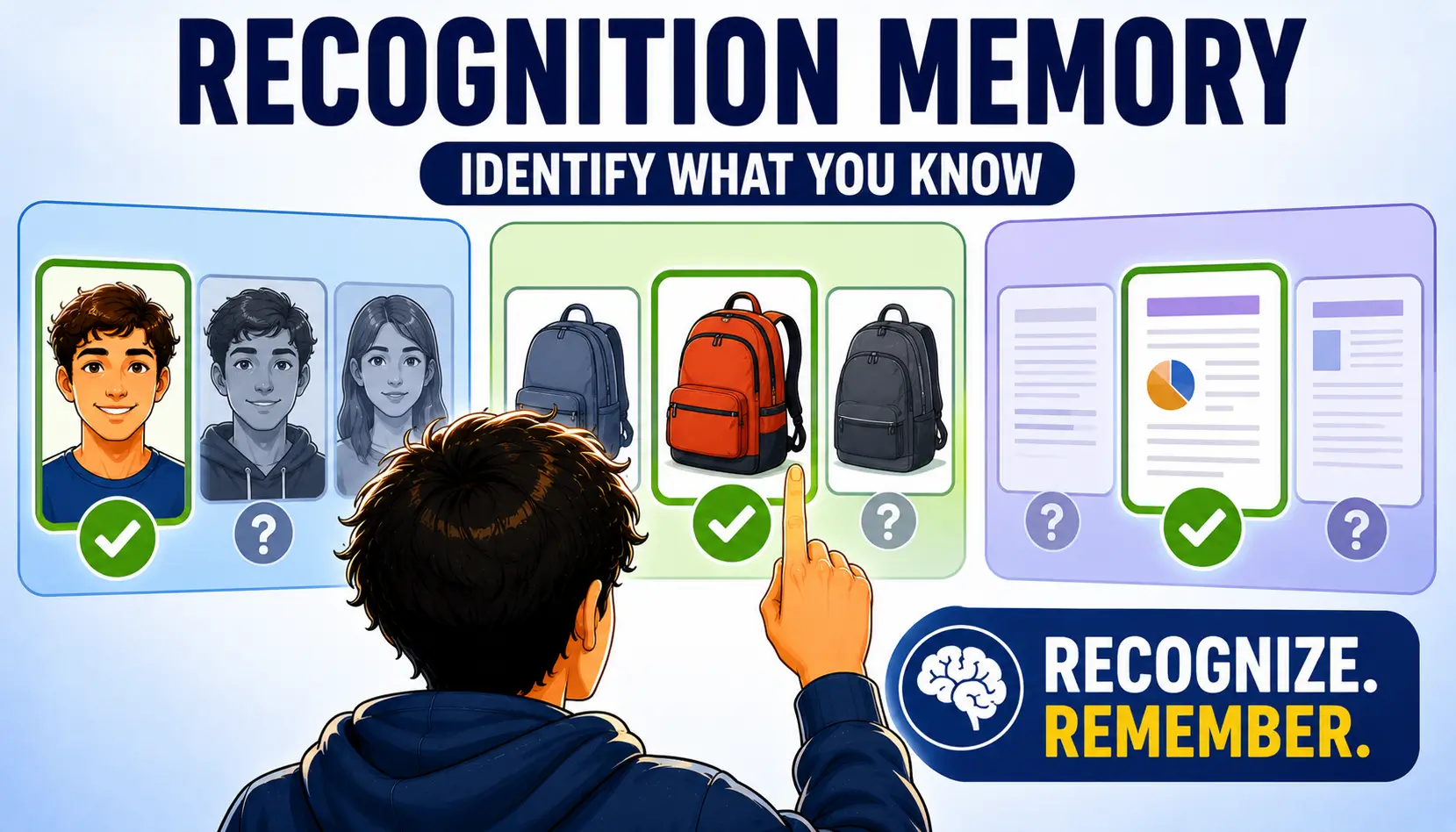
Recognition memory refers to the ability to determine whether information has been encountered before.
Rather than generating information from memory independently, recognition occurs when a person is presented with information and judges whether it feels familiar.
For example, recognizing a former classmate, identifying a previously visited location, or selecting the correct answer on a quiz all rely on recognition memory.
Recognition is generally easier than recall because external information is provided during the retrieval process.
This distinction is one reason why multiple-choice tests often feel easier than essay examinations.
Recognition memory works closely with Memory Retrieval, but it involves a different type of access to stored information.
Recognition vs Recall
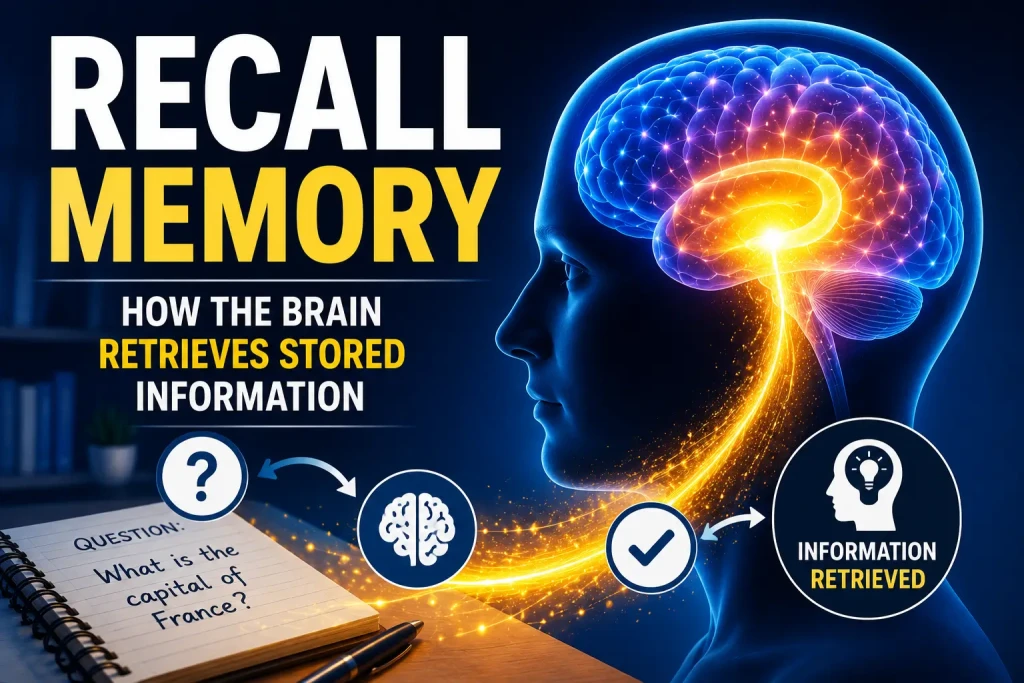
For the complementary process that requires generating information rather than identifying it, read Recall Memory.
Recognition and recall are both retrieval processes, but they require different levels of effort.
Recall requires generating information without external assistance.
Recognition requires identifying information when it is presented.
- Recall: remembering a friend’s phone number from memory.
- Recognition: identifying the correct phone number from a list.
- Recall: answering an essay question.
- Recognition: selecting an answer from multiple choices.
Because recognition provides retrieval support, performance is usually higher than free recall.


The Two Components of Recognition Memory
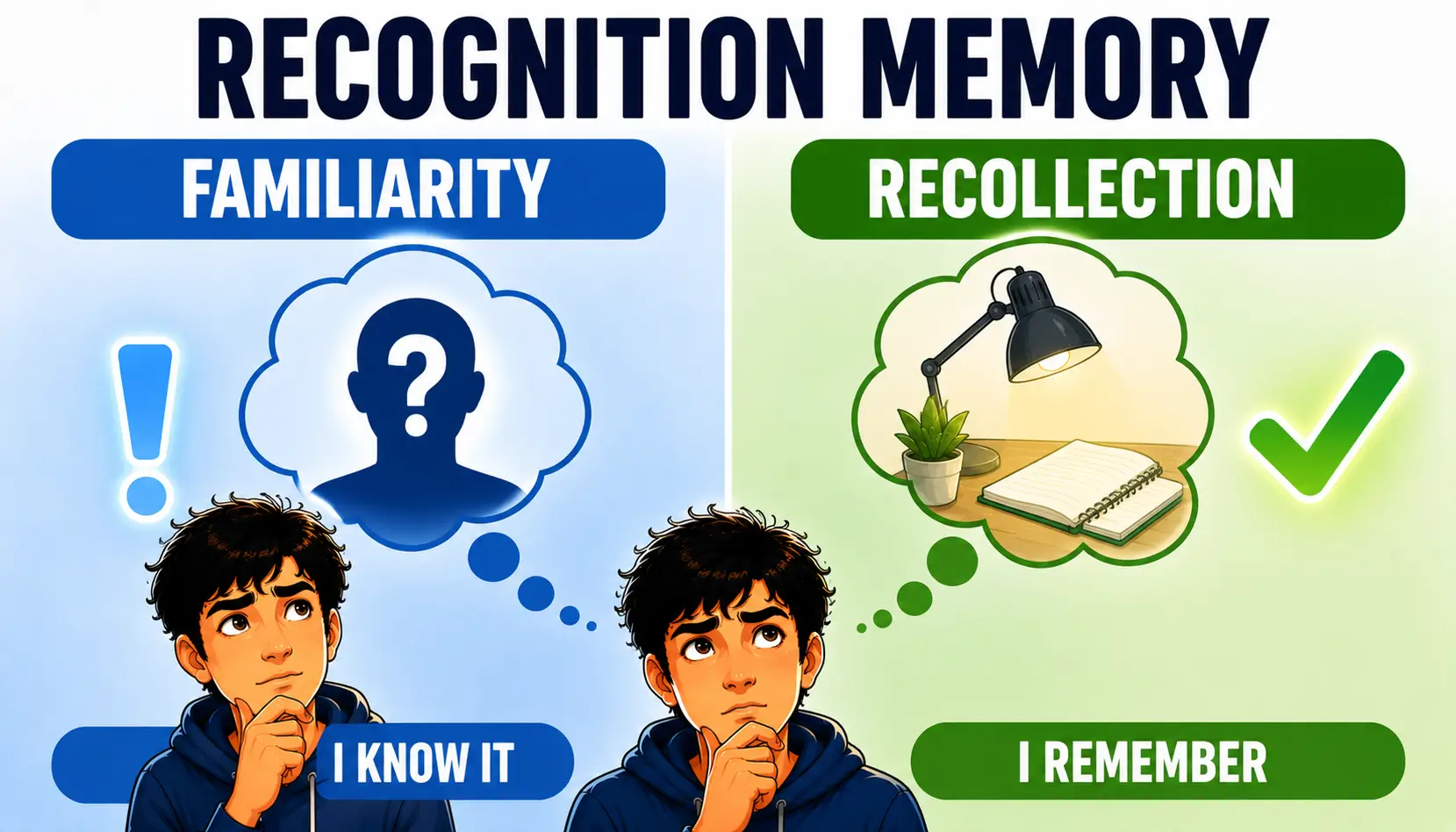
Researchers often describe recognition memory as involving two separate processes.
Familiarity
Familiarity is the feeling that something has been encountered before without necessarily remembering specific details.
For example, you may recognize a face but be unable to remember where you know the person from.
Recollection
Recollection involves retrieving specific details about a previous experience.
Instead of simply feeling familiarity, recollection provides contextual information, such as when, where, and how the memory was formed.
Together, familiarity and recollection create the recognition experiences people rely on every day.
How Recognition Memory Works in the Brain
Recognition memory depends on multiple brain regions working together.
The hippocampus plays an important role in recollection, while surrounding medial temporal lobe structures contribute to familiarity judgments.
These systems allow the brain to rapidly evaluate incoming information and determine whether it has been encountered before.
When recognition succeeds, the brain matches current input with stored representations from previous experiences.
This process occurs remarkably quickly and often without conscious effort.
Recognition Memory in Everyday Life
Recognition memory supports countless daily activities.
People use recognition when identifying friends, reading familiar words, recognizing songs, locating previously visited places, and navigating digital interfaces.
Without recognition memory, routine tasks would become significantly more difficult because every encounter would feel entirely new.
Recognition allows the brain to process information efficiently by leveraging previous experiences.
This ability reduces cognitive effort and supports faster decision-making.
Recognition Memory and Learning
Recognition memory plays an important role in education and skill development.
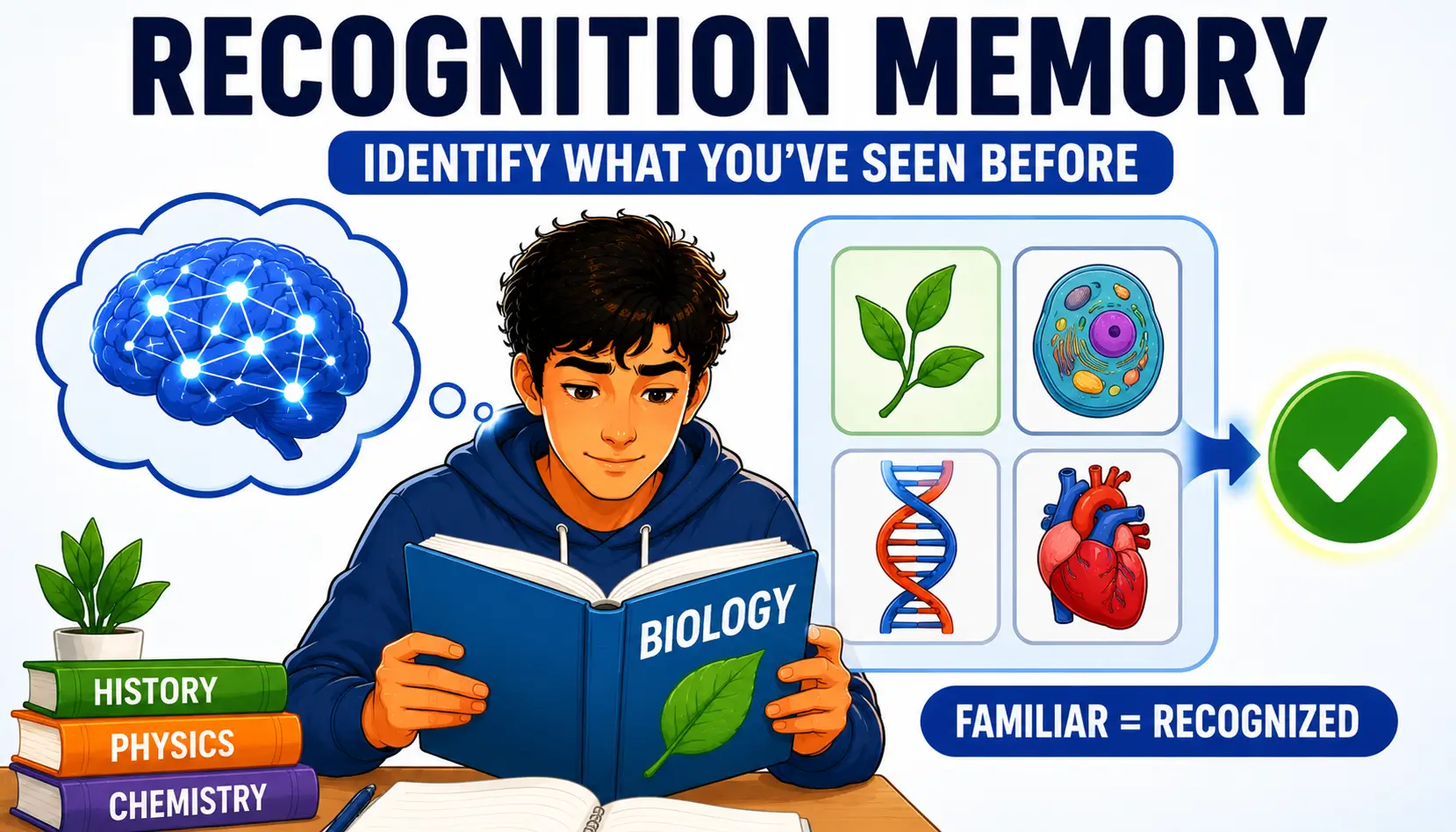
Students frequently rely on recognition when reviewing flashcards, answering multiple-choice questions, and identifying previously learned concepts.
However, recognition can sometimes create an illusion of learning.
Simply recognizing information does not necessarily mean it can be recalled independently.
This is one reason why researchers often recommend combining recognition-based review with Active Recall practice.
Active retrieval strengthens memory more effectively than familiarity alone.
Recognition Memory and Long-Term Memory
To see where recognition fits inside the larger architecture of memory systems, storage, and retrieval, visit the Complete Guide to Memory.
Recognition memory depends heavily on information stored within long-term memory.
The stronger and more stable a memory becomes, the easier it is to recognize later.
Processes such as encoding, consolidation, and retrieval all contribute to successful recognition.
This relationship explains why frequently encountered information often feels instantly familiar even after long periods of time.
Recognition memory therefore provides valuable insight into the overall strength and accessibility of long-term memory representations.
Why Recognition Is Usually Easier Than Recall
Recognition provides external retrieval support.
When information is presented, the brain only needs to determine whether it matches a stored memory.
Recall requires generating information without assistance, which demands greater retrieval effort.
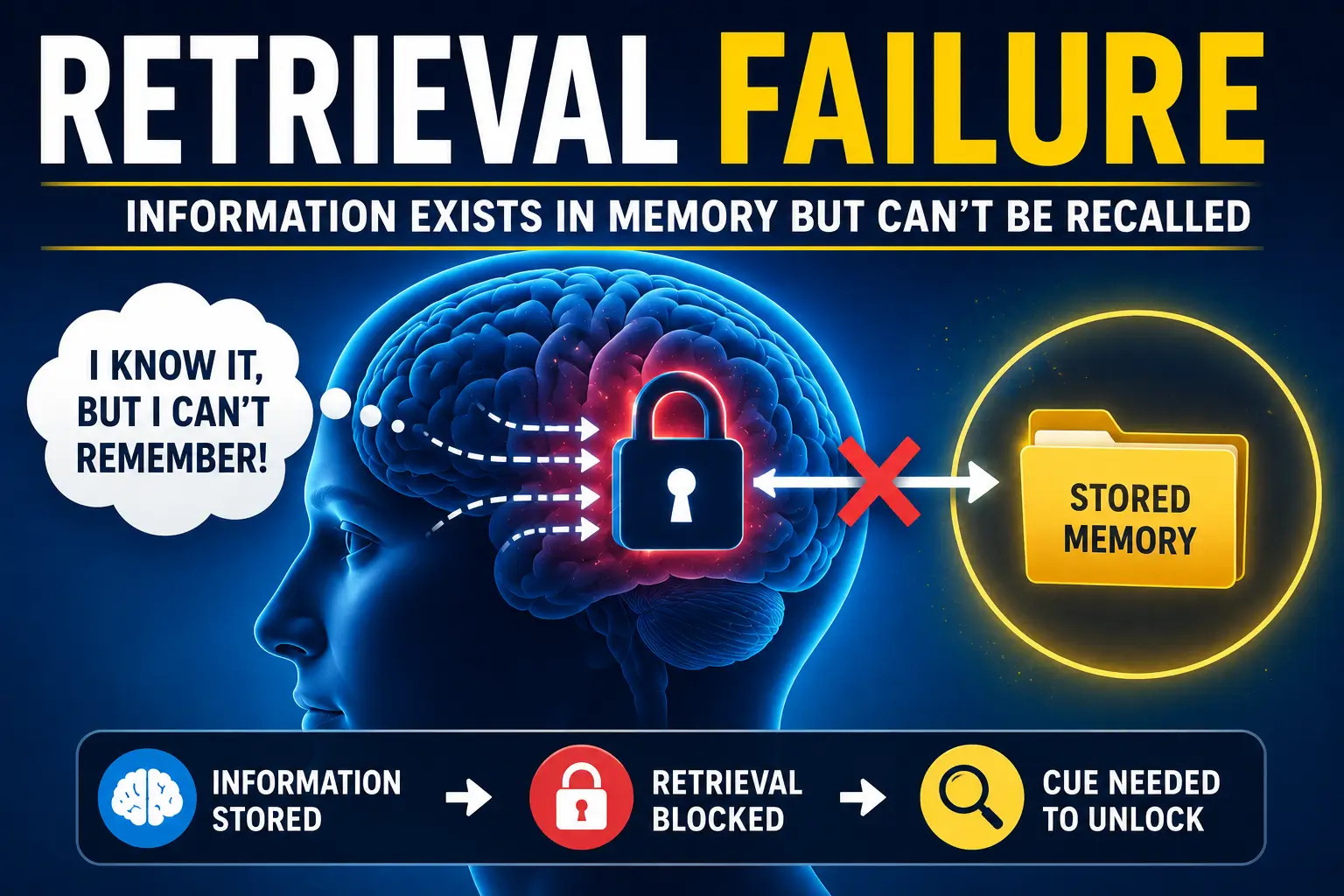
This difference explains why people often recognize an answer immediately after struggling to remember it. This experience is closely related to retrieval failure, which occurs when stored information cannot be successfully recalled at a particular moment.
Recognition and recall work together, but recognition generally places fewer demands on memory systems.
FAQ
What is recognition memory?
Recognition memory is the ability to identify information, people, objects, or experiences that have been encountered previously.
What is the difference between recognition and recall?
Recognition involves identifying information when it is presented, while recall requires generating information without external cues.
Why is recognition easier than recall?
Recognition provides retrieval support through presented information, reducing the amount of effort required to access stored memories.
What brain regions support recognition memory?
The hippocampus and other medial temporal lobe structures play important roles in recognition memory, familiarity judgments, and recollection.
Readers interested in supporting cognitive performance and memory health can learn more about Advanced Memory Formula, a supplement designed to support healthy brain function and long-term cognitive wellness.
Related Topics
- Memory Retrieval Explained: How the Brain Accesses Stored Information
- What Are Retrieval Cues? The Psychology Behind Memory Recall and Retrieval
- Episodic Memory Explained: How Your Brain Stores Personal Experiences
- Semantic Memory Explained: How Your Brain Stores Facts, Concepts, and Knowledge
Sources
- https://www.ncbi.nlm.nih.gov/books/NBK547695/
- https://dictionary.apa.org/recognition-memory
- https://www.britannica.com/science/recognition-memory