
Now Reading: Episodic Memory Explained: How Your Brain Stores Personal Experiences
-
01
Episodic Memory Explained: How Your Brain Stores Personal Experiences
Episodic Memory Explained: How Your Brain Stores Personal Experiences
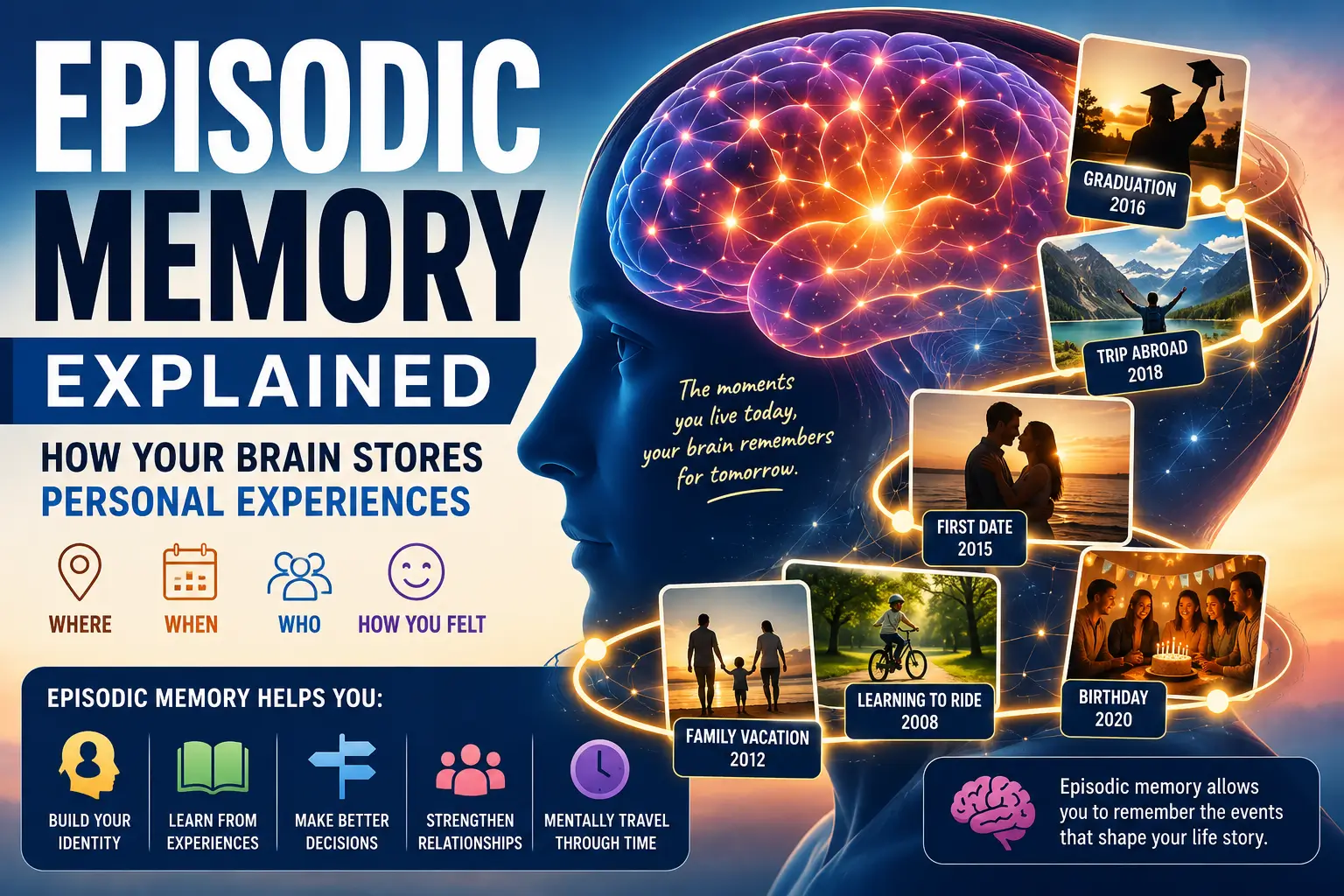
Think about your last birthday.
You may remember who was there, what you ate, conversations you had, or even how you felt during the celebration.
Perhaps you can recall your first day at school, a memorable vacation, or an important life event from years ago.
These memories belong to a special type of memory system known as episodic memory.
Episodic memory allows people to mentally travel back in time and revisit personal experiences.
It helps create a sense of personal history and plays a central role in how individuals understand themselves and their lives.
Without episodic memory, many of the experiences that shape identity would be difficult to access.
What Is Episodic Memory?
Episodic memory is a type of long-term memory responsible for storing personal experiences and specific events.
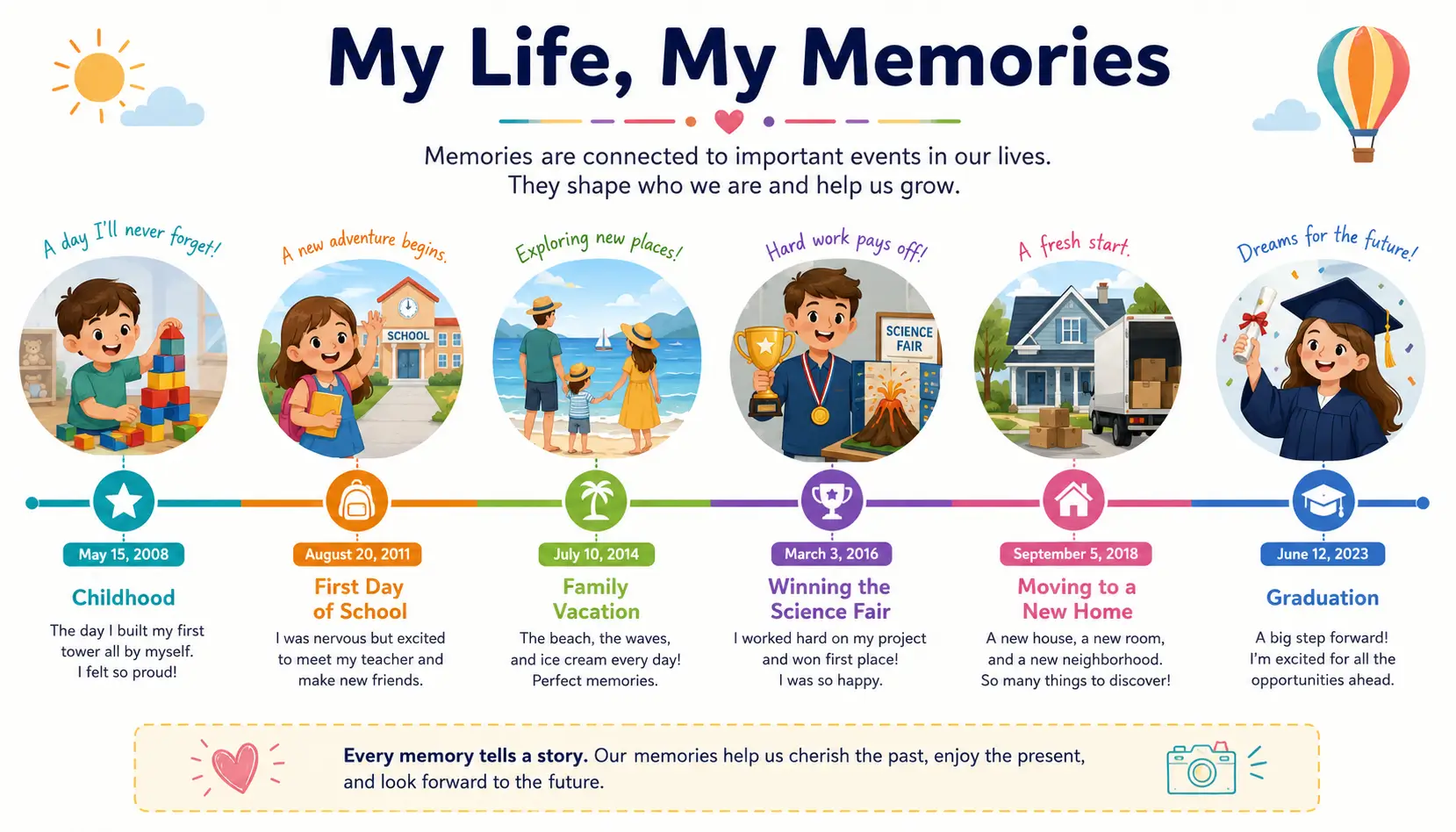
Unlike general knowledge, episodic memories are tied to particular times and places.
They often include contextual details such as:
- Who was involved
- Where the event occurred
- When it happened
- What emotions were experienced
Episodic memory allows people to remember events as experiences rather than simply facts.
It forms a major component of Long-Term Memory.
Why Episodic Memory Matters
Episodic memory contributes to far more than remembering the past.
It helps people:
- Build personal identity
- Learn from previous experiences
- Plan future actions
- Make decisions
- Maintain social relationships
- Develop self-awareness
Personal experiences provide valuable information that guides future behavior.
Episodic memory helps preserve those experiences for later use.


🔬 The Science Behind Episodic Memory
The concept of episodic memory was introduced by cognitive psychologist Endel Tulving.
He proposed that episodic memory differs from other forms of memory because it allows individuals to mentally re-experience past events.
Rather than simply knowing that something happened, people can often remember details surrounding the experience.
This ability is sometimes described as “mental time travel.”
Source: https://www.ncbi.nlm.nih.gov/books/NBK537287/
Episodic memory allows people to revisit moments from their own lives.
Episodic Memory vs Semantic Memory
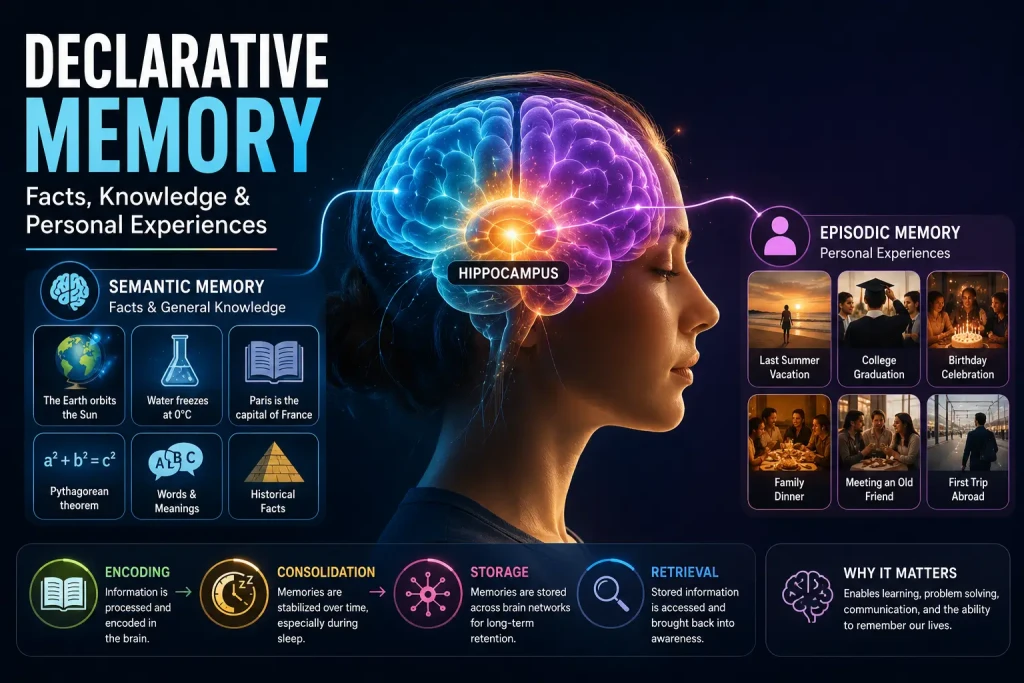
Episodic memory is often compared to Semantic Memory.
Although both belong to long-term memory, they serve different purposes.
Episodic memory stores experiences.
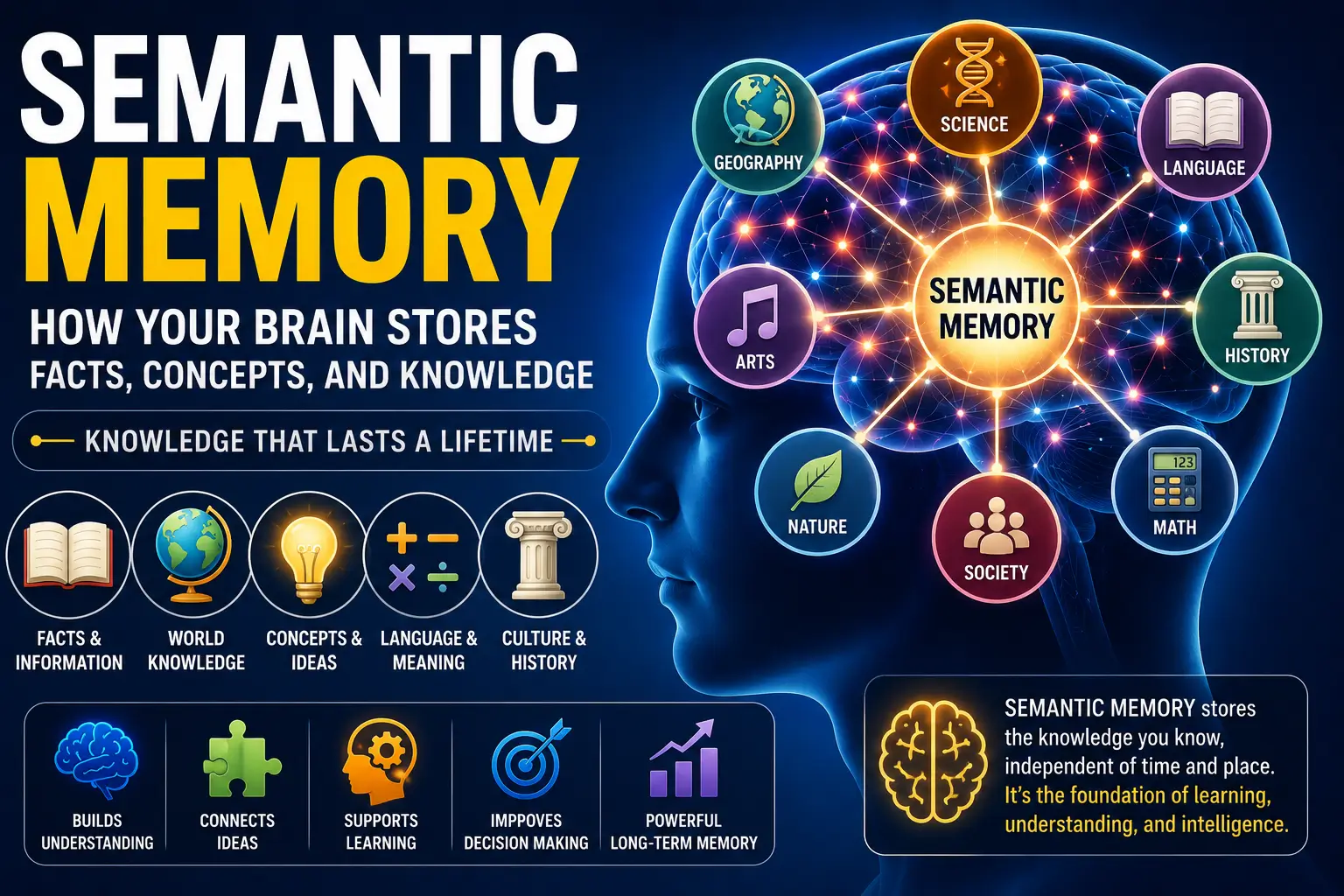
Semantic memory stores facts and knowledge.
For example:
- Remembering your graduation ceremony is episodic memory.
- Knowing that a graduation marks academic completion is semantic memory.
The two systems often work together, but they represent different forms of remembering.
How Episodic Memories Are Formed
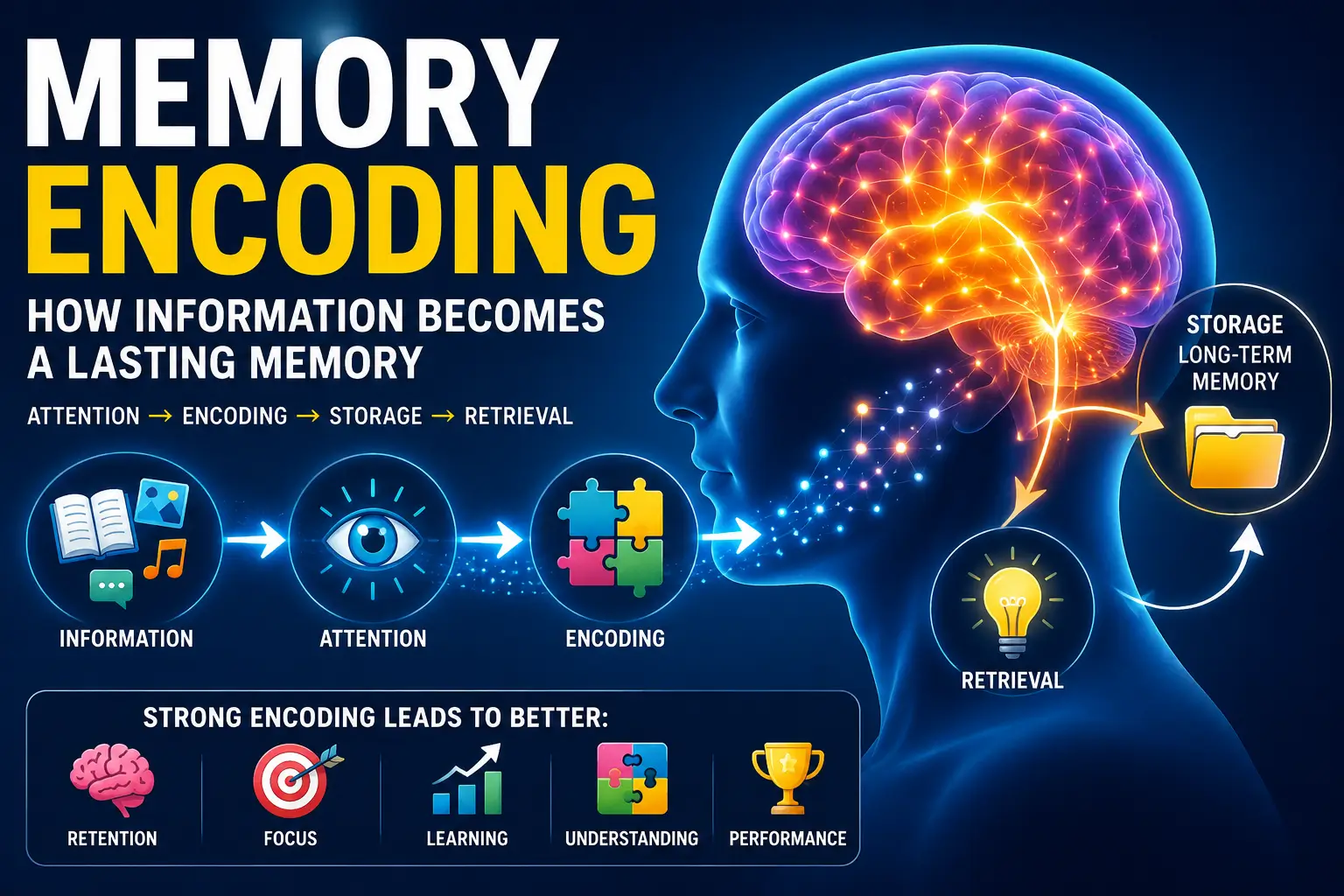
Episodic memories begin with Memory Encoding.
Experiences that receive sufficient attention are encoded into memory systems.
As information is processed, details about the event become associated with people, locations, emotions, and timing.
The richer these associations become, the more memorable the experience may be.
Encoding creates the initial memory trace that can later be consolidated and stored.
The Role of Emotion in Episodic Memory
Highly emotional episodic events can sometimes feel unusually vivid, a phenomenon explored in flashbulb memory.
Emotion often strengthens episodic memory.
Highly emotional experiences tend to be remembered more vividly than routine events.
This does not necessarily mean memories become perfectly accurate.
However, emotional significance frequently increases attention and processing during encoding.
As a result, emotionally meaningful experiences often remain accessible for longer periods.
Episodic Memory and Memory Consolidation
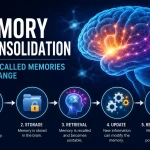
After an experience has been encoded, it must be stabilized through Memory Consolidation.
Consolidation helps transform fragile memories into more durable forms.
Without consolidation, many newly acquired experiences would quickly fade.
This process helps explain why memories often become more stable over time.
How Sleep Supports Episodic Memory
Research suggests that sleep plays an important role in episodic memory formation.
During sleep, recently encoded experiences may undergo additional processing.
This relationship is explored further in Sleep and Memory Consolidation.
Many researchers believe that sleep helps support the stabilization of newly formed episodic memories.
For this reason, quality sleep is often considered essential for effective learning and memory.
Why Some Experiences Are Forgotten
Not every experience becomes a lasting memory.
Many events receive limited attention and weak encoding.
Others are never revisited or reinforced.
Over time, these memories may become difficult to retrieve.
This process relates closely to principles described by the Forgetting Curve.
Retrieving Episodic Memories
Episodic memory does not simply store experiences.
It also allows those experiences to be retrieved when needed.
Retrieval occurs when the brain reconstructs aspects of a previous event.
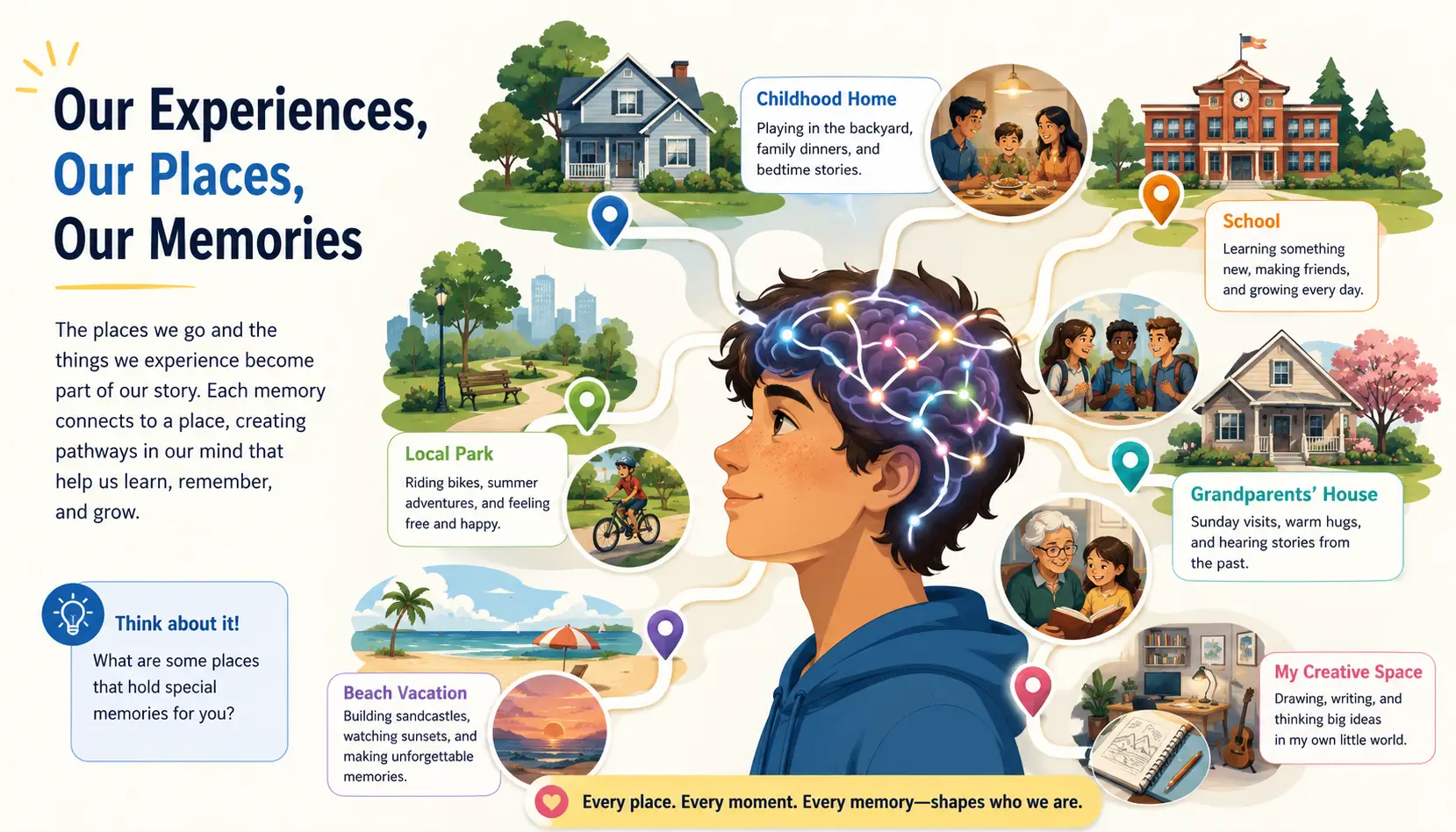
This process often involves recalling details about people, places, emotions, and circumstances associated with the original experience.
Successful retrieval depends on how well the memory was encoded and consolidated.
Why Memory Cues Matter
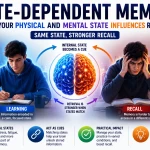
These cues often become even more powerful when they match the original setting, which is why context-dependent memory can improve access to past experiences.
Episodic memories are often triggered by retrieval cues.
A familiar song, photograph, scent, or location can suddenly bring a forgotten memory back into awareness.
These cues help reactivate pathways connected to the original experience.
The stronger the association between a cue and a memory, the easier retrieval often becomes.
This principle helps explain why certain memories can remain accessible for decades.
Episodic Memory and Learning
Although episodic memory is often associated with life experiences, it also contributes to learning.
Students frequently remember lessons by recalling the situations in which learning occurred.
Specific classroom experiences, conversations, examples, and demonstrations can become episodic memories.
These experiences often provide additional retrieval pathways that support understanding and recall.
Learning becomes more memorable when information is connected to meaningful experiences.
How Memory Techniques Use Episodic Principles
Many memory improvement techniques take advantage of mechanisms similar to episodic memory.
For example, the Memory Palace and Method of Loci rely on creating vivid mental experiences connected to familiar locations.
These techniques strengthen memory by making information feel more personally meaningful and easier to visualize.
The brain often remembers experiences more effectively than isolated facts.
This is one reason location-based memory systems can be highly effective.
Can Episodic Memories Change?
Because recalled experiences can be reshaped over time, they are also relevant to false memory, where remembered details no longer match reality exactly.
Many people assume memories function like recordings.
However, memory research suggests that episodic memories can be reconstructed each time they are retrieved.
Details may be strengthened, weakened, or occasionally altered over time.
This does not mean memories are unreliable.
Rather, memory is an active process that continually updates and reorganizes information.
Human remembering is often more flexible than many people realize.
Episodic Memory and Personal Identity
This identity-building role overlaps closely with autobiographical memory, which organizes personal life events into a coherent sense of self.
Episodic memory plays a major role in shaping personal identity.
People understand who they are partly through memories of past experiences.
Life events, achievements, relationships, successes, and challenges contribute to an ongoing personal narrative.
Episodic memory helps preserve this narrative across time.
Without access to personal experiences, maintaining a continuous sense of self would become much more difficult.
Ways to Strengthen Episodic Memory
Several evidence-based habits may support episodic memory formation and retention.
- Pay close attention during important experiences
- Create meaningful associations
- Use visualization techniques
- Practice active recall
- Maintain healthy sleep habits
- Reduce distractions during learning
- Review important information periodically
These strategies support the encoding and consolidation processes that help memories become more durable.
Episodic Memory and Long-Term Retention
Episodic memory represents one part of a broader memory system.
It works alongside Semantic Memory, Working Memory, and other forms of long-term memory.
Together, these systems help people learn, remember, solve problems, and navigate daily life.
Strong episodic memory supports the preservation of meaningful experiences while contributing to future learning and decision-making.
The Stories That Shape Our Lives
Episodic memory allows people to revisit moments that define who they are.
From childhood experiences to important life milestones, these memories provide continuity across time.
They connect the past to the present and help guide future choices.
Every personal experience that becomes a memory contributes to an individual’s unique story.
Episodic memory is the system that allows us to remember the experiences that make us who we are.
Understanding how episodic memory works can help learners appreciate the role of attention, encoding, consolidation, and retrieval in preserving life’s most meaningful moments.
Supporting Memory Beyond Daily Experiences
Long-term memory performance depends on many factors, including sleep quality, memory consolidation, retrieval practice, and overall brain health.
Many people combine evidence-based learning strategies with broader approaches that support cognitive function throughout life.
Readers interested in memory-supportive nutritional strategies can learn more about Advanced Memory Formula.
Related Topics
- Semantic Memory Explained: How Your Brain Stores Facts, Concepts, and Knowledge
- Long-Term Memory: How Information Is Stored, Retained, and Retrieved
- Memory Consolidation Explained: How Your Brain Turns Learning Into Long-Term Memory
- Memory Palace Technique: Build Powerful Mental Maps for Better Recall