
Now Reading: Dual Coding Theory: Learn Faster by Combining Words and Images
-
01
Dual Coding Theory: Learn Faster by Combining Words and Images
Dual Coding Theory: Learn Faster by Combining Words and Images
Have you ever noticed how some information seems to stick instantly while other information disappears almost as quickly as you learn it?
One reason may have nothing to do with intelligence, effort, or study time.
It may have everything to do with how the information was presented.
Imagine trying to learn how a bicycle works by reading a page of text.
Now imagine reading the same explanation while looking at a simple diagram.
For most people, the second experience feels easier.
The information becomes clearer, more memorable, and easier to understand.
This idea forms the foundation of Dual Coding Theory.
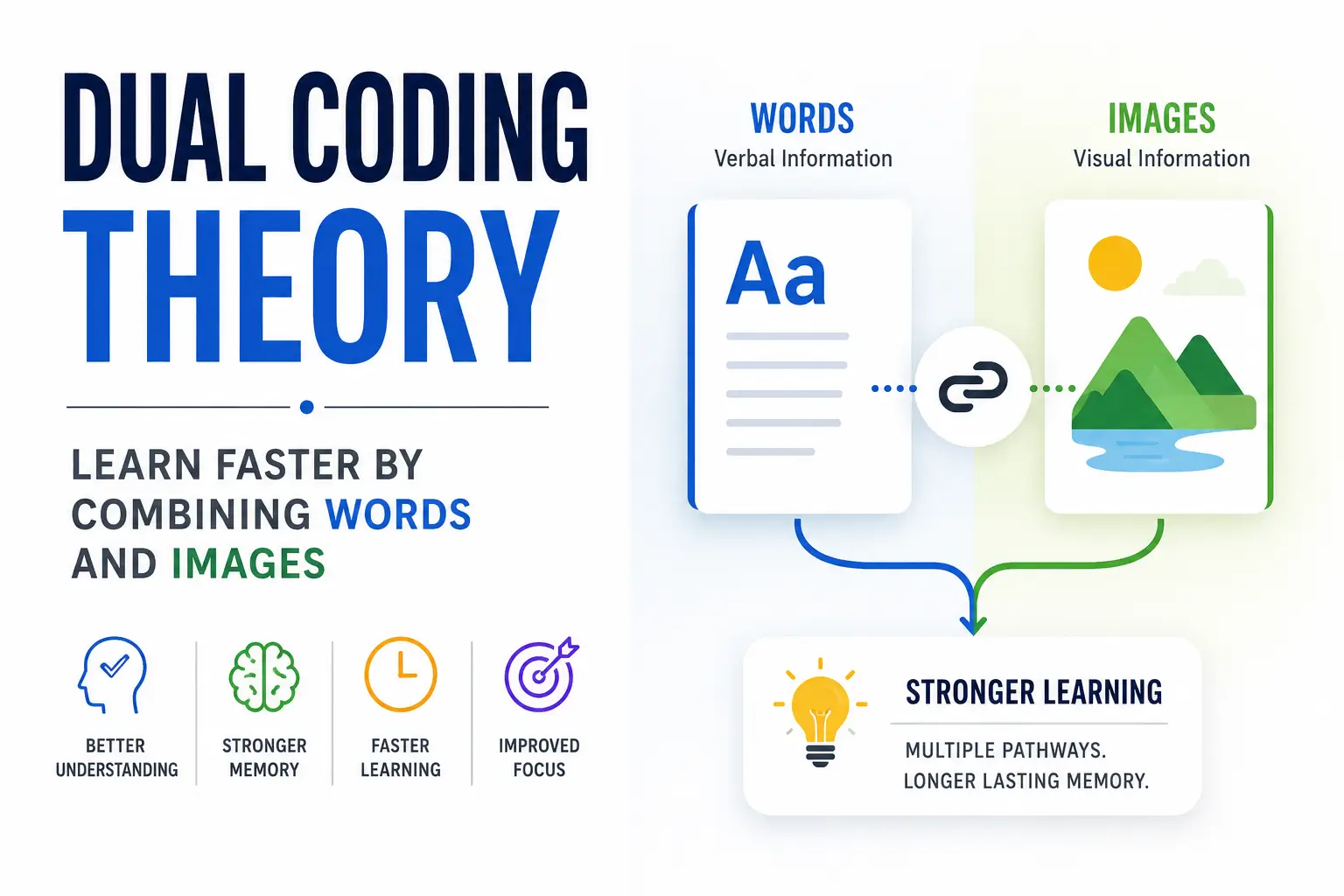
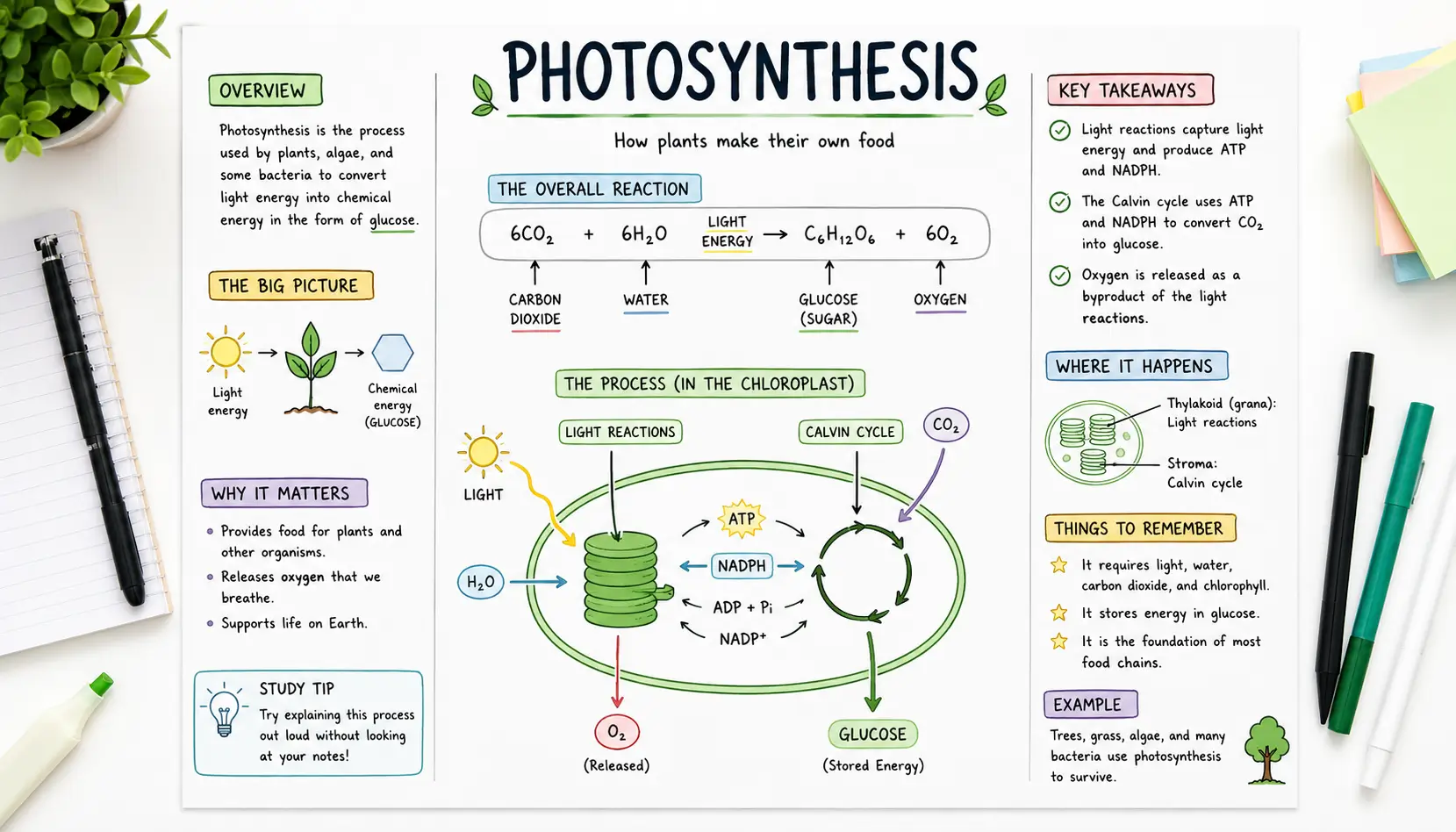
Dual Coding Theory suggests that people learn more effectively when information is presented through both verbal and visual systems rather than words alone.
Instead of relying on a single pathway for learning, dual coding creates multiple routes to the same information.
The result is often better understanding, stronger recall, and more durable memory.
What Is Dual Coding Theory?
Dual Coding Theory was developed by psychologist Allan Paivio in the 1970s.
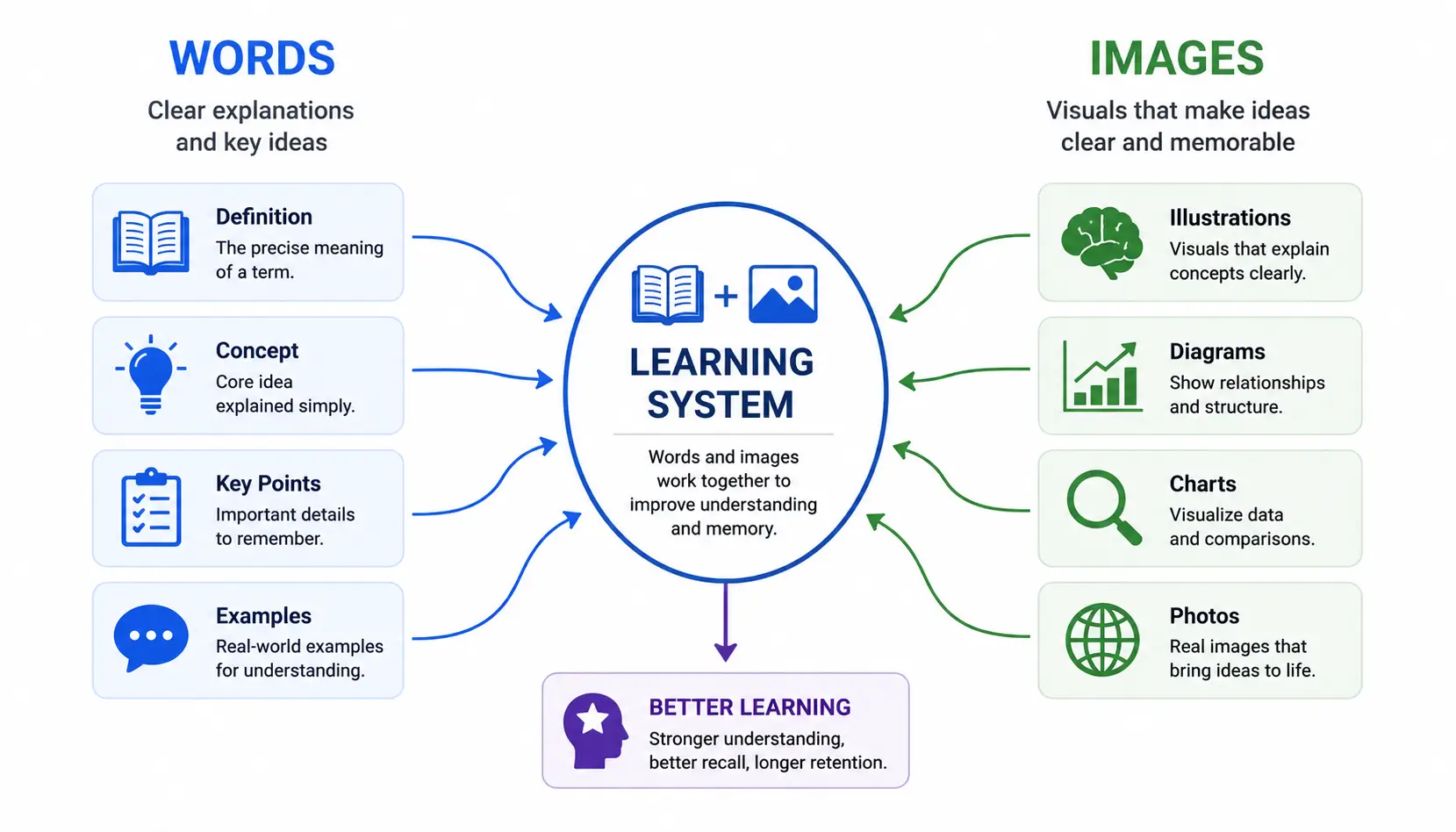
The theory proposes that the human brain processes information through two primary systems:
- Verbal information (words, language, text)
- Visual information (images, diagrams, symbols)
When information is encoded through both systems, learning often becomes more effective.
Instead of creating a single memory representation, the brain creates multiple representations.
This provides additional retrieval pathways later.
In simple terms:
Information that can be remembered both visually and verbally is often easier to recall.
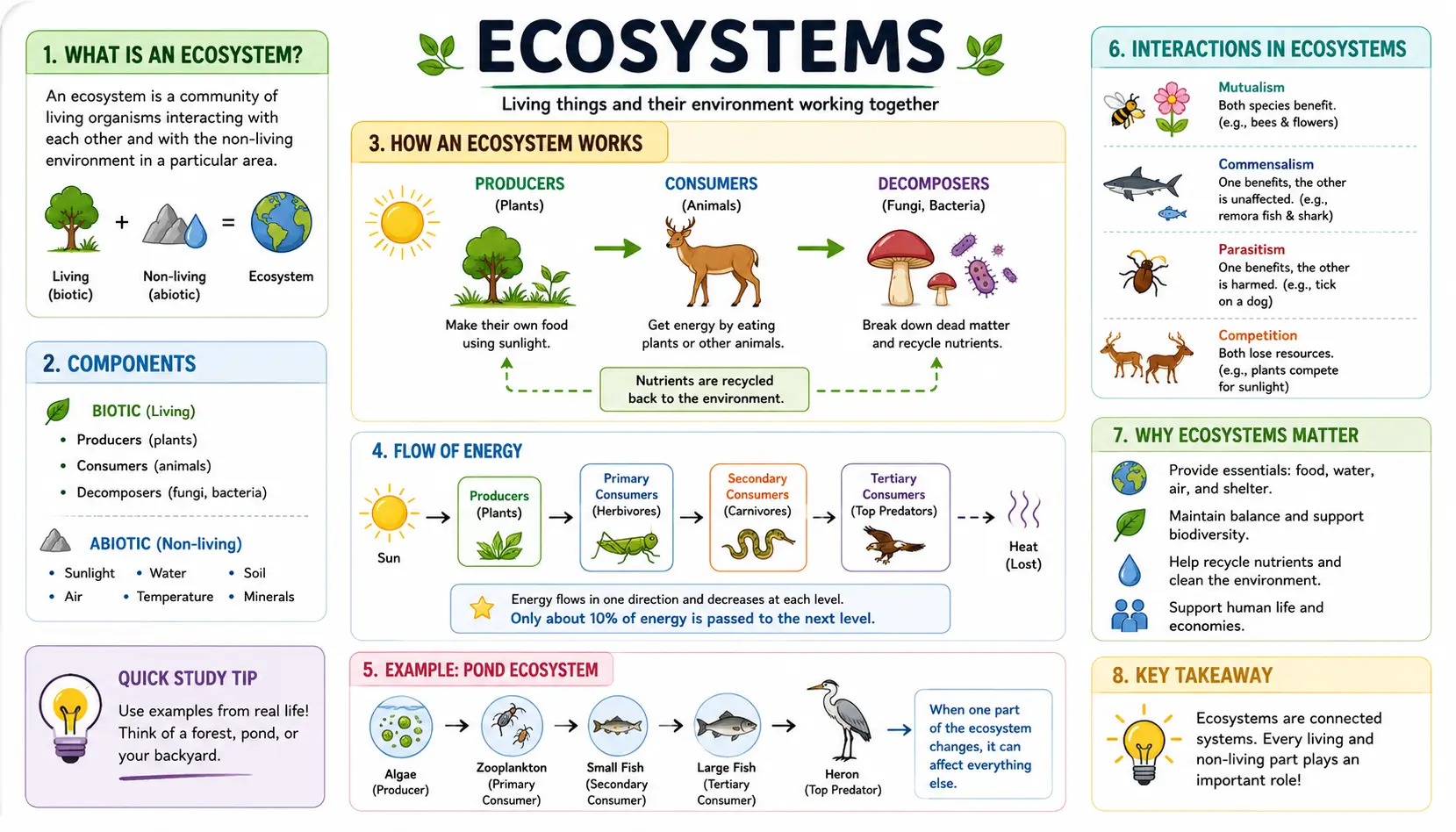
This is why diagrams, charts, illustrations, maps, and visual explanations can be so powerful when combined with clear text.
Why Words Alone Are Sometimes Difficult
Words are powerful, but they are abstract.
When reading text, the brain must actively construct meaning.
For simple concepts, this process happens quickly.
For complex concepts, the process becomes more demanding.
Imagine reading a detailed description of the solar system without seeing a picture.
You can understand it.
But a simple visual often makes the information easier to process.
The image reduces cognitive effort while increasing understanding.
This is one reason educational diagrams remain effective across so many subjects.


How Dual Coding Works in Memory
Suppose you learn a concept using only text.
Later, when you try to remember it, your brain primarily relies on the verbal representation.
Now imagine learning the same concept through both text and imagery.
You may remember:
- The words themselves
- The image associated with them
- The relationship between the two
This creates multiple retrieval routes.
If one pathway is weak, another pathway may still provide access to the memory.
This principle aligns surprisingly well with Active Recall, where stronger retrieval pathways often lead to stronger memory performance.
🔬 The Scientific Foundation of Dual Coding Theory
Research in educational psychology has consistently supported the idea that combining verbal and visual information can improve learning outcomes.
Allan Paivio’s original work established the theoretical foundation, while later research expanded our understanding of multimedia learning and visual processing.
Source: https://psycnet.apa.org/record/1971-22133-000
Research by educational psychologist Richard Mayer further demonstrated that learners often benefit when words and visuals are meaningfully integrated.
Source: https://cambridge.org/core/books/multimedia-learning/
The important word here is meaningfully.
Simply adding random images does not improve learning.
The visual element must support understanding.
Dual Coding vs Visual Learning
Dual Coding Theory is often misunderstood as a claim that people learn best through visuals alone.
That is not what the theory says.
Dual coding is not about replacing words with images.
It is about combining them.
The strongest learning often occurs when text and visuals support each other.
A diagram without explanation can be confusing.
A long explanation without a visual can be difficult to process.
Together, they often become much more effective.
Why Diagrams Often Improve Understanding
Think about subjects such as:
- Biology
- Physics
- Geography
- Anatomy
- Engineering
- Mathematics
Many concepts involve relationships between multiple components.
A visual can instantly communicate relationships that would require several paragraphs of text.
This does not replace explanation.
It enhances explanation.
The combination allows the brain to build richer mental representations.
Dual Coding and Memory Palaces
Interestingly, Dual Coding Theory helps explain why techniques such as the Memory Palace Technique can be so effective.
Memory Palaces rely heavily on visualization.
Information is attached to memorable images and locations.
Those visual representations work alongside verbal information to improve recall.
The learner is not simply memorizing words.
The learner is creating a visual experience connected to those words.
Dual Coding and Chunking
Dual coding also pairs well with Chunking Memory.
Chunking organizes information into meaningful groups.
Dual coding makes those groups easier to understand and remember.
Together, they help reduce mental overload while improving retention.
This becomes particularly useful when learning complex material involving multiple concepts.
The Biggest Mistake People Make With Visual Learning
Many learners assume that adding more visuals automatically improves learning.
Not necessarily.
A cluttered diagram can be more confusing than helpful.
Visuals should simplify information, not overwhelm it.
The goal is clarity.
Effective dual coding uses visuals strategically to support understanding rather than distract from it.
How to Use Dual Coding in Everyday Learning
One of the best things about Dual Coding Theory is that it doesn’t require special talent or expensive tools.
You can start using it immediately.
The goal is simple:
Whenever possible, combine meaningful visuals with meaningful words.
This can be done in surprisingly simple ways.
For example, instead of creating notes that consist entirely of text, you can add:
- Simple diagrams
- Flowcharts
- Timelines
- Concept maps
- Visual summaries
- Icons representing key ideas
The visual does not need to be artistic.
It simply needs to reinforce understanding.
Dual Coding and Note-Taking
Traditional note-taking often focuses exclusively on writing.
While writing can be useful, Dual Coding Theory suggests that adding visual elements may improve learning.
For example, imagine studying the process of memory formation.
Instead of writing several paragraphs, you might create a simple flow:
- Learning
- Encoding
- Consolidation
- Retrieval
That visual structure helps organize information in a way that is easier to understand.
This approach works particularly well when learning concepts such as Memory Consolidation, where relationships between ideas matter.
Using Dual Coding With Flashcards
Most learners think of flashcards as text-only tools.
However, flashcards can become much more effective when visual elements are included.
For example:
- A vocabulary card might include an image.
- An anatomy card might include a labeled diagram.
- A history card might include a timeline.
- A science card might include a process illustration.
These visual cues provide additional retrieval pathways.
When combined with Active Recall and Spaced Repetition, flashcards become even more powerful.
This is one reason many learners successfully use Anki Flashcards to combine retrieval practice, spacing, and visual learning.
Dual coding does not replace memory techniques.
It enhances them.
Why Dual Coding Reduces Mental Effort
One reason dual coding is effective is that it reduces unnecessary cognitive strain.
When learners rely entirely on text, working memory must process and organize large amounts of information.
Adding useful visuals can make relationships easier to understand.
This reduces the effort required to build mental models.
The concept connects closely to Working Memory, which has limited capacity.
When information is organized efficiently, working memory can focus on understanding rather than simply managing complexity.
Dual Coding and Cognitive Load Theory
Dual Coding Theory also shares common ground with Cognitive Load Theory.
Cognitive Load Theory focuses on managing the amount of mental effort required during learning.
Poorly designed materials can overwhelm learners.
Well-designed materials reduce unnecessary cognitive load.
Meaningful visuals often help achieve this goal.
A clear diagram may communicate a relationship more efficiently than several paragraphs of text.
The result is often faster comprehension and stronger understanding.
Why Visual Learning Sometimes Fails
Although visuals can improve learning, not every visual is useful.
Many educational materials include decorative graphics that add little educational value.
These visuals may look attractive but contribute very little to understanding.
Effective dual coding requires relevance.
The visual should directly support the concept being learned.
If the image distracts attention rather than improving understanding, it may actually reduce learning effectiveness.
This is why quality matters more than quantity.
What Makes a Good Learning Visual?
The best educational visuals tend to share several characteristics:
- Simple and uncluttered
- Directly related to the concept
- Easy to interpret quickly
- Focused on understanding rather than decoration
- Supporting rather than replacing explanations
The goal is not artistic perfection.
The goal is communication.
A simple diagram that improves understanding is often more valuable than a beautiful graphic that creates confusion.
Dual Coding in Digital Learning
Modern online learning environments frequently rely on dual coding principles.
Video lessons often combine:
- Speech
- Text
- Visual demonstrations
- Animations
- Diagrams
When designed properly, these elements work together to support understanding.
This is one reason educational videos can sometimes communicate complex ideas more efficiently than text alone.
The most effective learning experiences often provide multiple ways to process the same information.
Dual Coding and Long-Term Memory
Ultimately, Dual Coding Theory is not just about understanding information more quickly.
It is also about remembering information more effectively.
When memories are encoded through both verbal and visual pathways, retrieval often becomes easier.
The learner has more than one route back to the information.
This is one reason many successful learners naturally combine text, imagery, diagrams, and visual associations.
Rather than relying on a single representation, they create multiple memory connections.
Supporting Learning and Cognitive Performance
Dual coding is one of many evidence-based strategies that can improve learning efficiency.
However, learning outcomes are also influenced by factors such as sleep quality, attention, stress management, physical activity, and overall cognitive health.
Successful learners often combine effective study techniques with healthy daily habits.
Readers interested in broader approaches to supporting memory and cognitive wellness can learn more about Advanced Memory Formula, which provides information about nutritional support for healthy memory function.
Learning Through More Than One Pathway
Dual Coding Theory offers a simple but powerful insight:
The brain often learns more effectively when words and visuals work together.
Instead of choosing between text and images, learners can benefit from combining both.
The result is often clearer understanding, stronger retention, and more efficient learning.
Whether you’re studying for exams, learning professional skills, or exploring new subjects, dual coding provides a practical framework for making information easier to learn and easier to remember.