
Now Reading: Anki Flashcards Explained: The Best Spaced Repetition Tool for Long-Term Learning
-
01
Anki Flashcards Explained: The Best Spaced Repetition Tool for Long-Term Learning
Anki Flashcards Explained: The Best Spaced Repetition Tool for Long-Term Learning
Most learners eventually discover an uncomfortable truth:
Learning information is often easier than remembering it.
You can read a chapter, watch a lecture, or complete a course and feel confident in your understanding.
A few days later, much of that information may already be fading.
This challenge is exactly why many students, language learners, medical professionals, and lifelong learners use Anki.
Anki is one of the most popular flashcard applications in the world because it combines two of the most powerful learning principles ever discovered:
Rather than reviewing information randomly, Anki helps learners review the right information at the right time.
The result is often stronger memory, better retention, and more efficient learning.
What Is Anki?
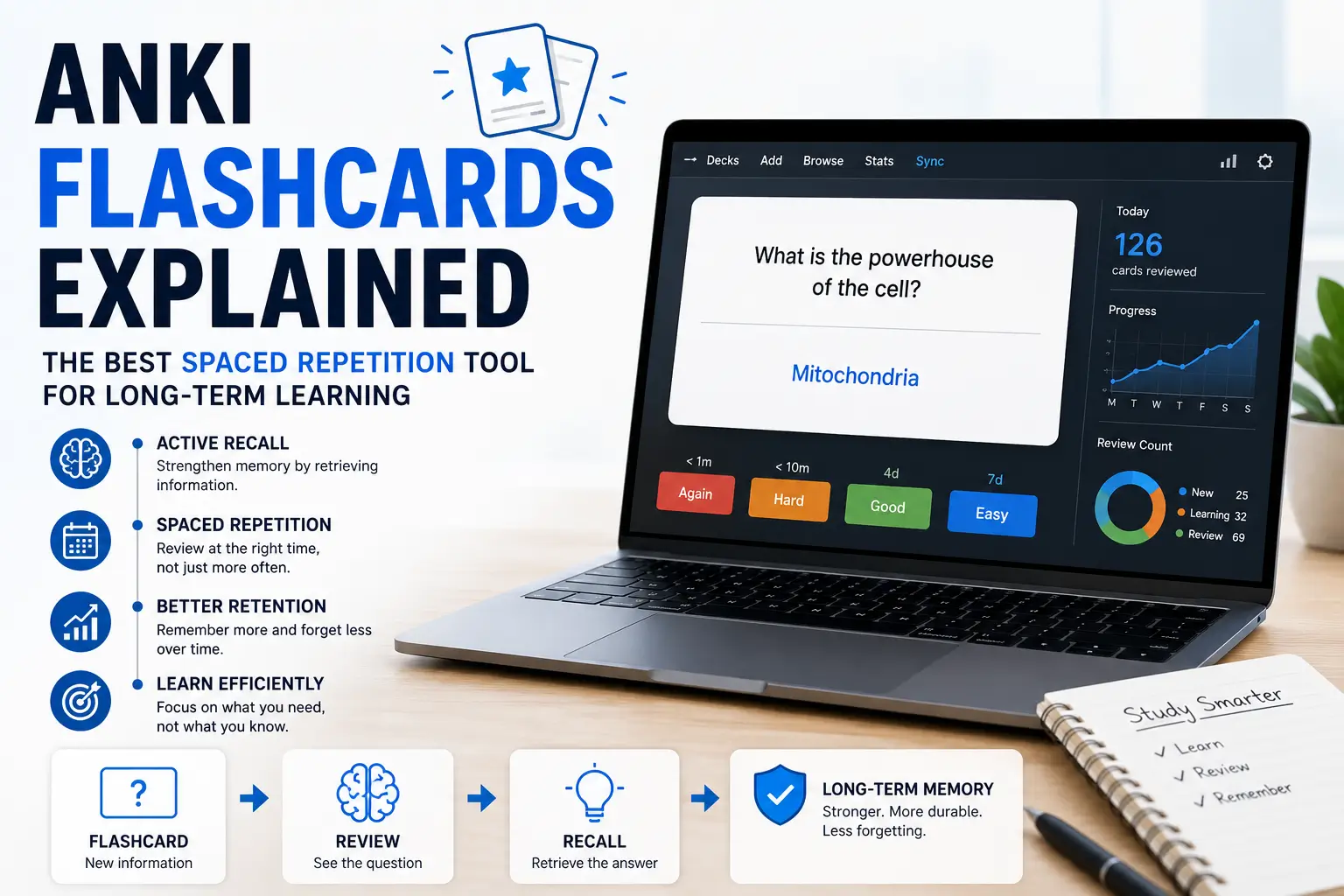
Anki is a digital flashcard application designed to improve long-term memory through intelligent review scheduling.
The name comes from the Japanese word for “memorization.”
Unlike traditional flashcards, Anki automatically decides when cards should be reviewed.
This scheduling system is based on learning science rather than guesswork.
As a result, learners spend less time reviewing information they already know and more time strengthening information that is at risk of being forgotten.
This efficiency is one of the primary reasons Anki has developed such a devoted following.
Why Traditional Flashcards Often Fail
Many learners create flashcards but review them inefficiently.
Every card receives roughly the same amount of attention.
Easy cards and difficult cards are treated equally.
This creates two problems:
- Time is wasted reviewing mastered information.
- Difficult information may not receive enough reinforcement.
Anki solves this problem through adaptive scheduling.
Cards are reviewed based on memory strength rather than random order.
The system focuses attention where it creates the greatest learning benefit.


🔬 The Science Behind Anki
Anki is built around principles that have been extensively studied in cognitive psychology.
The most important are Spaced Repetition and Active Recall.
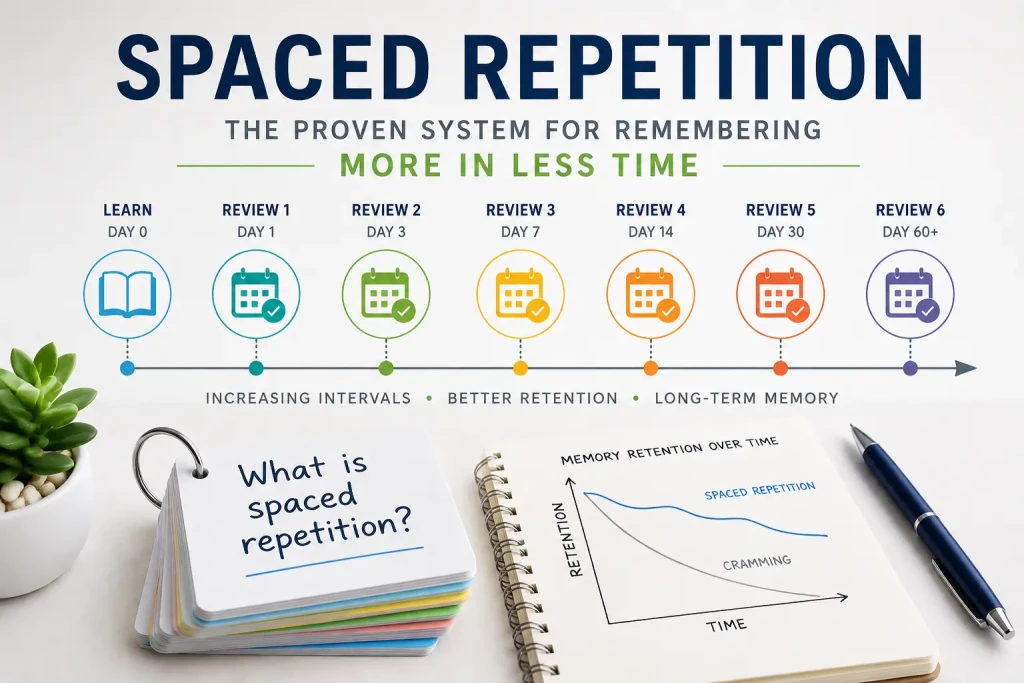
Spaced repetition helps reduce forgetting by scheduling reviews at strategic intervals.
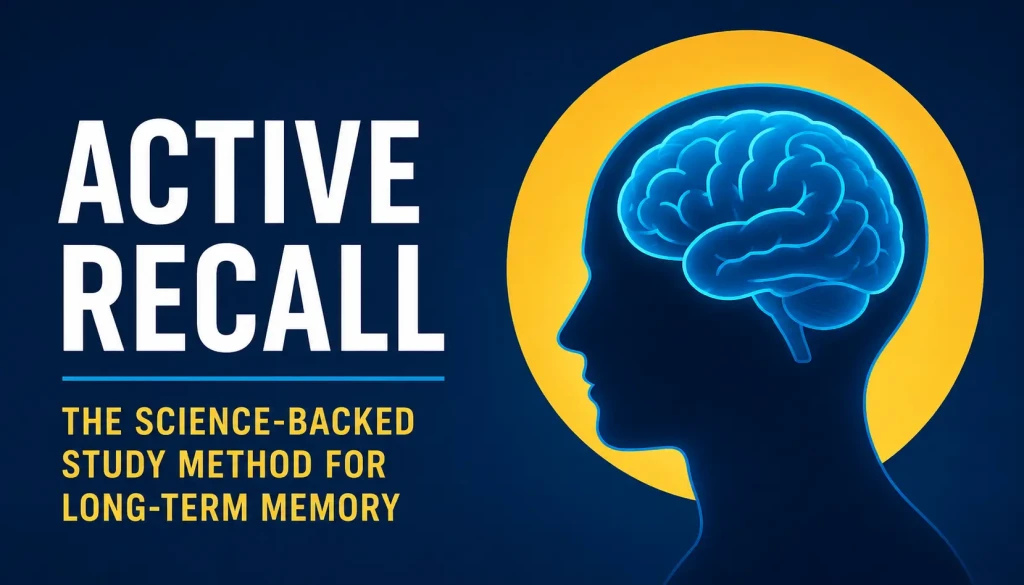
Active recall strengthens memory by requiring learners to retrieve information before seeing the answer.
Together, these techniques consistently outperform passive review methods such as rereading notes.
Source: https://www.apa.org/education-career/undergrad/evidence-based-study-techniques
The goal is not to review more often. The goal is to review more intelligently.
How Anki Uses Spaced Repetition
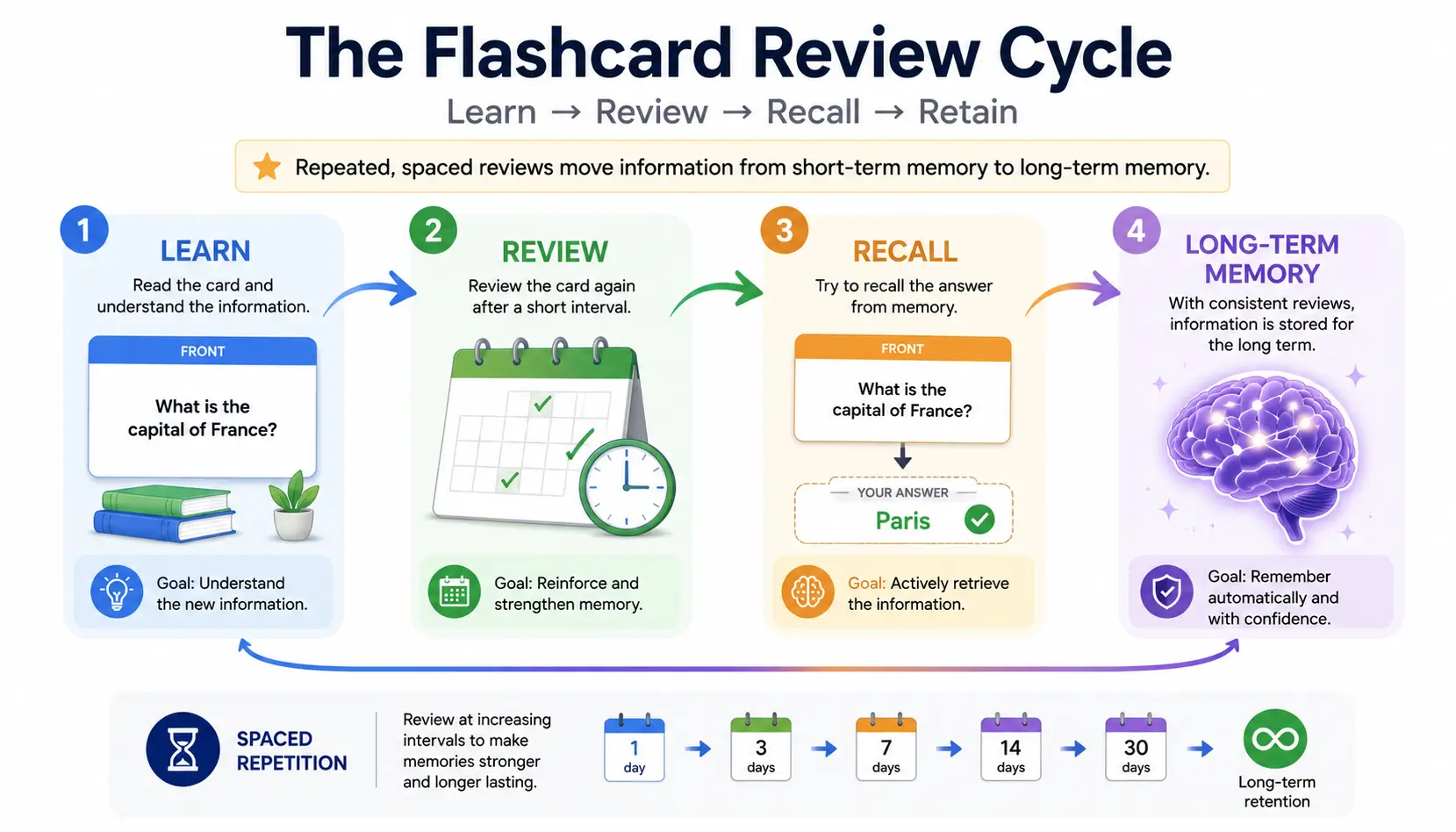
The heart of Anki is its spaced repetition algorithm.
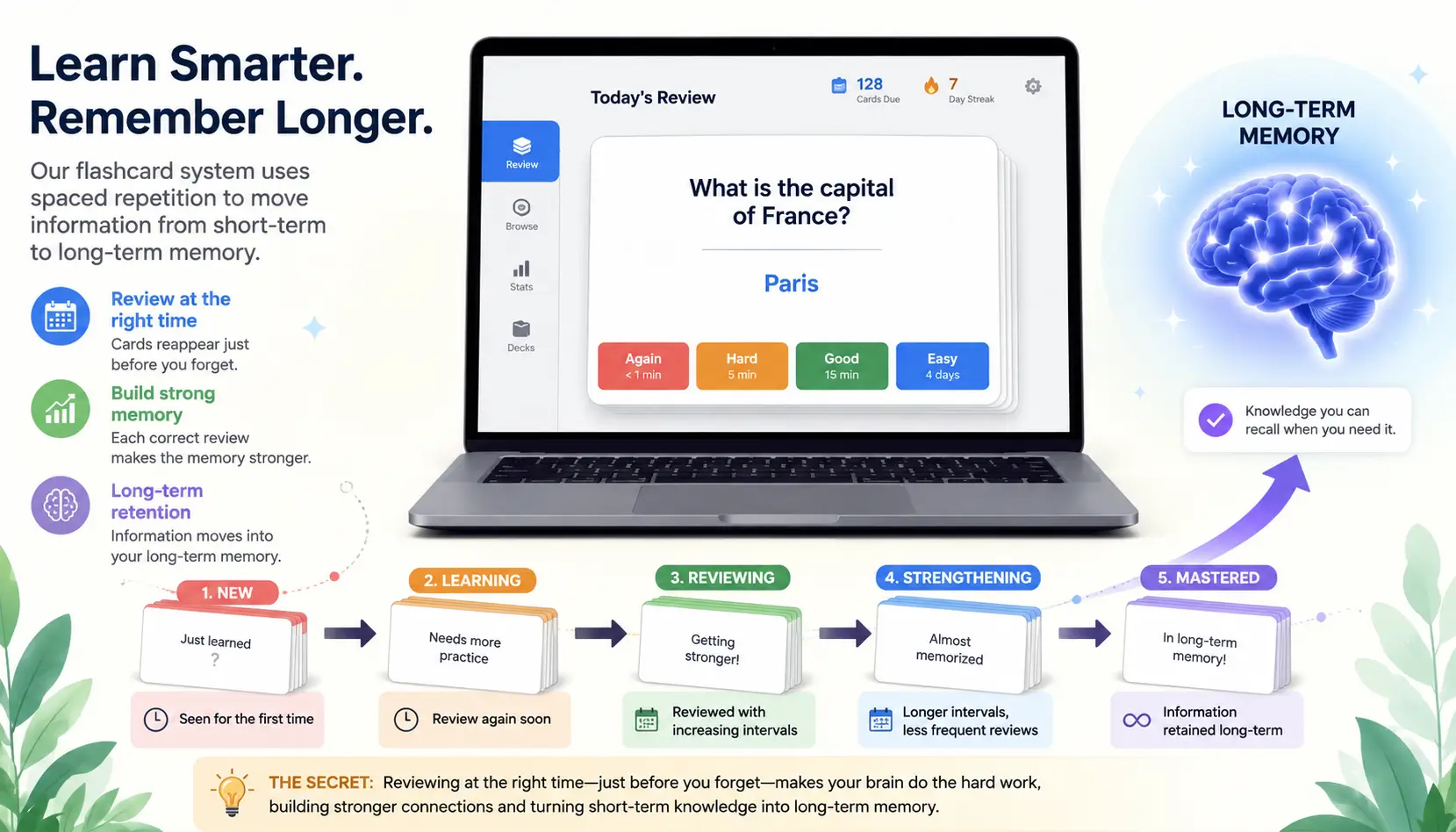
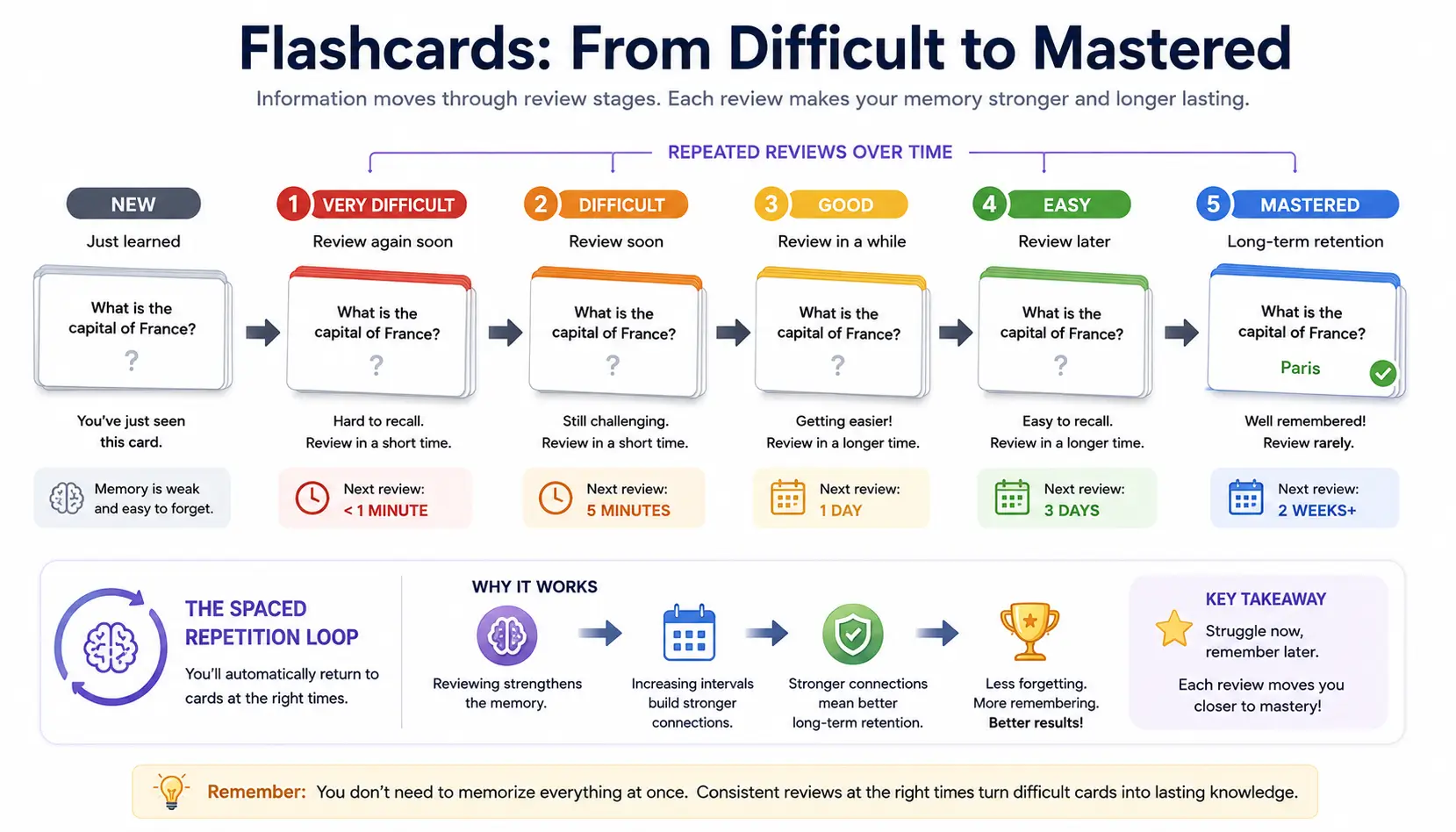
Each time you review a flashcard, Anki asks how well you remembered the answer.
Based on your response, the card receives a new review date.
Easy cards appear less frequently.
Difficult cards appear more frequently.
Over time, review intervals gradually expand.
This approach helps maximize retention while minimizing unnecessary study time.
Instead of reviewing everything every day, learners review only what is needed.
Anki and the Forgetting Curve
Anki was designed specifically to combat the effects of the Ebbinghaus Forgetting Curve.
Without review, memories naturally weaken over time.
The algorithm attempts to schedule reviews shortly before information is likely to be forgotten.
This timing creates an efficient balance between effort and retention.
Rather than fighting the forgetting curve randomly, learners work with it strategically.
Why Active Recall Matters
Many study methods rely heavily on recognition.
Learners reread notes and become familiar with information.
Unfortunately, familiarity is not always the same as memory.
Anki forces retrieval.
Before revealing the answer, learners must actively attempt to remember it.
This retrieval process strengthens memory pathways and improves future recall.
It is one of the primary reasons Anki can be so effective.
Anki and the Leitner System
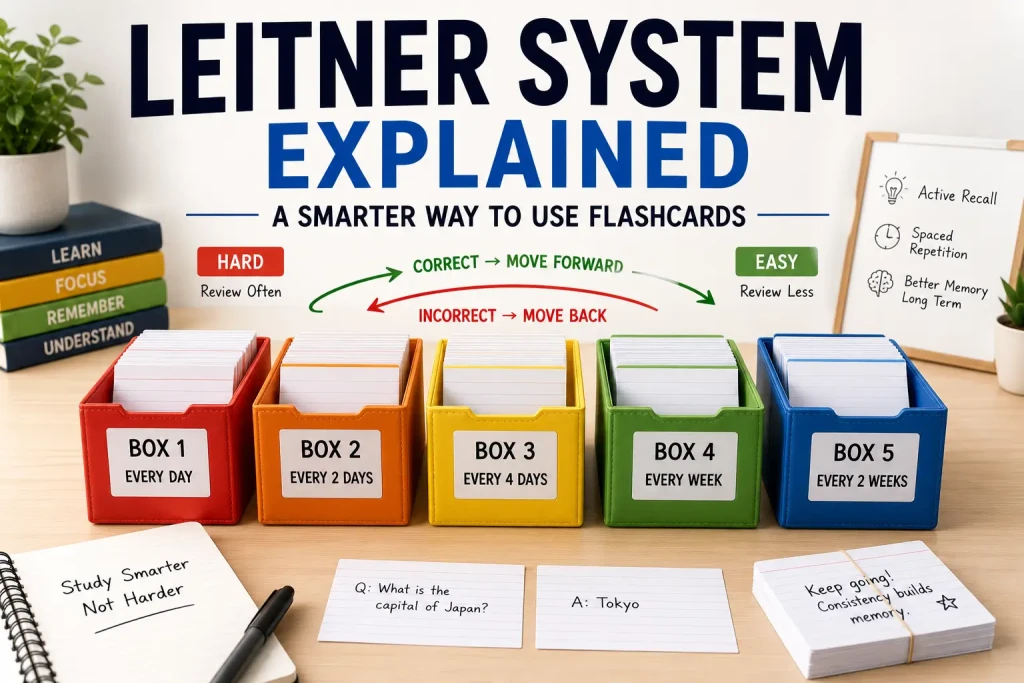
In many ways, Anki can be viewed as a modern digital version of the Leitner System.
Both approaches rely on:
- Flashcards
- Spaced repetition
- Adaptive review schedules
- Active recall
The main difference is automation.
The Leitner System requires manual organization.
Anki performs the scheduling automatically.
This allows learners to focus entirely on learning rather than card management.
Who Uses Anki?
Anki is used by a wide range of learners around the world.
Common users include:
- Medical students
- Language learners
- Law students
- University students
- Professionals earning certifications
- Lifelong learners
Any subject that benefits from long-term retention can potentially benefit from Anki.
The system is flexible enough to support almost any learning goal.
How to Use Anki Effectively
Many new users assume Anki works simply because it uses flashcards.
In reality, the effectiveness comes from how the flashcards are created and reviewed.
Good cards are usually:
- Simple
- Specific
- Focused on one idea
- Easy to review quickly
Large, complicated flashcards often slow down learning and reduce review efficiency.
The best cards make retrieval easy to attempt but difficult enough to strengthen memory.
The Importance of Consistency
Anki is most effective when used consistently.
The system is designed around regular reviews.
Missing a day occasionally is not a disaster, but long breaks can create large review backlogs.
Many successful Anki users spend just a small amount of time reviewing each day.
The power comes from consistency rather than marathon study sessions.
Small daily reviews often outperform occasional intensive sessions.
Anki and Memory Consolidation
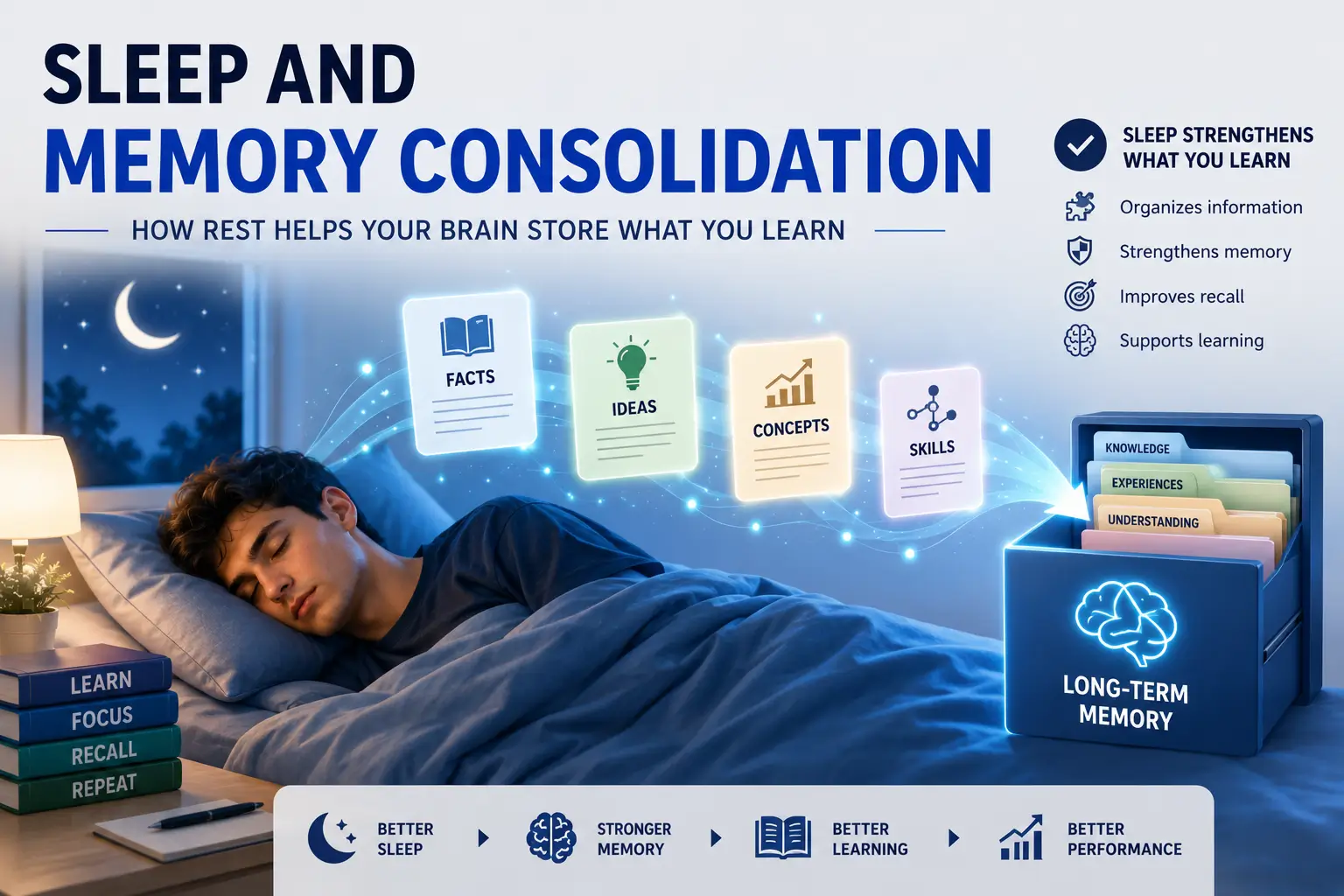
Anki works particularly well because it supports Memory Consolidation.
Each review strengthens existing memory traces.
Repeated retrieval signals that information remains important.
Over time, memories become more stable and easier to access.
Rather than allowing information to fade, Anki repeatedly reinforces it through carefully timed reviews.
Why Anki Feels Difficult
Many beginners notice something surprising:
Anki often feels harder than rereading notes.
This is actually a good sign.
Rereading creates familiarity.
Anki creates retrieval effort.
The effort involved in recalling information is one of the reasons the system is effective.
Learning that feels slightly challenging often produces stronger long-term retention than learning that feels easy.
Common Anki Mistakes
Creating Cards That Are Too Large
A single flashcard should ideally test a single idea.
Cards containing entire paragraphs often become difficult to review efficiently.
Collecting Decks Instead of Studying
Many users spend more time downloading decks than reviewing them.
Learning happens during retrieval, not collection.
Ignoring Daily Reviews
Anki’s scheduling system depends on consistency.
Regular reviews keep the system working as intended.
Using Recognition Instead of Recall
Before revealing an answer, genuinely attempt retrieval.
The learning benefit comes from the recall process itself.
Can Anki Replace Understanding?
No.
Anki is excellent for remembering information, but understanding still matters.
Facts learned without comprehension are often harder to apply in real-world situations.
This is why many learners combine Anki with techniques such as:
These approaches strengthen understanding while Anki strengthens retention.
Together, they create a more complete learning system.
What Subjects Work Best With Anki?
Anki excels whenever information must be remembered accurately over long periods.
Examples include:
- Languages
- Medicine
- Law
- Science
- History
- Professional certifications
- Technical knowledge
Any field that requires reliable recall can potentially benefit from spaced repetition.
Anki and Long-Term Learning
One of Anki’s greatest strengths is its ability to support learning over months and years.
Many study techniques produce short-term improvements.
Anki is designed for durability.
The system helps learners maintain knowledge long after the initial learning experience.
This makes it particularly valuable for subjects where forgetting can be costly.
Supporting Memory Beyond Flashcards
Although Anki is a powerful learning tool, memory performance depends on more than flashcards alone.
Sleep quality, attention, stress management, exercise, and cognitive health all influence retention.
Many learners combine evidence-based study techniques with broader strategies that support long-term brain function.
Readers interested in memory-supportive nutritional approaches can learn more about Advanced Memory Formula.
A Learning Tool Built on Science
Anki has become one of the world’s most popular learning applications because it applies well-established principles from cognitive science.
By combining spaced repetition, active recall, and intelligent review scheduling, it helps learners remember more while studying less efficiently.
It does not replace understanding, curiosity, or effective study habits.
However, it can dramatically improve the ability to retain information over time.
The goal of Anki is not to help you study more. The goal is to help you forget less.
For learners who value long-term retention, that can make all the difference.