
Now Reading: Leitner System Explained: A Smarter Way to Use Flashcards
-
01
Leitner System Explained: A Smarter Way to Use Flashcards
Leitner System Explained: A Smarter Way to Use Flashcards
Flashcards have been used for generations as a simple way to memorize information.
Students use them for vocabulary.
Medical professionals use them for terminology.
Language learners use them for grammar and pronunciation.
Yet despite their popularity, many people use flashcards inefficiently.
They review every card equally.
Easy cards receive as much attention as difficult cards.
Time is wasted reviewing information that is already well known.
The Leitner System was created to solve this problem.
By combining flashcards with strategic review intervals, the Leitner System helps learners spend more time on difficult information and less time on information they already know.
The result is often faster learning and stronger long-term retention.
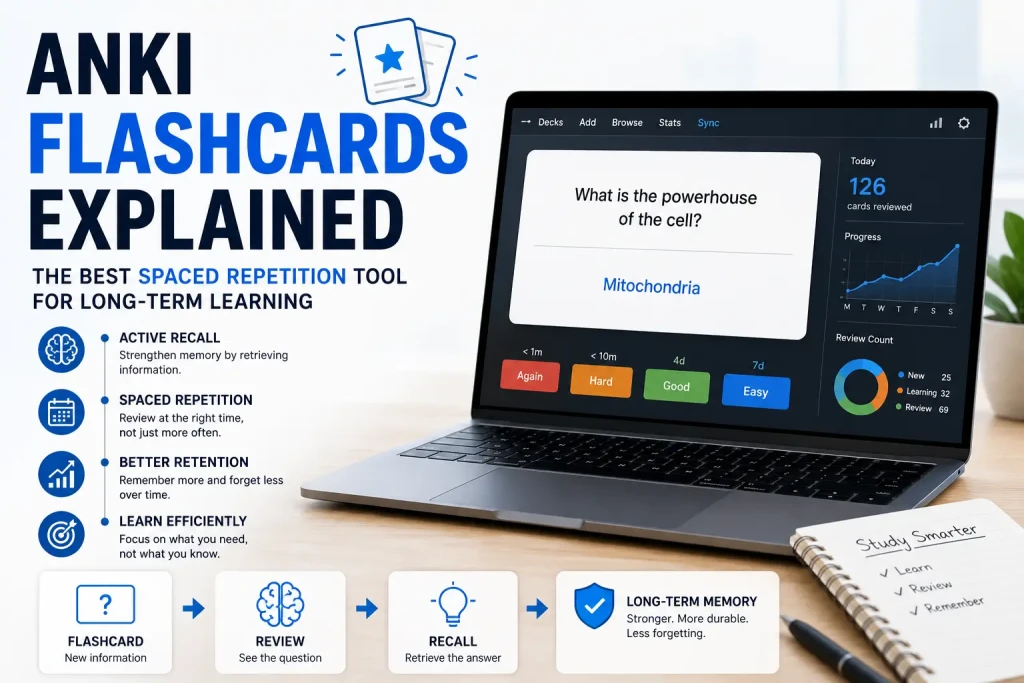
Today, many modern learning tools—including digital flashcard systems such as Anki—are built upon similar principles.
What Is the Leitner System?
The Leitner System is a flashcard-based learning method developed by German science journalist Sebastian Leitner.
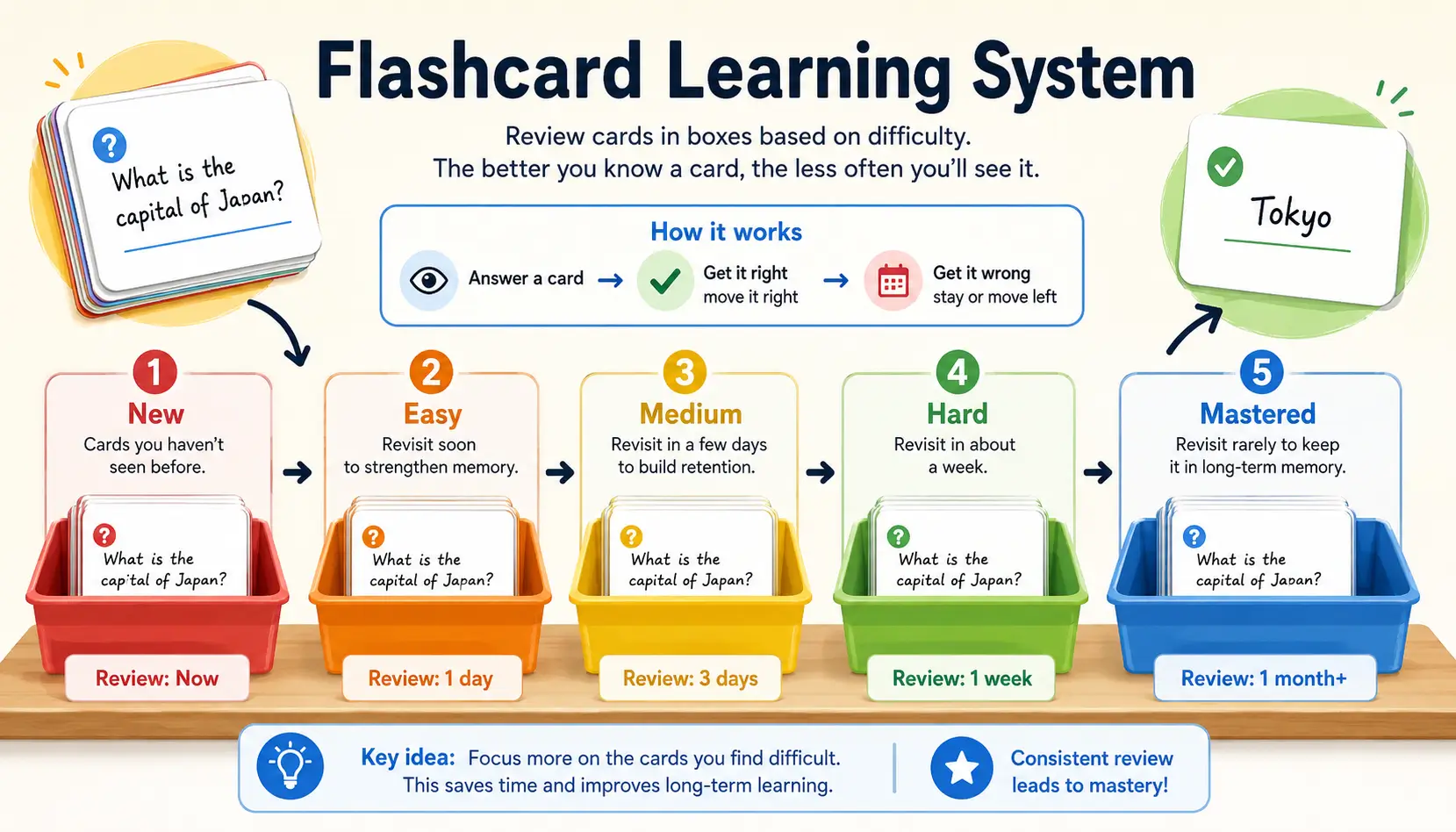
The system organizes flashcards into different groups or “boxes” based on how well the learner knows the information.
Cards that are answered correctly move to boxes reviewed less frequently.
Cards that are answered incorrectly return to boxes reviewed more frequently.
This simple process automatically focuses study time where it is needed most.
Instead of treating every flashcard equally, the system adapts to individual learning needs.
How the Leitner System Works
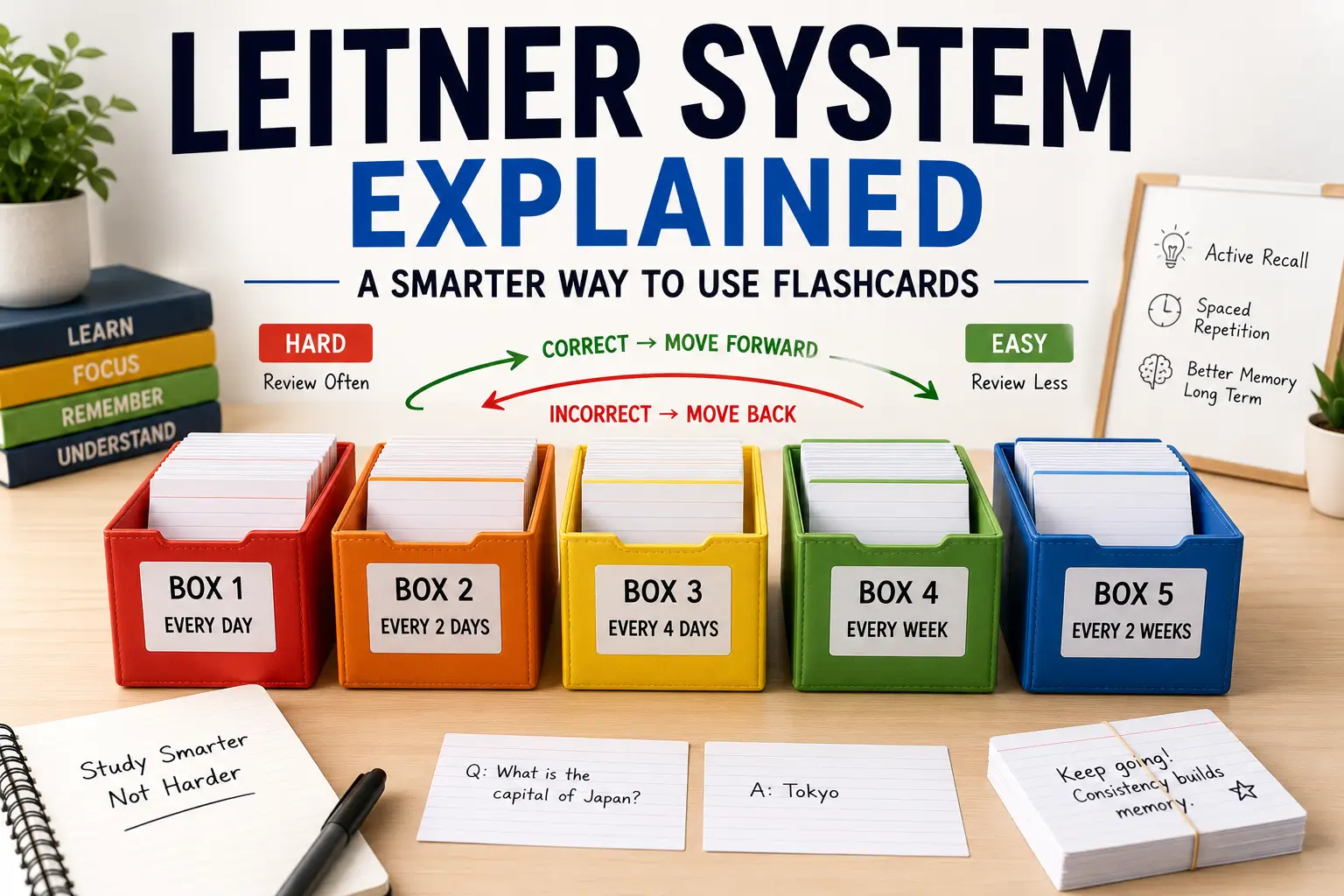
A traditional Leitner setup often uses five boxes.
Each box represents a different review frequency.
For example:
- Box 1: Review every day
- Box 2: Review every 2 days
- Box 3: Review every 4 days
- Box 4: Review every week
- Box 5: Review every two weeks
When a card is answered correctly, it moves forward.
When a card is answered incorrectly, it returns to the first box.
Over time, easy information naturally requires less attention while difficult information receives more practice.
This creates an efficient learning cycle.


Why Traditional Flashcards Are Often Inefficient
Many learners repeatedly review entire flashcard decks from beginning to end.
While this approach can work, it often wastes time.
Cards that are already mastered continue receiving attention.
Meanwhile, difficult cards may not receive enough focused review.
The Leitner System solves this problem through selective repetition.
Attention is directed toward weaknesses rather than strengths.
This targeted approach often improves both efficiency and retention.
🔬 The Science Behind the Leitner System
The Leitner System is closely connected to two of the most important principles in learning science:
- Retrieval Practice
- Spaced Repetition
Each flashcard review requires retrieval.
The review schedule creates spacing.
Together, these principles strengthen memory far more effectively than passive rereading.
Research consistently shows that spaced retrieval improves long-term retention and reduces forgetting.
Source: https://www.apa.org/education-career/undergrad/evidence-based-study-techniques
The Leitner System essentially transforms these scientific principles into a practical study workflow.
The Leitner System and Spaced Repetition
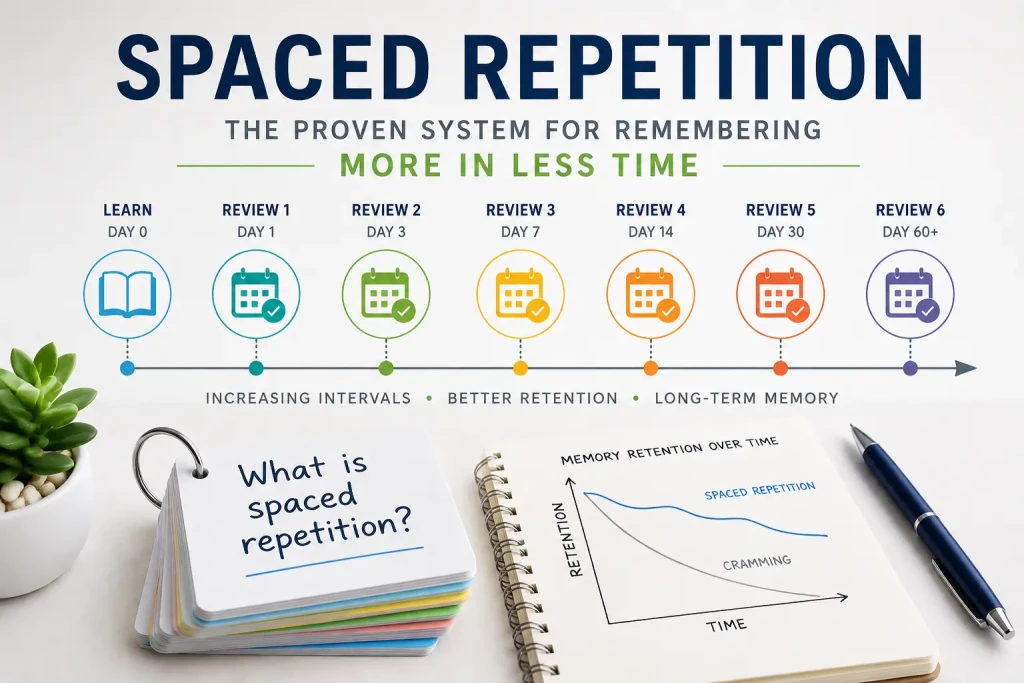
The strongest connection between the Leitner System and learning science is Spaced Repetition.
Spaced Repetition works because information is reviewed at increasing intervals rather than continuously.
This spacing challenges memory and strengthens retention.
The Leitner System automates that process.
Easy information gradually moves into longer review cycles.
Difficult information remains in shorter cycles.
The learner spends time where it creates the greatest benefit.
The Leitner System and Active Recall
The system also depends heavily on Active Recall.
Every flashcard requires the learner to retrieve information before checking the answer.
This retrieval process strengthens memory pathways and improves future recall.
The flashcard itself is not the reason the method works.
The retrieval process is.
This is one reason flashcards can be far more effective than passive review methods.
Leitner System vs Simple Flashcards
Both methods use flashcards.
The difference lies in organization.
Traditional flashcards often rely on random review.
The Leitner System relies on strategic review intervals.
Instead of asking:
“Which card should I study next?”
The system already provides the answer.
This structure removes guesswork and makes studying more efficient.
The Connection to the Forgetting Curve
The Leitner System was designed to combat the effects of the Ebbinghaus Forgetting Curve.
Without review, memories naturally weaken over time.
Strategic review interrupts this process.
Each successful retrieval strengthens the memory and delays forgetting.
The review schedule becomes a tool for preserving information over longer periods.
Who Should Use the Leitner System?
The system is particularly useful for learners who need to retain large amounts of information.
Examples include:
- Students
- Language learners
- Medical professionals
- Law students
- Certification candidates
- Lifelong learners
Any subject that involves facts, definitions, terminology, or structured knowledge can potentially benefit from the Leitner approach.
How to Set Up a Leitner System
One reason the Leitner System remains popular is its simplicity.
You do not need expensive software or specialized equipment.
A basic system can be created using index cards and several labeled boxes.
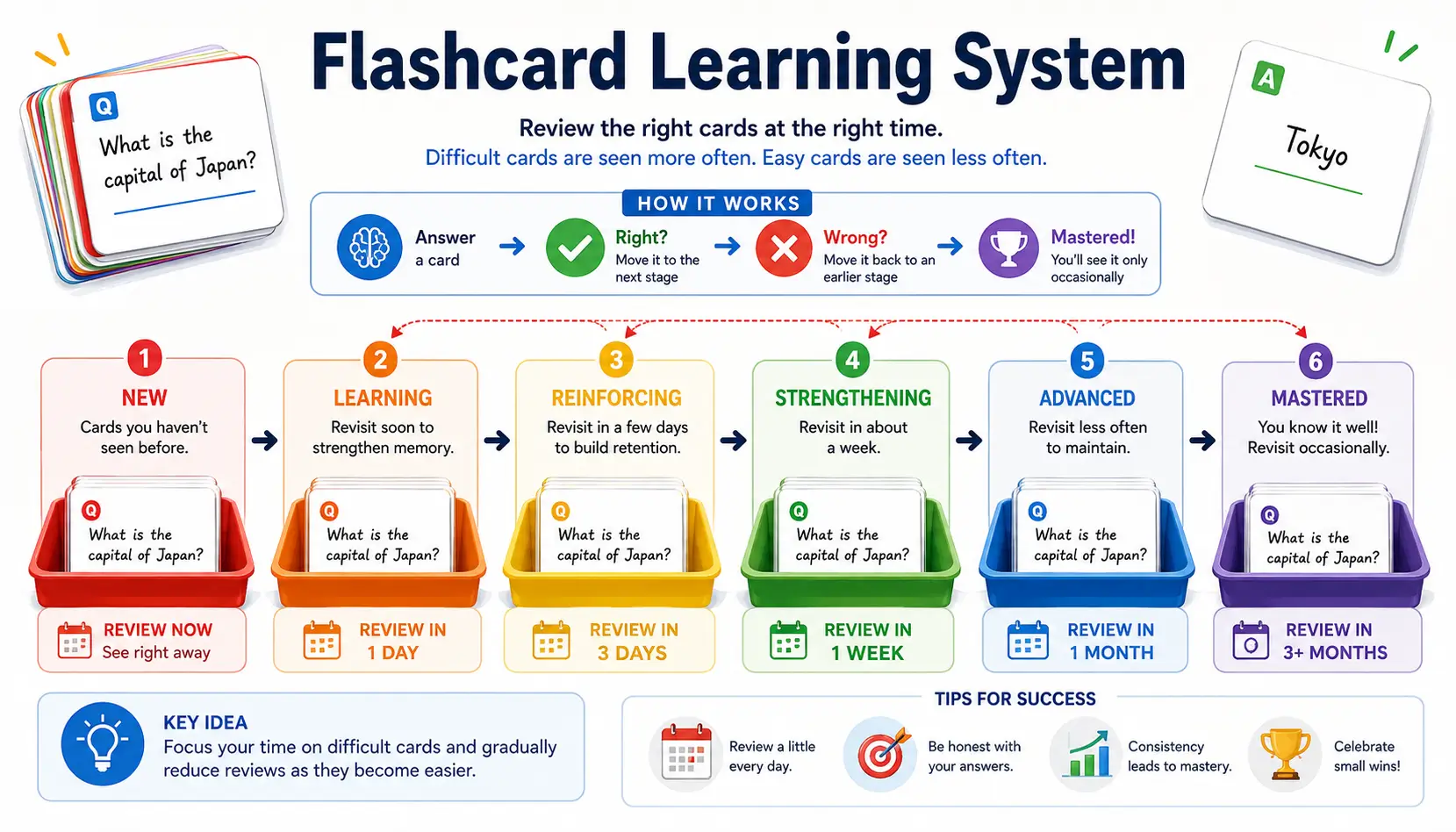
Start by placing all new flashcards into Box 1.
During each review session:
- Correct answers move forward.
- Incorrect answers return to Box 1.
Over time, the system naturally adapts to your learning progress.
The cards that need the most attention receive it automatically.
Why the Leitner System Feels Efficient
Many learners spend too much time reviewing material they already know.
The Leitner System prevents this problem.
Instead of repeatedly studying mastered information, learners focus on weak areas.
This targeted review process often reduces study time while improving retention.
The system rewards mastery by reducing unnecessary repetition.
At the same time, difficult information continues receiving reinforcement.
This balance is one of the reasons the method has remained popular for decades.
The Leitner System and Retrieval Practice
The success of the Leitner System depends heavily on Retrieval Practice.
Each flashcard review requires learners to retrieve information before checking the answer.
This retrieval effort strengthens memory.
The card itself is not the key benefit.
The act of recalling information is what drives learning.
Every successful retrieval reinforces neural pathways and improves future recall.
Why Mistakes Are Valuable
Many learners become frustrated when they answer flashcards incorrectly.
However, mistakes provide valuable information.
The Leitner System uses errors as feedback.
Incorrect answers identify weak memories that require additional practice.
Instead of treating mistakes as failures, the system treats them as guidance.
This mindset often leads to more effective learning.
Leitner System vs Anki
Many modern learners eventually encounter Anki Flashcards.
Anki is often described as a digital evolution of the Leitner System.
Both methods rely on:
- Spaced repetition
- Active recall
- Adaptive review schedules
The primary difference is automation.
Traditional Leitner systems require manual organization.
Anki automatically calculates review intervals using algorithms.
Despite the technological differences, the underlying learning principles remain remarkably similar.
Common Leitner System Mistakes
Reviewing Cards Passively
Some learners flip through cards too quickly without genuinely attempting retrieval.
The method works best when answers are recalled before checking the card.
Creating Poor Flashcards
Flashcards should be simple and focused.
Cards containing too much information often become difficult to review efficiently.
Ignoring Difficult Cards
The most challenging cards often provide the greatest learning opportunities.
Consistent review is essential.
Reviewing Too Frequently
Many learners assume more review always leads to better results.
Spacing matters.
Allowing some forgetting between reviews often strengthens long-term retention.
What Subjects Work Best With the Leitner System?
The method is especially effective for information that requires accurate recall.
Examples include:
- Foreign language vocabulary
- Medical terminology
- Scientific concepts
- Historical dates
- Legal definitions
- Professional certifications
Any subject involving factual knowledge can potentially benefit from structured flashcard review.
Combining the Leitner System With Other Learning Strategies
The Leitner System becomes even more powerful when combined with other evidence-based learning techniques.
For example:
- Active Recall strengthens retrieval.
- Spaced Repetition optimizes timing.
- The Testing Effect improves long-term retention.
- Metacognition helps learners identify weaknesses.
These techniques complement each other rather than compete with each other.
Together, they form a highly effective learning system.
Supporting Long-Term Memory Beyond Flashcards
Flashcards can significantly improve memory performance, but they are only one part of the learning process.
Sleep quality, stress management, attention, and overall cognitive health also influence retention.
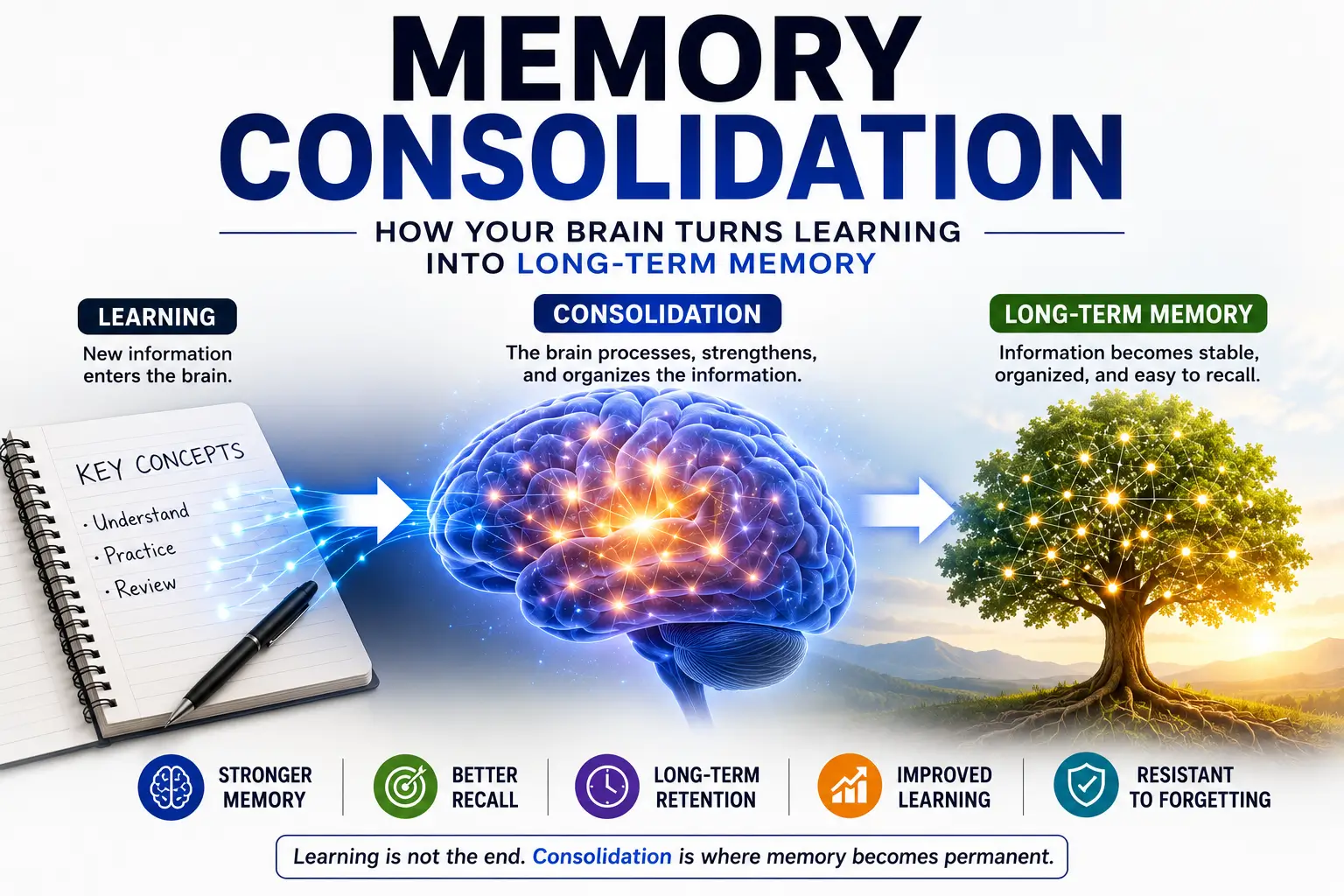
For example, Memory Consolidation plays a critical role in transforming newly learned information into long-term memory.
Many learners combine evidence-based study techniques with broader strategies that support cognitive wellness.
Readers interested in memory-supportive nutritional approaches can learn more about Advanced Memory Formula.
A Smarter Way to Review
The Leitner System remains popular because it solves a simple problem:
Not all information needs the same amount of review.
By focusing attention where it is needed most, the system helps learners study more efficiently and remember more over time.
Whether you use physical flashcards or modern digital tools, the principles behind the Leitner System continue to provide one of the most effective approaches to long-term learning.
Sometimes studying smarter really is better than studying longer.