
Now Reading: Memory Palace Technique: How to Build a Mental System for Better Recall
-
01
Memory Palace Technique: How to Build a Mental System for Better Recall
Memory Palace Technique: How to Build a Mental System for Better Recall
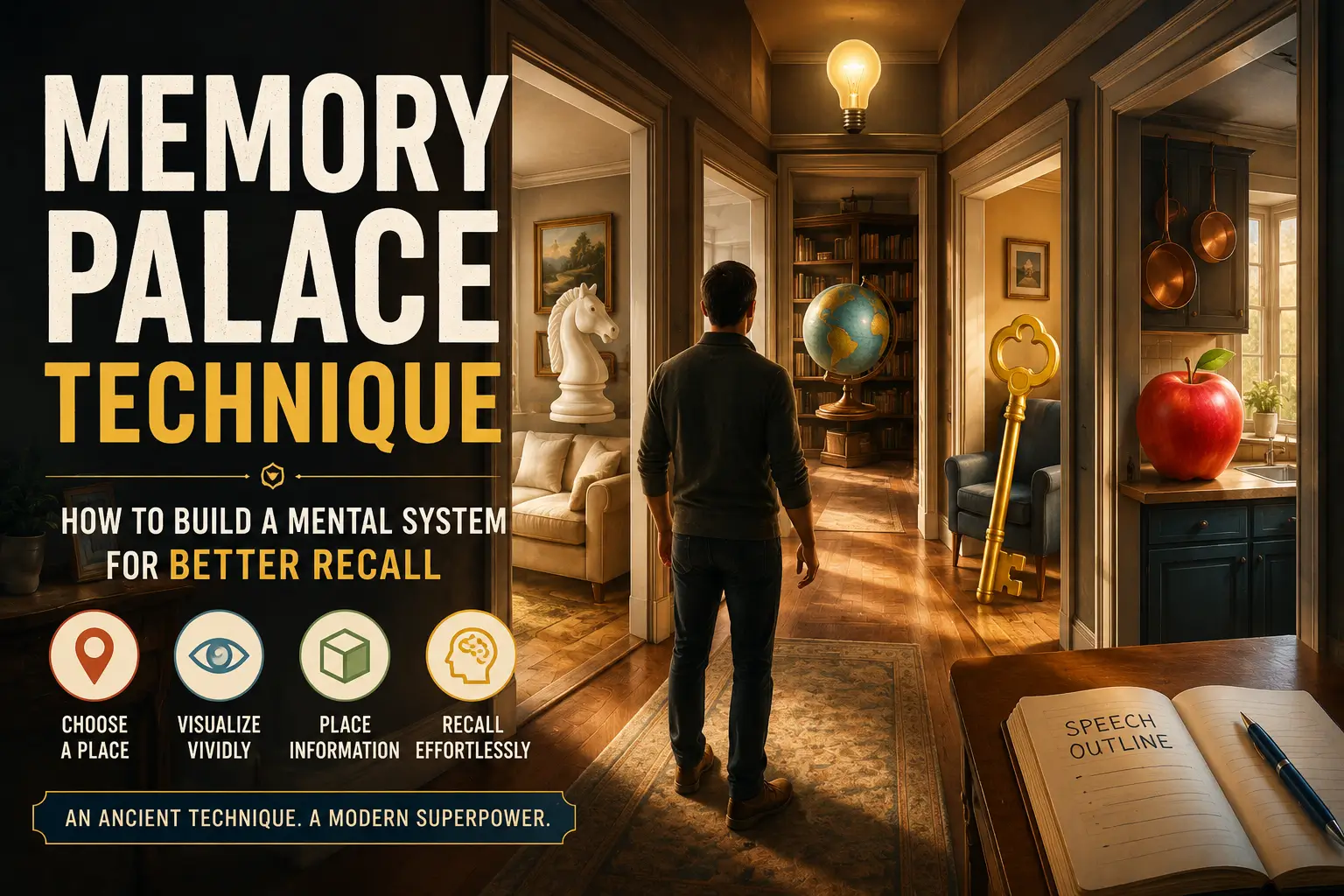
Imagine being able to remember a shopping list, a speech, dozens of vocabulary words, or even an entire presentation without constantly checking your notes.
It might sound like a rare talent possessed only by memory champions, but the underlying technique has existed for more than two thousand years.
Today, it is commonly known as the Memory Palace Technique.
The method is surprisingly simple.
You take information you want to remember and place it inside an imaginary location that already exists in your mind.
Instead of trying to memorize abstract information directly, you attach it to places you know well.
Your brain is naturally good at remembering locations. The Memory Palace technique uses that ability to make information easier to retrieve later.
From ancient Greek orators to modern memory competitors, this technique has helped people remember extraordinary amounts of information.
The good news is that you don’t need special talent to use it.
You simply need a familiar location and a little imagination.
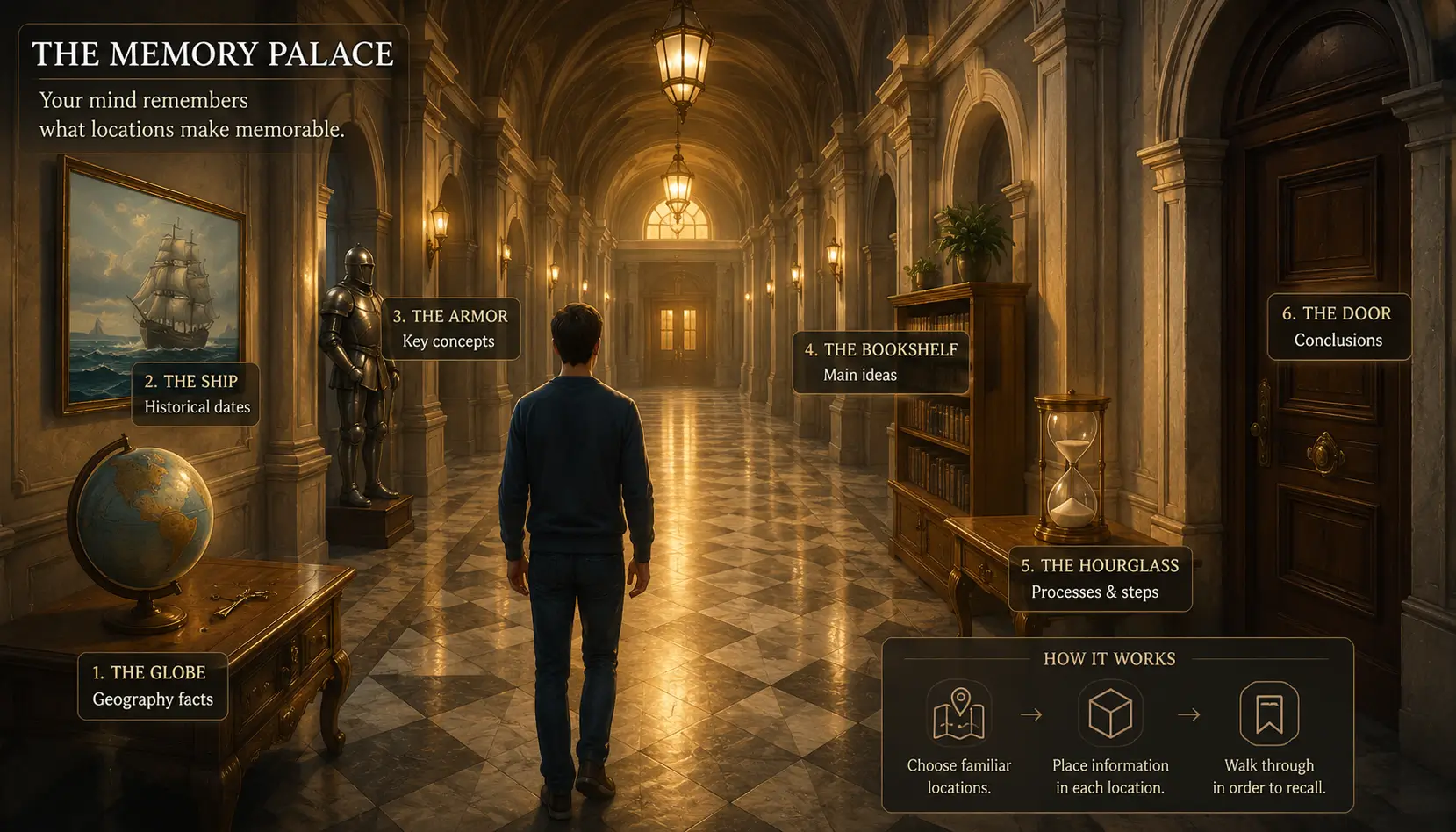
What Is a Memory Palace?
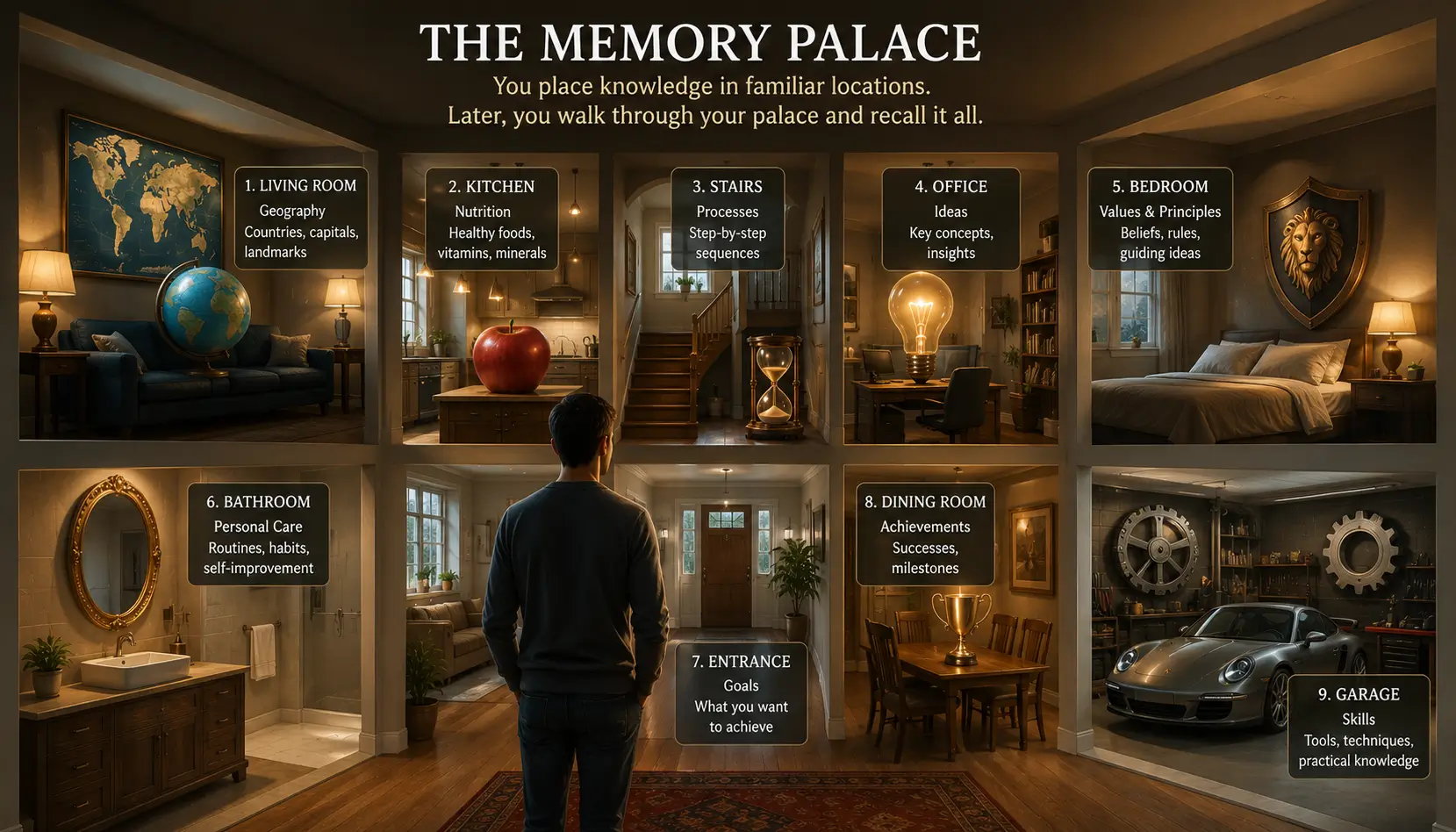
A Memory Palace is a mental representation of a physical place that you know well.
It could be:
- Your home
- Your childhood house
- Your office
- Your school
- A favorite walking route
- A familiar building
You mentally place information at specific locations inside that environment.
Later, when you need to remember the information, you mentally walk through the location and retrieve each item.
This process transforms abstract information into visual and spatial memories.
Because the brain naturally remembers places exceptionally well, recall often becomes much easier.
The Ancient Origins of the Method
The Memory Palace Technique is not a modern productivity hack.
Its roots go back to ancient Greece.
According to historical accounts, the poet Simonides discovered that people could remember information more effectively when it was associated with physical locations.
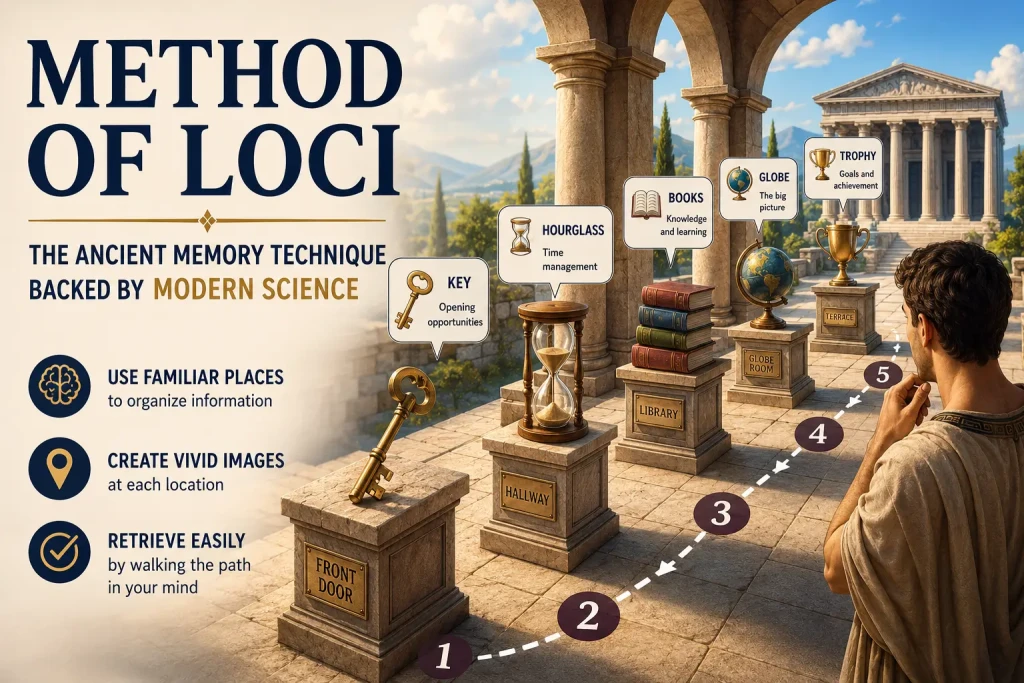
This observation eventually developed into what became known as the Method of Loci.
In fact, the modern Memory Palace Technique and the Method of Loci are closely related.
Many people use the terms interchangeably.
For centuries, speakers, scholars, and philosophers relied on this method to remember large amounts of information before the invention of modern note-taking tools.


Why the Brain Loves Locations
Human memory evolved long before textbooks, smartphones, and search engines.
Our ancestors needed to remember:
- Where food could be found
- Safe travel routes
- Dangerous locations
- Shelter locations
- Important landmarks
As a result, the human brain became remarkably good at spatial memory.
Even today, many people can easily remember the layout of a childhood home they have not visited for years.
The Memory Palace Technique takes advantage of this natural ability.
Instead of forcing the brain to remember disconnected facts, it anchors those facts to locations that already feel familiar.
How a Memory Palace Works
Imagine that you need to remember five items:
- Milk
- Apples
- Bread
- Coffee
- Eggs
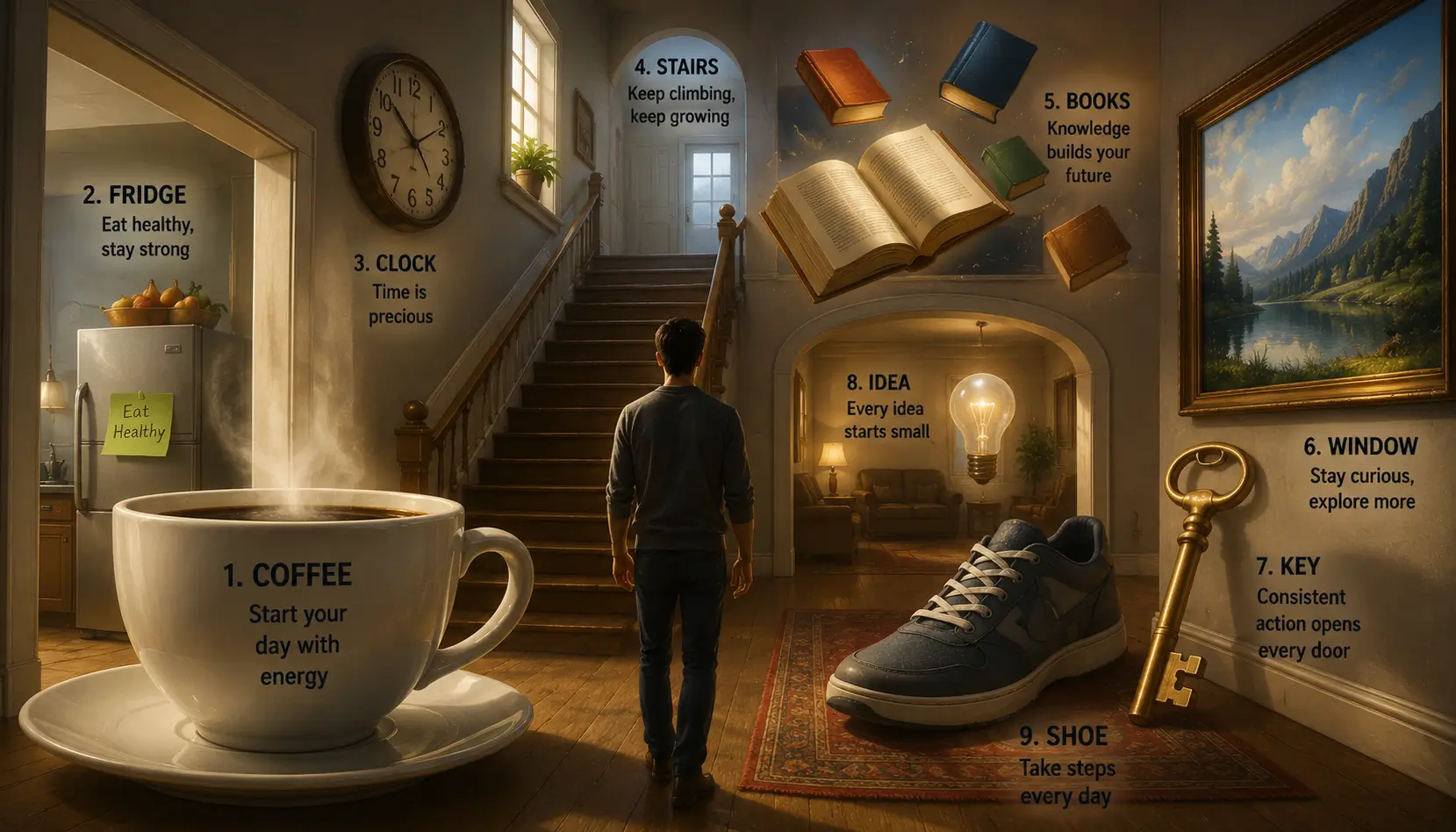
Rather than repeating the list over and over, you place each item somewhere inside your house.
You might imagine:
- A giant milk carton blocking the front door
- Apples bouncing across the living room
- Bread hanging from the television
- Coffee pouring from the kitchen ceiling
- Eggs stacked on your bed
The images are intentionally unusual.
The stranger and more vivid the image, the more memorable it becomes.
When you mentally walk through your house, the information appears naturally.
Visualization Is the Secret Ingredient
The Memory Palace Technique works best when the images are vivid, emotional, and unusual.
Ordinary images are easy to forget.
Extraordinary images stand out.
For example, if you need to remember a banana, don’t imagine a normal banana sitting quietly on a table.
Imagine a banana the size of a car crashing through your living room wall while singing opera.
Ridiculous?
Absolutely.
Memorable?
Almost certainly.
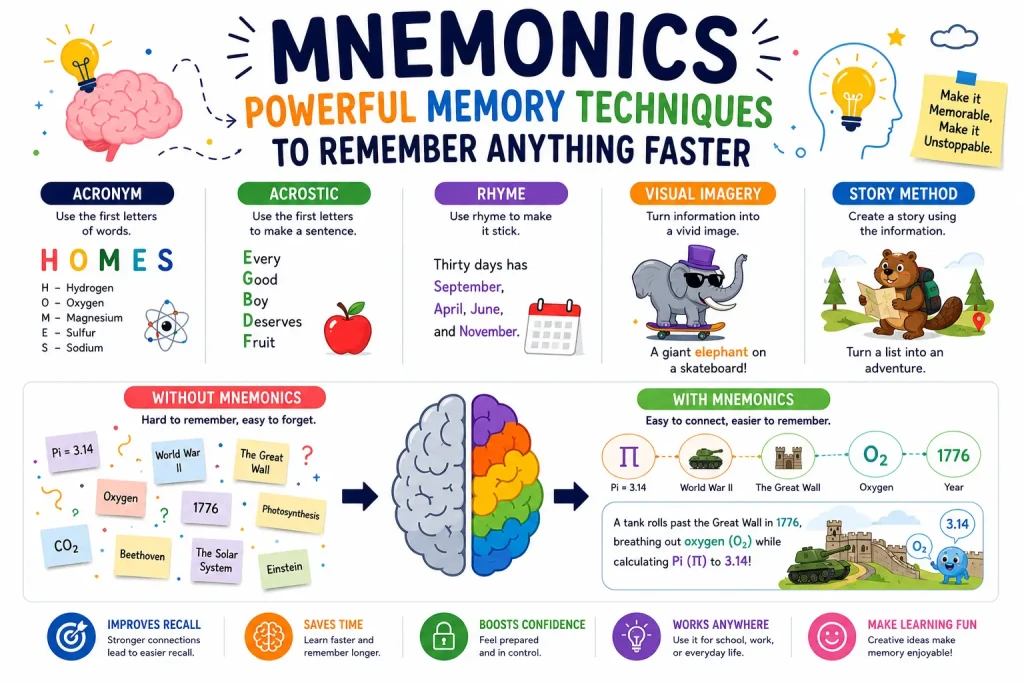
This principle overlaps with many traditional Mnemonic Techniques, which often use unusual associations to improve retention.
Memory Palaces and Long-Term Retention
Many people assume the Memory Palace Technique is useful only for short-term memory challenges.
In reality, it can support long-term retention as well.
The key is review.
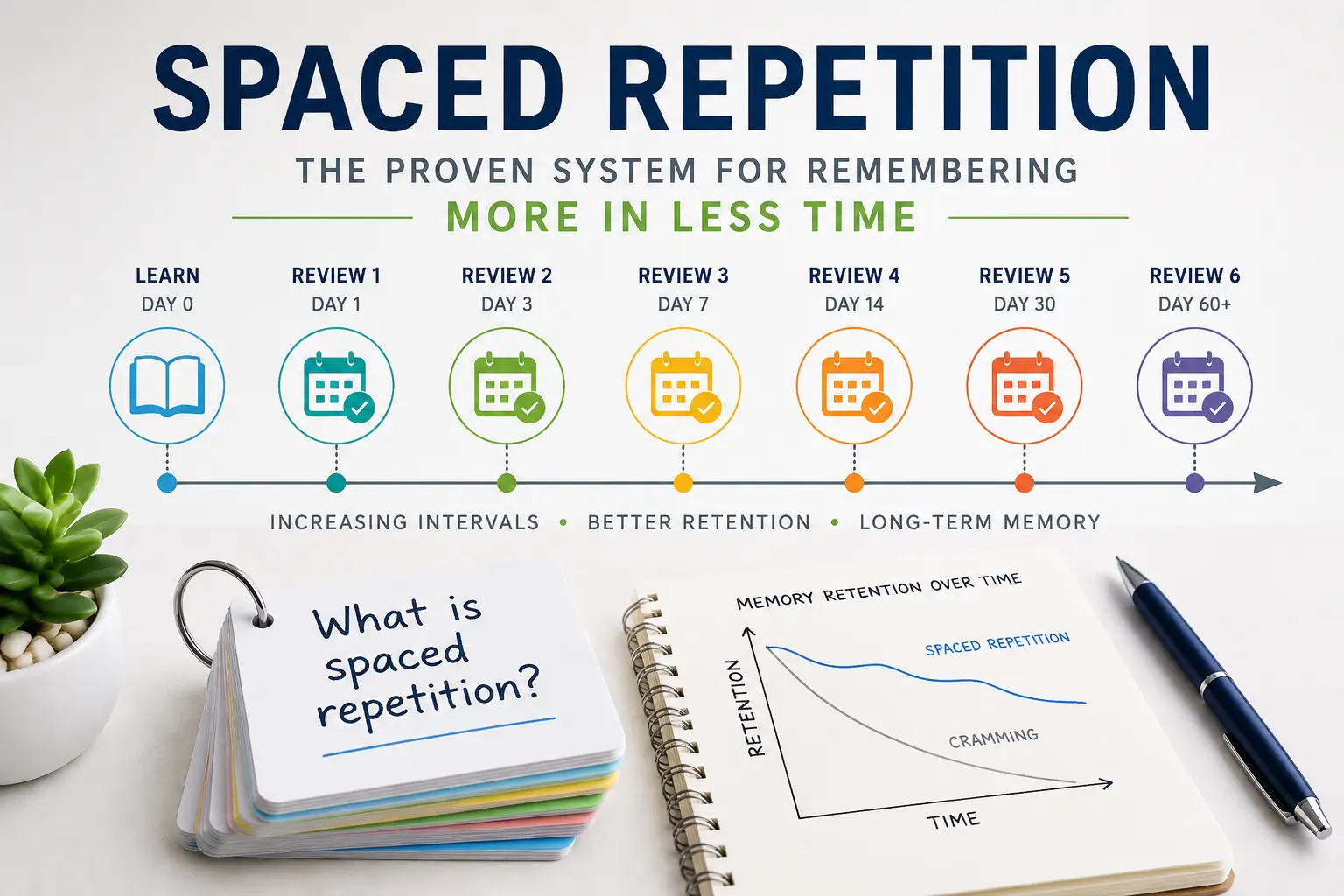
When combined with Spaced Repetition and Active Recall, Memory Palaces can become surprisingly durable learning systems.
Each time you mentally walk through the palace, you strengthen the memory.
Over time, recall becomes faster and more automatic.
What Can You Use a Memory Palace For?
The technique is remarkably flexible.
People commonly use Memory Palaces to remember:
- Speeches
- Presentations
- Foreign language vocabulary
- Exam material
- Historical dates
- Names and faces
- Shopping lists
- Professional information
The larger the amount of information, the more valuable a structured memory system becomes.
This is one reason memory athletes frequently rely on Memory Palaces during competitions.
Memory Palace vs Rote Memorization
Traditional memorization often relies on repetition.
The Memory Palace Technique relies on association.
Instead of repeating information until it sticks, you connect information to locations and images that are easier for the brain to remember.
Many learners find this approach more engaging and significantly less boring than endless repetition.
That doesn’t mean repetition has no value.
In fact, combining Memory Palaces with retrieval-based methods often produces the strongest results.
This is where concepts like Retrieval Practice become particularly useful.
Choosing Your First Memory Palace
If you’re new to the technique, start small.
Don’t build a palace with one hundred locations.
Choose a place you know extremely well.
Your current home is often the best option.
Create a simple route through the environment.
For example:
- Front Door
- Hallway
- Living Room
- Kitchen
- Dining Room
- Bedroom
- Bathroom
These locations become storage points for information.
Once the route feels natural, you can begin placing information along it.
Building Your First Memory Palace Step by Step
The biggest mistake beginners make is trying to build a massive Memory Palace immediately.
Start small.
Your goal is not to impress anyone. Your goal is to create a reliable mental storage system.
Choose a familiar location with five to ten distinct points.
A simple route might look like this:
- Front Door
- Shoe Rack
- Living Room Sofa
- Television
- Kitchen Sink
- Dining Table
- Bedroom Desk
- Bed
Each location becomes a memory anchor.
When you need to remember information, place vivid images at each point along the route.
The order matters.
Always follow the same path.
Consistency helps the brain retrieve information more efficiently.
Why Weird Images Work Better
If you place ordinary objects inside your Memory Palace, recall will often be weaker.
The brain tends to ignore normal experiences.
It pays attention to things that are surprising, emotional, humorous, or unusual.
For example, imagine you need to remember the word “coffee.”
Instead of imagining a normal cup of coffee on your kitchen counter, imagine a gigantic coffee cup overflowing through the entire room while dancing and singing.
The goal is not realism.
The goal is memorability.
The more vivid the image, the easier it becomes to retrieve later.
Using Memory Palaces for Studying
Many people discover Memory Palaces while preparing for exams.
This makes sense because the technique works particularly well when information must be remembered in a specific order.
For example, you could create a Memory Palace for:
- Historical timelines
- Biology processes
- Legal concepts
- Medical terminology
- Foreign language vocabulary
- Speech outlines
Instead of relying entirely on repetition, you create a visual journey that guides recall.
Many students combine this method with Active Recall to strengthen retrieval even further.
Memory Palace and Chunking
The Memory Palace Technique becomes even more powerful when paired with Chunking Memory.
Chunking involves grouping information into meaningful units.
Instead of storing dozens of unrelated pieces of information, you organize them into larger chunks.
For example, a student learning world history might assign one room to a historical period and place important events inside that room.
This structure makes large amounts of information easier to manage.
The combination of chunking and spatial memory can dramatically improve organization and recall.
The Relationship Between Memory Palaces and Working Memory
One reason Memory Palaces are effective is that they reduce pressure on Working Memory.
Working memory has limited capacity.
Trying to hold too much information in your mind at once can quickly become overwhelming.
A Memory Palace provides an external mental structure.
Instead of juggling information continuously, you store it in locations and retrieve it when needed.
This makes complex information feel more manageable.
How Memory Athletes Use Memory Palaces
If you’ve ever watched a memory competition, you’ve probably seen extraordinary feats of recall.
Competitors memorize:
- Hundreds of random numbers
- Entire decks of cards
- Long word lists
- Names and faces
Many of them rely heavily on Memory Palaces.
The technique allows them to transform abstract information into visual and spatial experiences.
The impressive results may seem superhuman, but the underlying method can be learned by almost anyone.
The difference is often practice, not talent.
Common Memory Palace Mistakes
Choosing an Unfamiliar Location
Your palace should feel automatic.
If you struggle to visualize the location itself, retrieval becomes more difficult.
Creating Weak Images
Boring images are easier to forget.
Make them vivid, exaggerated, and memorable.
Using Too Many Locations Too Quickly
Beginners often try to build enormous palaces immediately.
Start small and expand gradually.
Not Reviewing the Palace
Like any memory system, a Memory Palace benefits from review.
Combining it with Spaced Repetition can significantly improve long-term retention.
Can Memory Palaces Improve Everyday Memory?
Absolutely.
While the technique is often associated with studying, it can also be useful in daily life.
People commonly use Memory Palaces to remember:
- Shopping lists
- Names
- Meeting agendas
- Presentations
- Travel plans
- Important tasks
Even simple uses can help develop stronger memory habits over time.
The more often you practice creating associations, the more natural the process becomes.
Supporting Memory Beyond Memorization Techniques
Techniques such as Memory Palaces, Active Recall, and Retrieval Practice can significantly improve memory performance.
However, memory also depends on broader factors including sleep, stress management, physical activity, and overall cognitive health.
For example, the process of Memory Consolidation plays a critical role in transforming new experiences into long-term memories.
Many people also choose to support memory through broader wellness strategies. Readers interested in nutritional support for healthy memory function can learn more about Advanced Memory Formula.
A Technique That Has Survived for Centuries
Thousands of years have passed since the earliest forms of the Memory Palace Technique were used.
Despite advances in technology, the method remains relevant.
Why?
Because it works with the natural strengths of human memory.
The brain is exceptionally good at remembering places, routes, and visual experiences.
The Memory Palace Technique simply turns those strengths into a practical learning tool.
Whether you’re trying to remember a speech, learn a language, or improve everyday recall, building a Memory Palace can be one of the most effective memory skills you’ll ever learn.