
Now Reading: Memorization Techniques: Proven Methods to Remember Information Faster and Retain It Longer
-
01
Memorization Techniques: Proven Methods to Remember Information Faster and Retain It Longer
Memorization Techniques: Proven Methods to Remember Information Faster and Retain It Longer
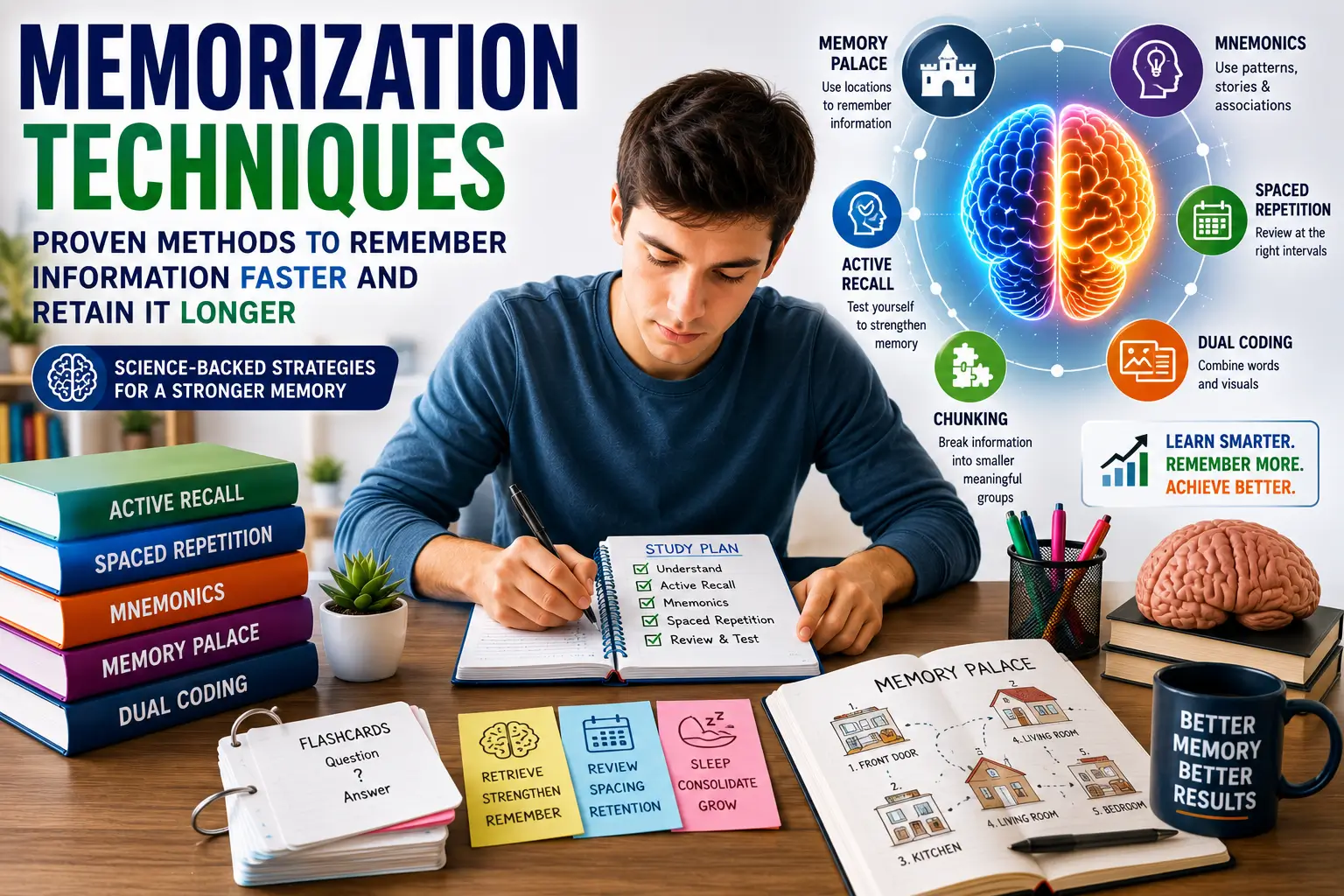
Everyone has experienced the frustration of forgetting important information shortly after learning it.
Whether you’re preparing for an exam, learning a new language, studying professional material, or simply trying to remember names and facts, memory plays a critical role in success.
The good news is that memory is not a fixed ability.
Research in cognitive psychology has shown that specific memorization techniques can dramatically improve how efficiently information is encoded, stored, and retrieved.
Many of these methods have been studied for decades and continue to be used by top students, memory athletes, and lifelong learners.
Rather than relying on repetition alone, effective memorization techniques work by leveraging how the brain naturally forms and retrieves memories.
In this guide, we’ll explore proven methods that can help you remember information faster and retain it longer.
Why Memorization Often Fails
Many learners attempt to memorize information by repeatedly rereading notes or highlighting large sections of text.
While these activities may create a sense of familiarity, they often fail to produce durable memory.
The brain remembers information more effectively when learning requires active processing and retrieval.
In other words, memory improves when information is used rather than simply observed.
This principle is supported by decades of research in cognitive science and learning psychology.
Successful memorization depends on creating stronger memory traces during encoding and strengthening retrieval pathways afterward.
The Science Behind Effective Memorization
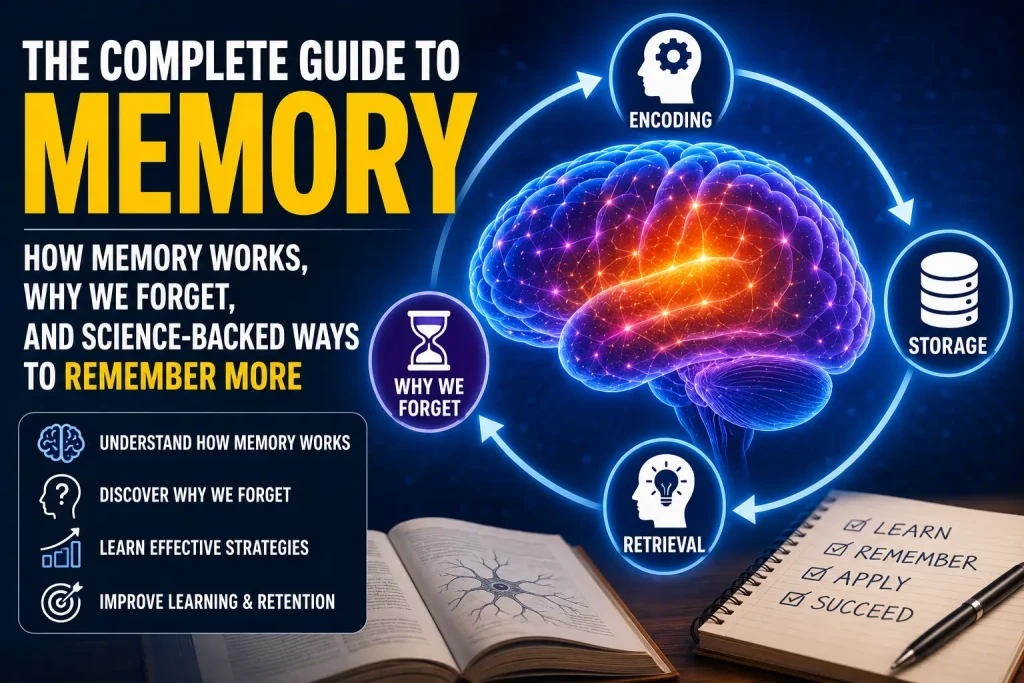
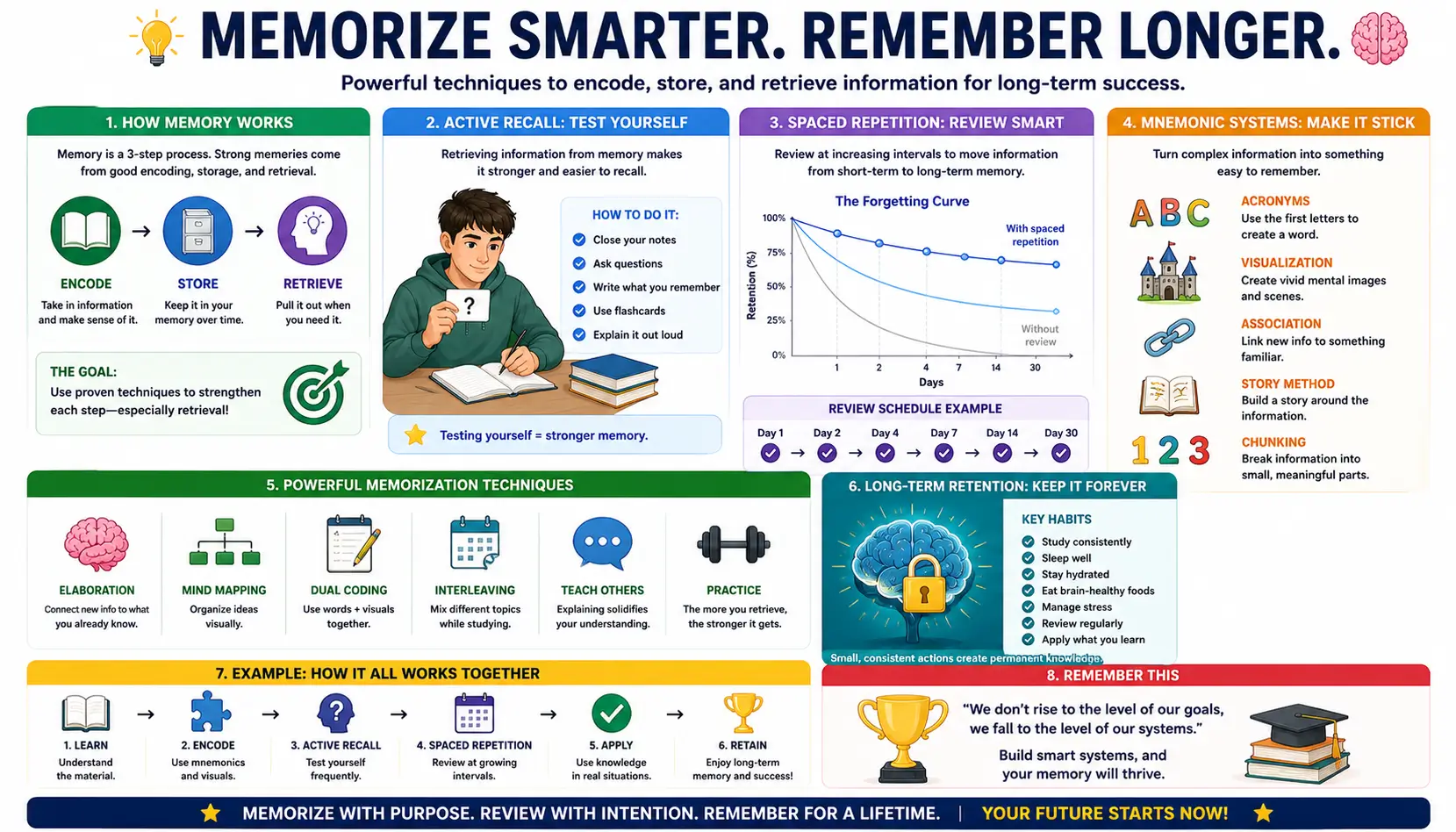
Memory formation occurs through several stages.
- Encoding information
- Storing information
- Consolidating memories
- Retrieving information later
Weakness at any stage can reduce recall.
This explains why effective memorization techniques target multiple parts of the memory process rather than relying on repetition alone.
Readers interested in how memories are formed can learn more from Memory Encoding and Memory Consolidation.


Technique #1: Active Recall
Active recall is consistently ranked among the most effective memorization techniques.
Instead of reviewing information passively, learners actively attempt to retrieve information from memory.
This retrieval process strengthens neural pathways and improves long-term retention.
Examples include:
- Answering practice questions
- Using flashcards
- Writing summaries from memory
- Teaching concepts to someone else
- Self-testing regularly
Research shows that retrieval strengthens memory far more effectively than rereading notes.
Learn more about this process in Active Recall.
Technique #2: The Memory Palace Method
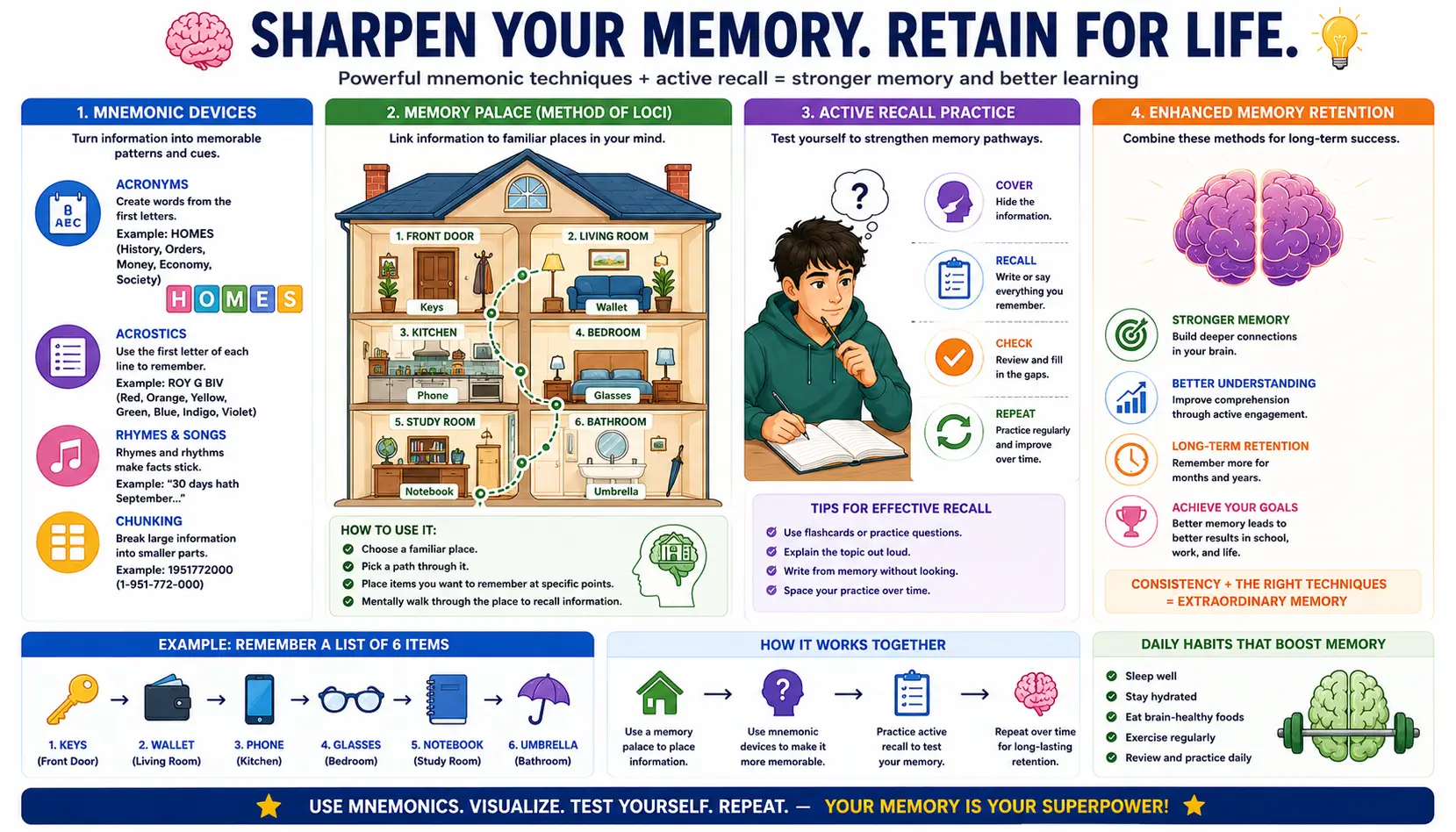
The Memory Palace, also known as the Method of Loci, is one of the oldest memorization systems ever developed.
This technique involves placing information within imagined physical locations.
When recall is needed, learners mentally walk through these locations and retrieve stored information.
The method works because the brain is naturally good at remembering places and spatial relationships.
Memory athletes frequently use this approach to memorize large amounts of information quickly.
Readers can explore the complete system in Memory Palace Technique and Method of Loci.
Technique #3: Mnemonics
Mnemonics improve memory by transforming difficult information into more meaningful and memorable forms.
Common mnemonic techniques include:
- Acronyms
- Acrostics
- Rhymes
- Visualization
- Association techniques
These methods reduce cognitive effort during retrieval and create stronger memory cues.
Mnemonics are particularly useful when memorizing lists, sequences, formulas, and terminology.
For a deeper exploration, see Mnemonics.
Technique #4: Spaced Repetition
One of the biggest reasons people forget information is that they review it only once.
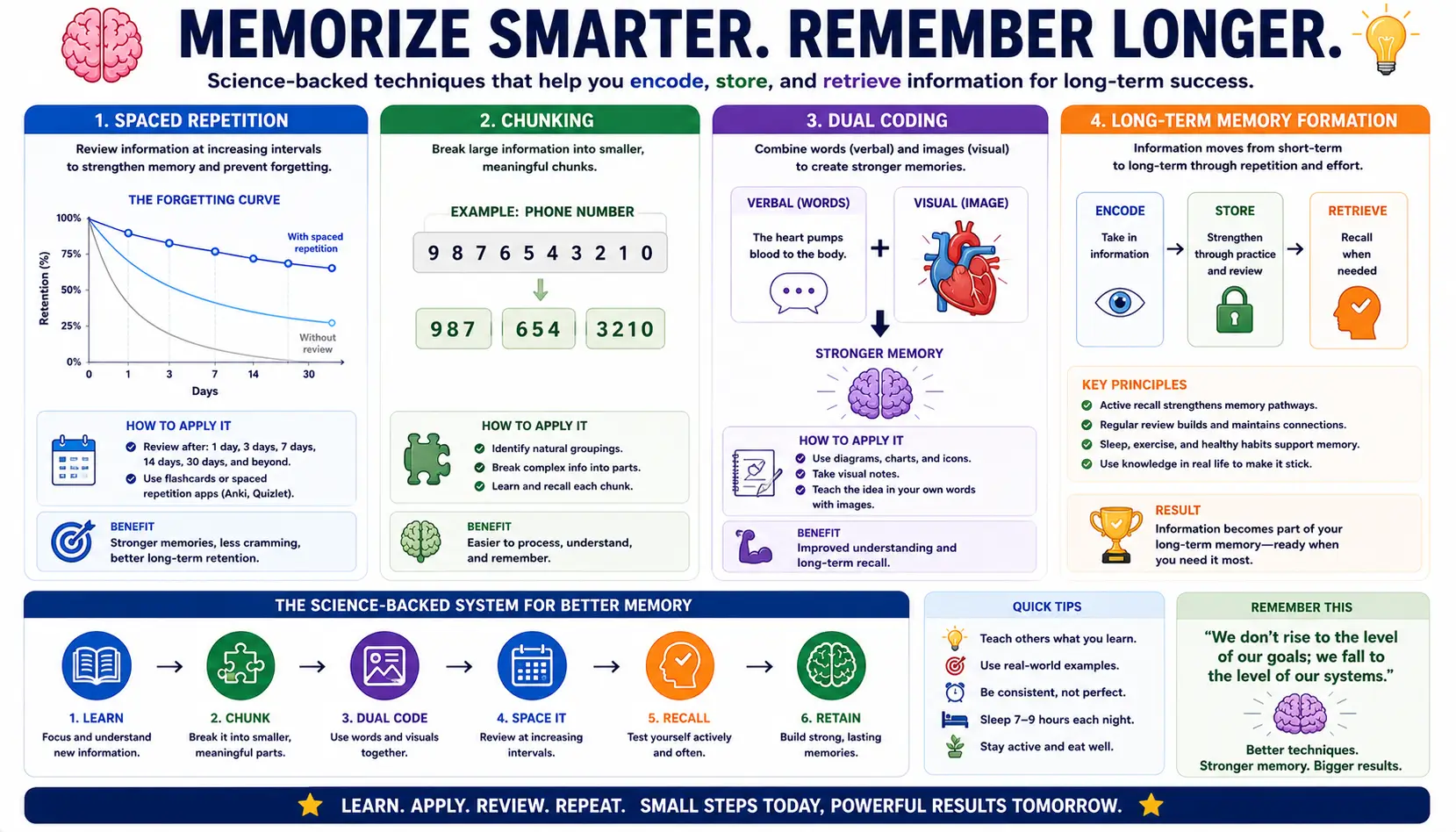
Spaced repetition solves this problem by scheduling reviews at carefully timed intervals.
Each review occurs when information is beginning to fade, forcing the brain to strengthen memory traces.
Over time, retention becomes dramatically more efficient.
A common review schedule might look like:
- 1 day after learning
- 3 days later
- 1 week later
- 2 weeks later
- 1 month later
This technique is strongly supported by research on long-term memory and forgetting.
Readers interested in implementing this system can explore Spaced Repetition and Anki Flashcards.
Technique #5: Chunking Information
Chunking involves grouping smaller pieces of information into larger, meaningful units.
This reduces the burden placed on working memory and makes information easier to retain.
For example:
- Phone numbers are divided into groups.
- Large concepts are organized into categories.
- Complex procedures are broken into manageable steps.
Because working memory has limited capacity, chunking allows learners to process larger amounts of information more efficiently.
Learn more about this strategy in Chunking Memory.
Technique #6: Dual Coding
The brain processes verbal and visual information through different systems.
Dual coding takes advantage of this by combining words with images, diagrams, charts, and visual representations.
When information is stored through multiple pathways, retrieval becomes easier.
Examples include:
- Mind maps
- Visual diagrams
- Concept charts
- Illustrated notes
- Infographics
Many learners find that visual representations make abstract information easier to remember.
Additional information can be found in Dual Coding Theory.
Technique #7: Elaborative Rehearsal
Simple repetition often creates weak memories.
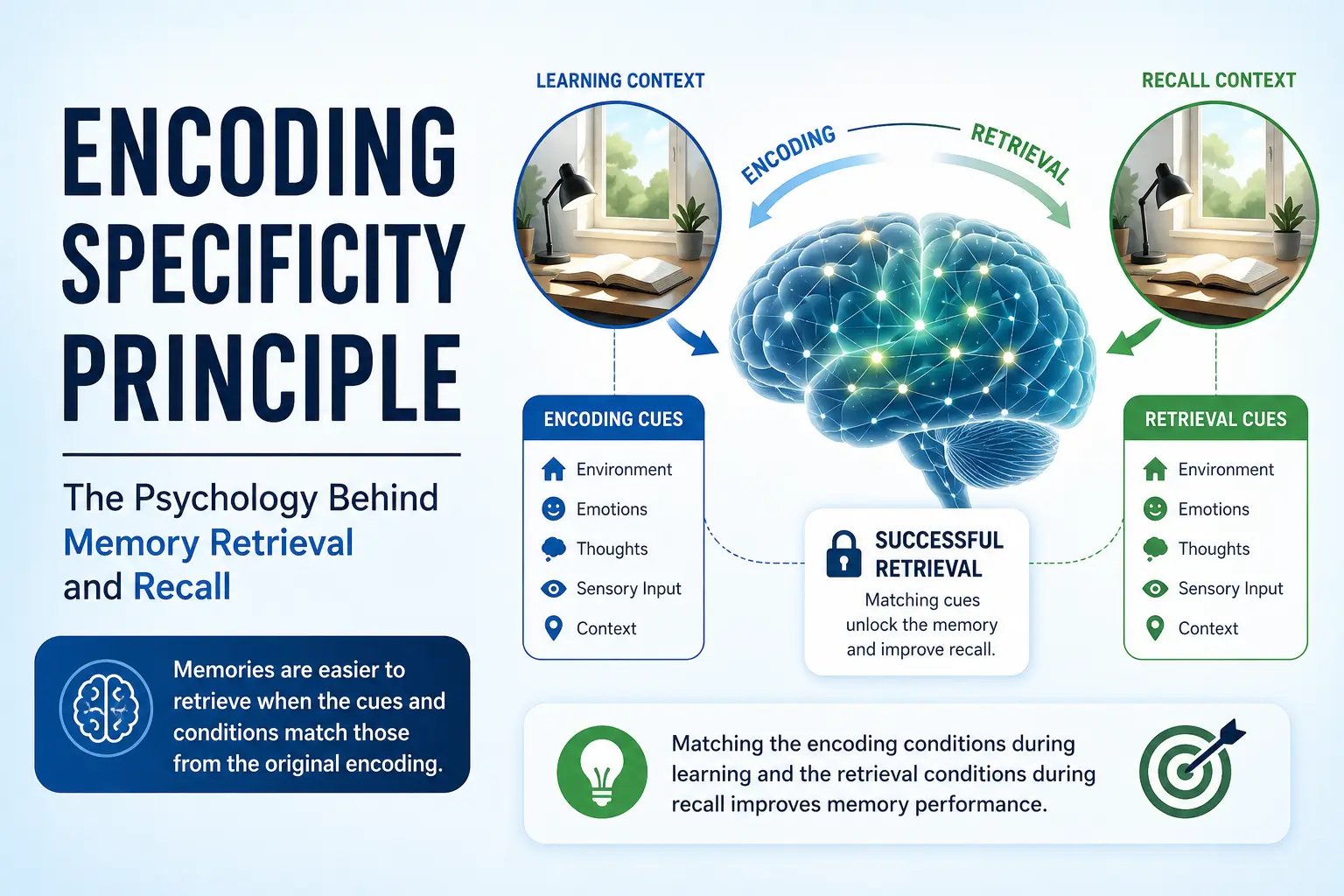
Elaborative rehearsal improves retention by connecting new information to existing knowledge.
Instead of asking:
“Can I repeat this?”
Ask:
“How does this connect to what I already know?”
Creating meaningful associations helps information move into long-term memory more effectively.
This technique is particularly useful for conceptual learning and academic subjects.
Readers can learn more from Elaborative Rehearsal.
Building a Personal Memorization System
If your goal is not only retention but also speed, read How to Memorize Faster for a more execution-focused workflow built around chunking, associations, and fast recall.
The most effective learners rarely depend on a single memory technique.
Instead, they combine multiple strategies into a consistent learning system.
A practical memorization workflow might include:
- Encode information using dual coding.
- Create meaningful associations.
- Apply mnemonic techniques.
- Practice active recall.
- Schedule spaced reviews.
- Use chunking for complex material.
- Get adequate sleep for memory consolidation.
When these methods work together, retention becomes significantly stronger than relying on repetition alone.
Supporting Better Long-Term Recall
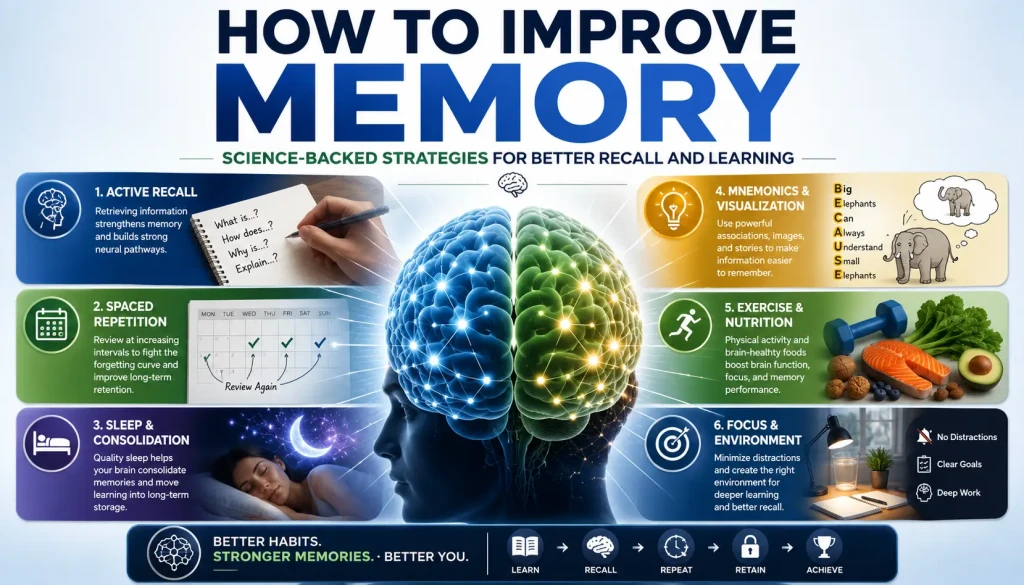
For a broader framework that connects memorization with retrieval, spacing, sleep, and daily learning habits, see How to Improve Memory.
Memorization is often misunderstood as a natural talent.
In reality, memory performance improves dramatically when learners use techniques aligned with how the brain naturally encodes and retrieves information.
Active recall, memory palaces, mnemonics, spaced repetition, chunking, dual coding, and elaborative rehearsal all strengthen memory through different mechanisms.
Combining these strategies creates a powerful system for learning faster and retaining information longer.
Research published through cognitive psychology and learning science literature consistently demonstrates that retrieval practice, spaced learning, meaningful encoding, and memory association techniques significantly improve long-term retention compared to passive review methods.