
Now Reading: Memory Interference Explained: How Old and New Memories Compete During Recall
-
01
Memory Interference Explained: How Old and New Memories Compete During Recall
Memory Interference Explained: How Old and New Memories Compete During Recall
Have you ever forgotten a newly learned password because you kept typing your old one?
Or struggled to remember where you parked today because yesterday’s parking spot kept coming to mind?
These experiences are common examples of memory interference.
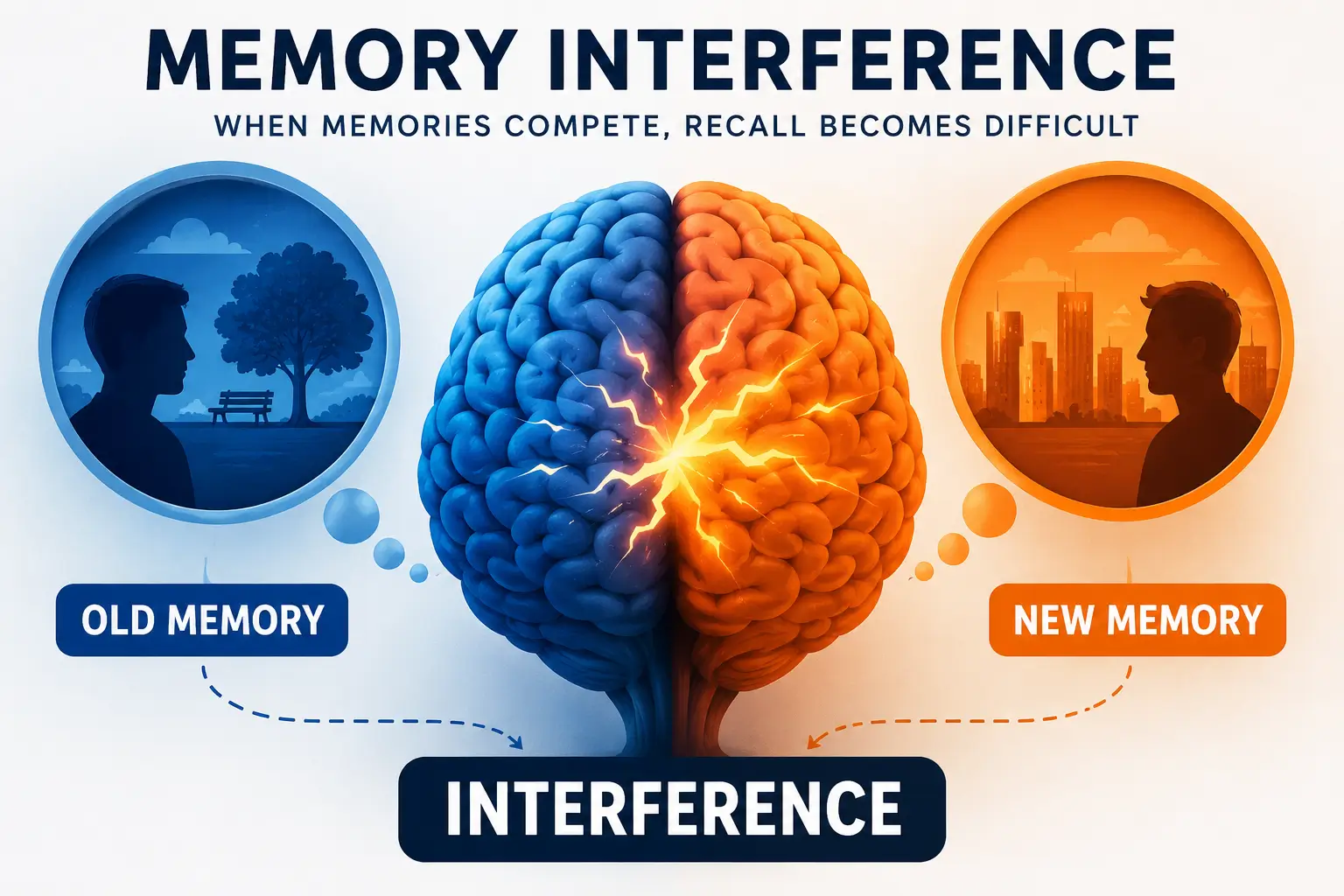
Memory interference occurs when one memory disrupts the recall of another memory. Instead of memories existing independently, old and new information often compete during retrieval, making accurate recall more difficult. Cognitive psychologists consider interference one of the major causes of everyday forgetting.
Understanding memory interference helps explain why forgetting happens even when information has not completely disappeared from memory. In many cases, the problem is not storage but retrieval.
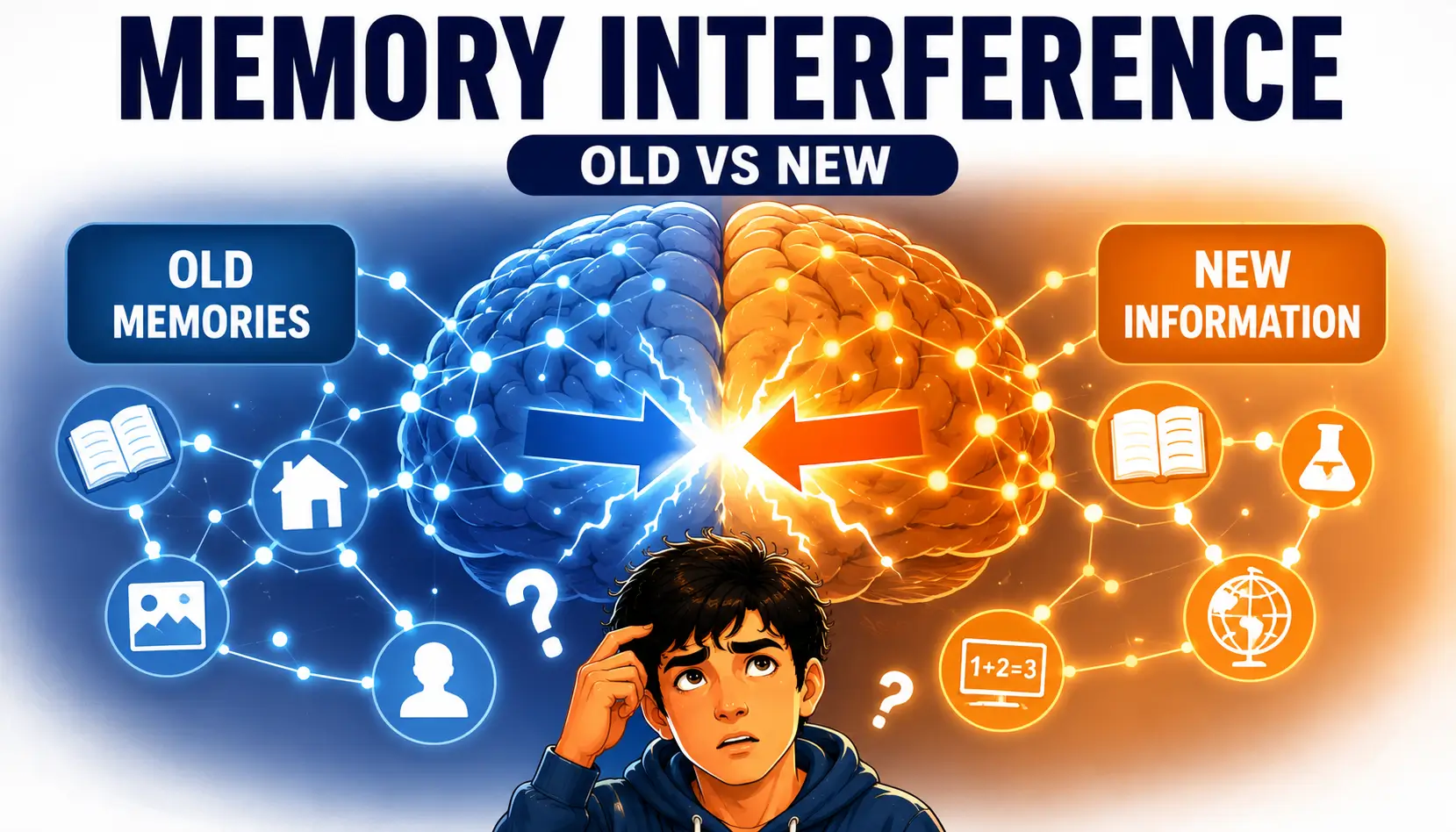
What Is Memory Interference?
Memory interference refers to a psychological phenomenon in which stored information competes with other memories during recall.
Rather than functioning as isolated files, memories exist within interconnected networks. When similar memories overlap, the brain may struggle to retrieve the correct information.
This concept has been studied for decades because it helps explain a surprising fact about forgetting: information can remain stored in memory even when it cannot be successfully recalled.
Unlike memory decay theories, which suggest that memories gradually fade over time, interference theory proposes that memories often remain available but become harder to access because competing information gets in the way.
This idea closely connects to Memory Retrieval, which explores how stored information is accessed and recalled.
Why Memory Interference Happens
The brain constantly absorbs new information.
Every day, people learn names, passwords, facts, procedures, locations, and experiences. As these memories accumulate, some begin sharing similar characteristics.
When memories overlap, retrieval becomes more challenging.
Interference becomes especially likely when:
- Information is highly similar.
- Learning sessions occur close together.
- Multiple memories share the same retrieval cues.
- Older and newer memories contain overlapping details.
- The retrieval environment provides weak memory cues.
The more similar two memories become, the more likely they are to interfere with one another.


The Two Main Types of Memory Interference
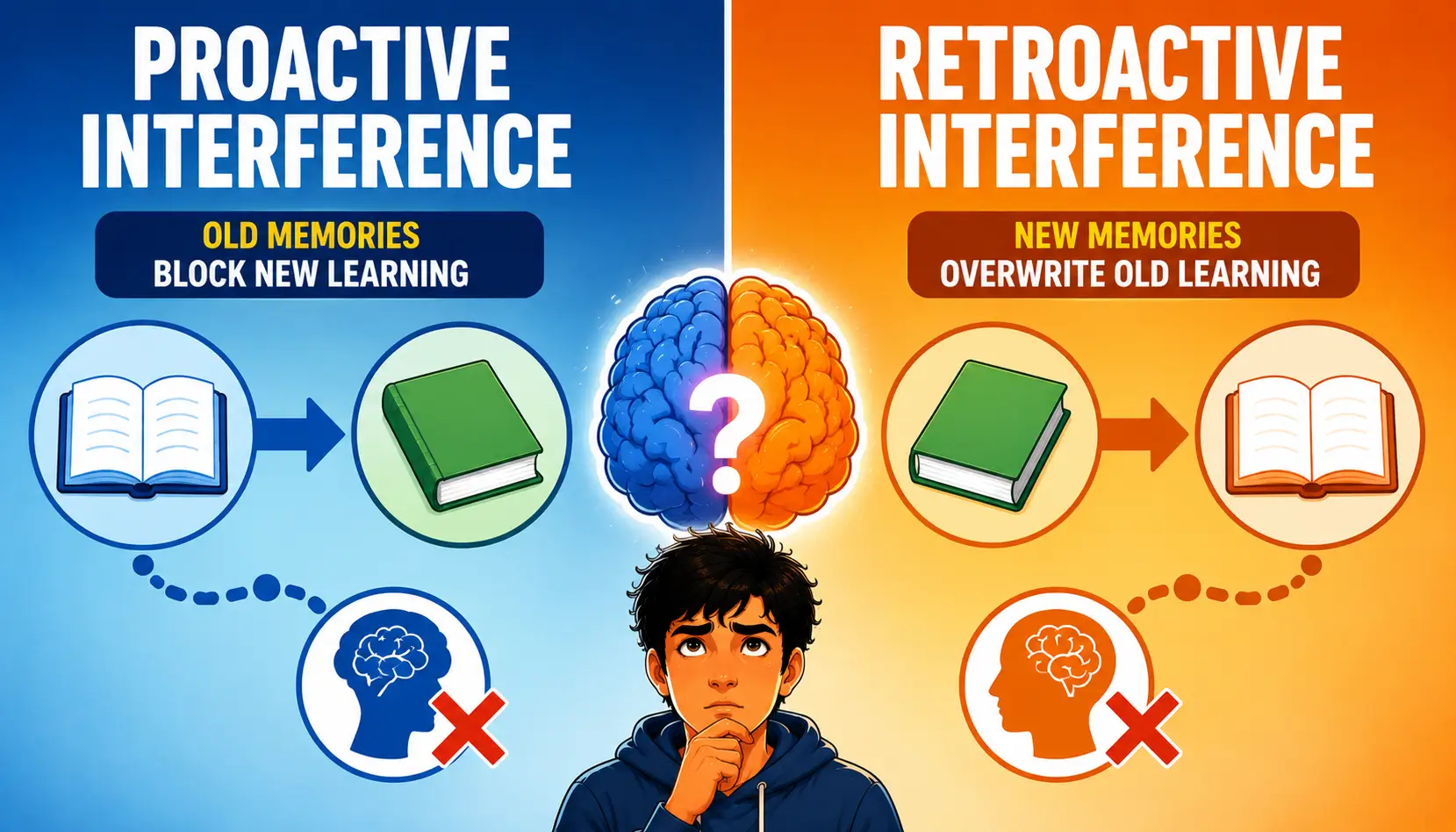
Researchers generally divide memory interference into two major categories: proactive interference and retroactive interference.
Proactive Interference
Proactive interference occurs when older memories interfere with the recall of newer information.
For example, after changing your email password, you may continue entering the previous password because it has been reinforced through repeated use.
In this situation, old information disrupts access to newly learned information.
Retroactive Interference
Retroactive interference occurs when newly learned information interferes with older memories.
Imagine learning a new phone number and suddenly struggling to remember your previous one. The newer memory competes with and partially blocks access to older information.
Both forms of interference demonstrate how memories constantly interact with one another rather than remaining completely separate.
Memory Interference and Forgetting
Many people assume forgetting means information has disappeared from memory.
Research suggests a different explanation.
In many cases, information remains stored but becomes difficult to access because competing memories interfere with retrieval.
This helps explain why a forgotten name, fact, or experience can suddenly return when the right cue is presented.
Studies involving Retrieval Cues show that effective cues can often overcome interference and improve recall performance.
The Relationship Between Interference and Retrieval Failure
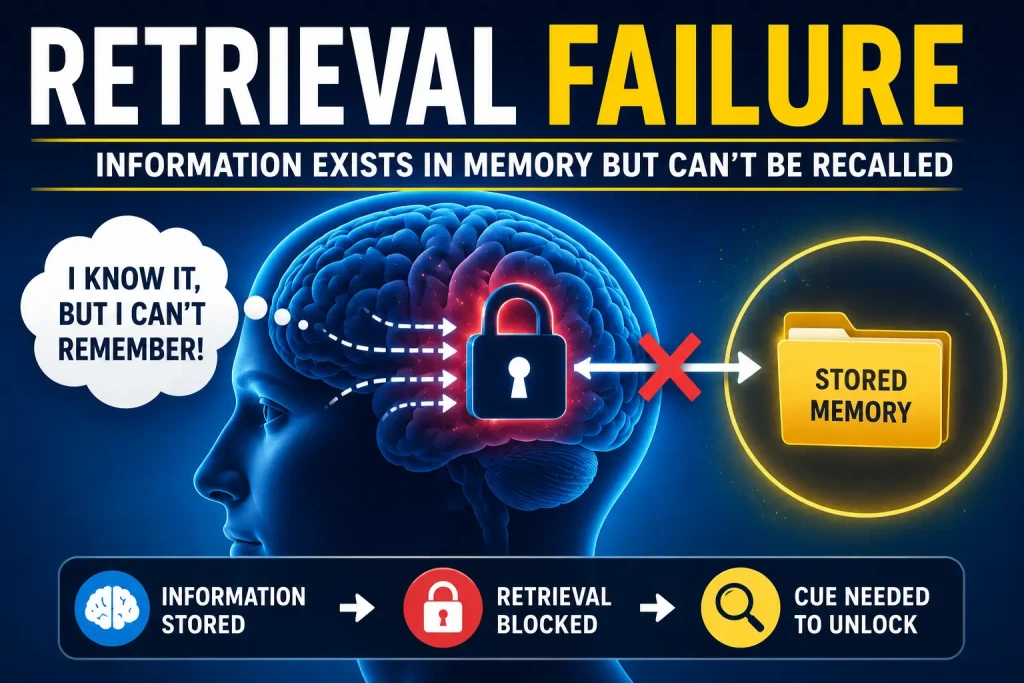
For a focused explanation of why stored information can become temporarily inaccessible, see Retrieval Failure.
Memory interference is closely related to retrieval failure.
Sometimes information exists in long-term memory but cannot be accessed at a specific moment because competing memories block the retrieval process.
This phenomenon helps explain experiences such as having a word “on the tip of your tongue” while being temporarily unable to recall it.
Understanding this relationship provides important insight into why forgetting occurs and how memory retrieval can sometimes fail despite successful learning.
Real-Life Examples of Memory Interference
Memory interference affects people every day, often without them realizing it.
Common examples include:
- Using an old password after creating a new one.
- Calling a new colleague by a former coworker’s name.
- Mixing information from different courses while studying.
- Confusing details from similar books or movies.
- Remembering a previous parking location instead of today’s.
These situations demonstrate how similar memories can compete during retrieval and create temporary recall errors.
Memory Interference in Learning
Interference plays an important role in education and skill development.
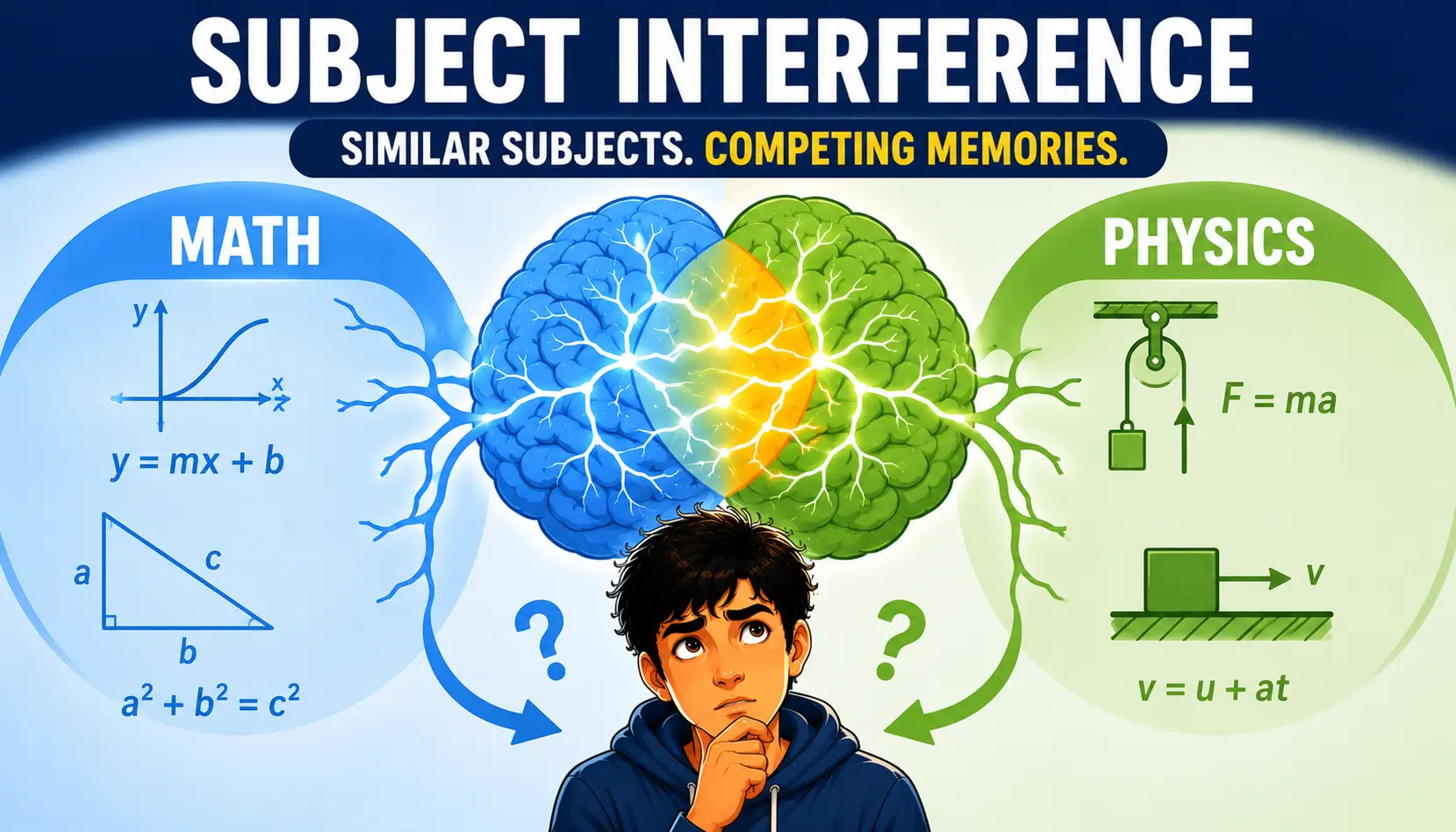
Students often experience interference when learning multiple subjects that contain similar concepts.
For example, studying Spanish and Italian simultaneously may create interference because many words and grammatical structures overlap.
Likewise, learning several scientific theories in a short period may increase confusion if adequate review is not used.
This is one reason why evidence-based learning strategies such as Spaced Repetition can improve long-term retention. Spacing study sessions reduces competition between similar memories and strengthens retrieval pathways.
Can Memory Interference Be Reduced?
Readers who want the larger context behind forgetting, recall problems, and memory-strengthening strategies can continue with the Complete Guide to Memory.
Although interference cannot be eliminated entirely, several strategies can reduce its effects.
- Space learning sessions over time.
- Use active recall instead of passive review.
- Create distinctive memory cues.
- Study similar topics separately when possible.
- Review information regularly before forgetting occurs.
- Connect new knowledge to existing understanding.
These techniques help strengthen memory traces and make retrieval more reliable.
Research on Active Recall suggests that repeatedly retrieving information improves accessibility and reduces competition from related memories.
Memory Interference and Long-Term Memory
Memory interference does not necessarily indicate weak memory.
In fact, interference often occurs because the brain has successfully stored large amounts of information.
The more knowledge a person possesses, the greater the potential for overlapping memories.
Efficient retrieval depends on strong encoding, effective retrieval cues, and regular reinforcement through practice.
This relationship highlights why memory systems are dynamic rather than static. Memories constantly interact, strengthen, weaken, and compete with one another throughout life.
FAQ
What is memory interference?
Memory interference is a psychological phenomenon in which one memory disrupts the retrieval of another memory, making accurate recall more difficult.
What is the difference between proactive and retroactive interference?
Proactive interference occurs when older memories interfere with newer information, while retroactive interference occurs when newer memories interfere with older memories.
Does interference mean a memory is lost?
No. In many cases the information remains stored but becomes temporarily inaccessible because competing memories block retrieval.
How can memory interference be reduced?
Spacing study sessions, practicing active recall, using retrieval cues, and reviewing information regularly can help reduce interference effects.
Readers interested in supporting cognitive performance and memory health can learn more about Advanced Memory Formula, a supplement designed to support healthy brain function and memory performance as part of a broader learning and wellness strategy.
Related Topics
- Memory Retrieval Explained: How the Brain Accesses Stored Information
- What Are Retrieval Cues? The Psychology Behind Memory Recall and Retrieval
- Encoding Specificity Principle: The Psychology Behind Memory Retrieval and Recall
- Ebbinghaus Forgetting Curve: Why We Forget and How to Remember More
Sources
- https://www.simplypsychology.org/interference-theory.html
- https://openstax.org/books/psychology-2e/pages/8-1-how-memory-functions
- https://dictionary.apa.org/interference-theory