
Now Reading: How to Focus on Studying: Science-Backed Strategies to Improve Concentration and Learning
-
01
How to Focus on Studying: Science-Backed Strategies to Improve Concentration and Learning
How to Focus on Studying: Science-Backed Strategies to Improve Concentration and Learning
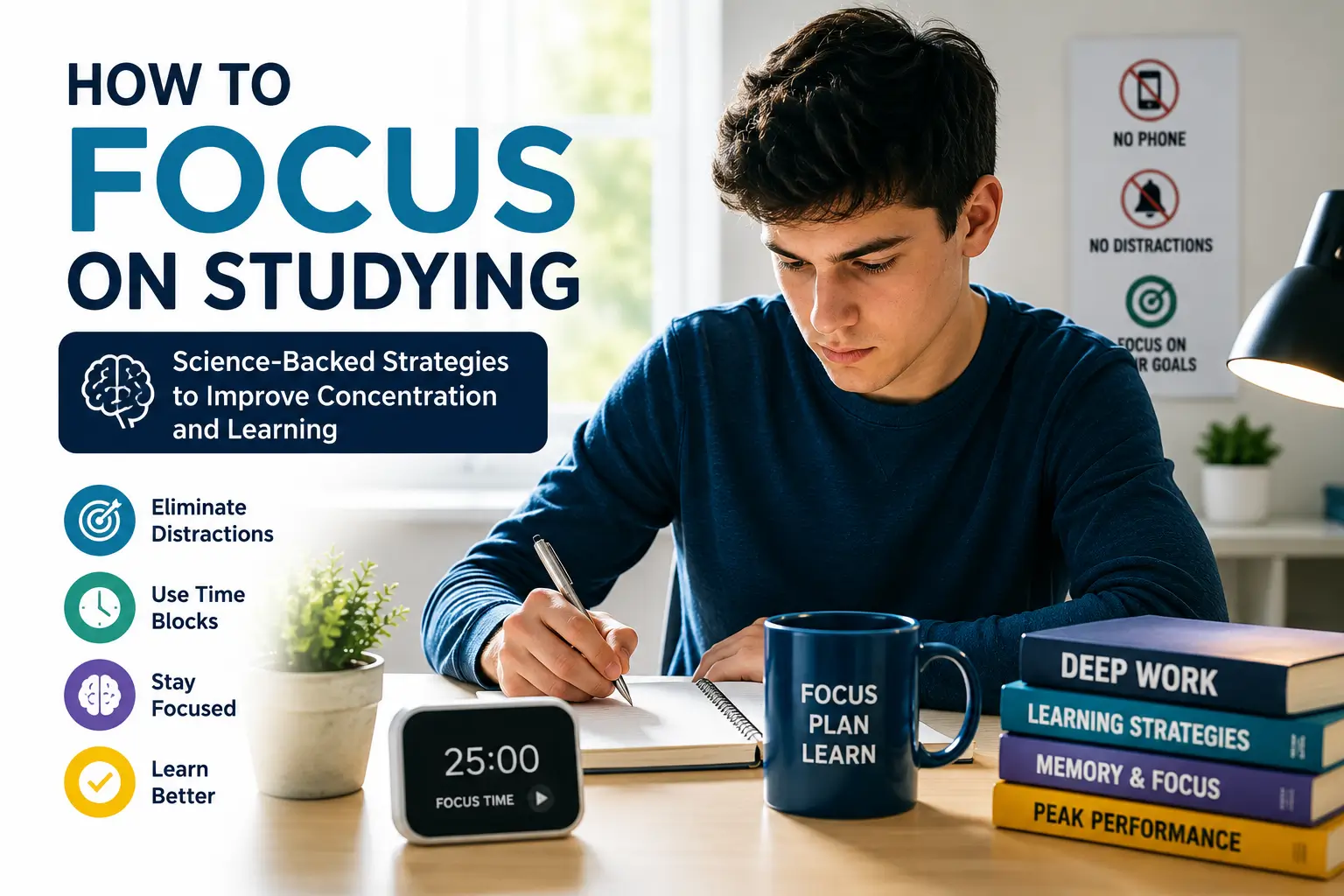
Learning how to focus on studying is one of the most important academic skills, yet it is also one of the biggest challenges students face today.
If you struggle to concentrate for more than a few minutes, constantly check your phone, or find yourself rereading the same paragraph repeatedly, you are not alone.
Research in cognitive psychology suggests that focus is not simply a matter of willpower. Concentration depends on attention management, mental energy, study habits, environment design, and the way information is processed by the brain.
The good news is that focus can be trained.
By understanding how attention works and applying evidence-based study techniques, it is possible to study more efficiently, learn faster, and retain information longer.
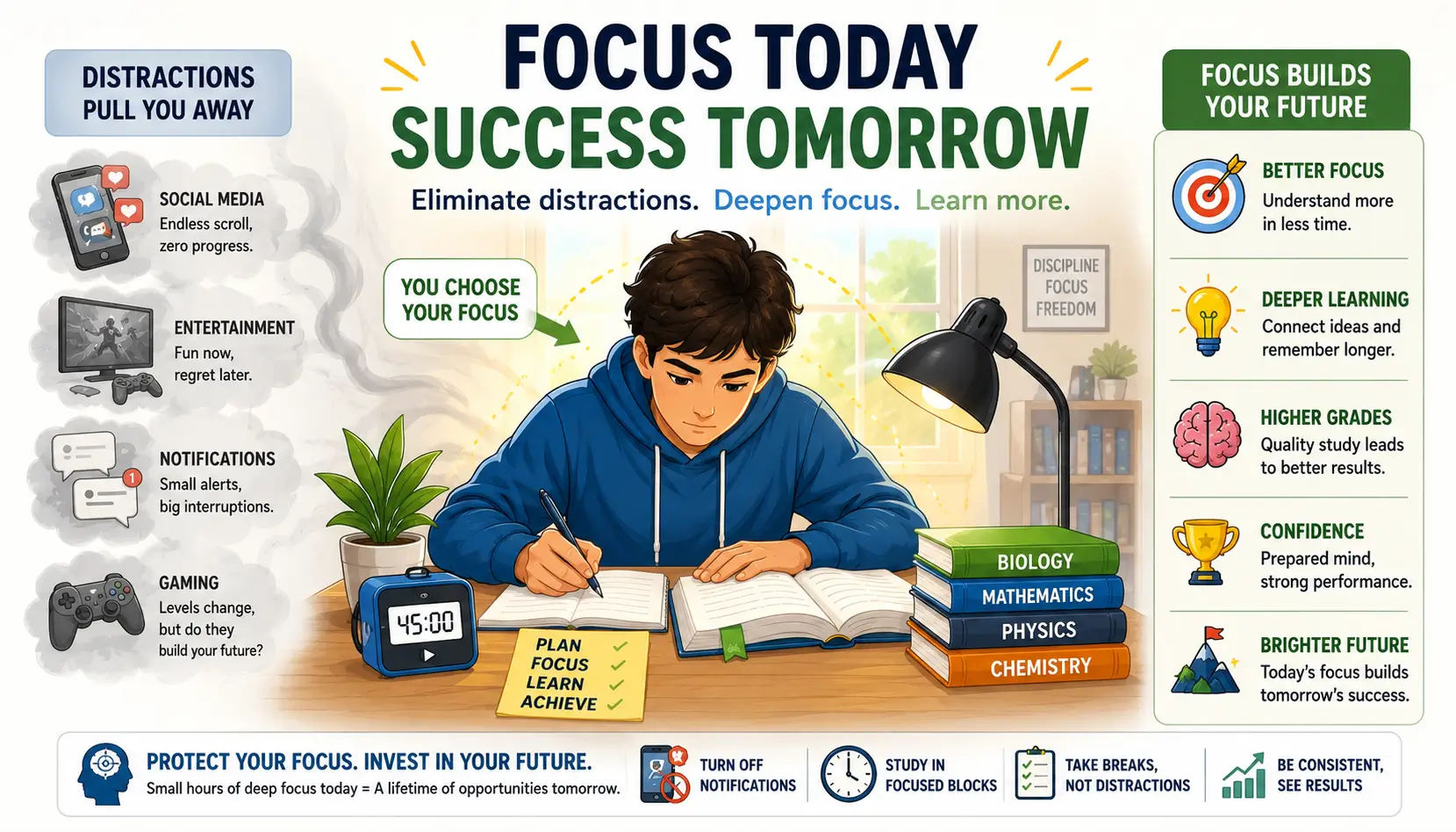
Why Staying Focused While Studying Is Difficult
The human brain evolved to notice changes in the environment.
From an evolutionary perspective, paying attention to new sounds, movements, or potential threats increased survival.
Modern technology takes advantage of this natural tendency.
Notifications, social media feeds, videos, and messages constantly compete for attention, making it harder to maintain a sustained attention span.
Every interruption forces the brain to switch tasks.
This process, often called task switching, creates cognitive costs that reduce efficiency and increase mental fatigue.
Research related to Cognitive Load Theory shows that unnecessary distractions consume valuable mental resources that could otherwise be devoted to learning.
How Attention Works During Learning
Because attention is the gateway to stronger encoding and recall, How to Improve Memory is a strong next read for turning focus into better retention.
Attention acts as the gateway to memory formation.
Before information can be stored in long-term memory, it must first pass through attention systems.
If attention is weak, memory formation becomes weaker as well.
This explains why students sometimes spend hours studying but remember very little afterward.
The issue is not always effort.
It is often attention quality.
Research on memory encoding consistently demonstrates that focused attention improves the likelihood that information will be stored successfully.


How to Create a Study Environment That Supports Focus
Your environment has a powerful influence on concentration.
Many distractions can be eliminated before studying even begins.
- Silence unnecessary notifications.
- Place your phone out of reach.
- Keep only study materials on your desk.
- Use website blockers when necessary.
- Maintain a clean workspace.
- Choose a consistent study location.
Research related to context-dependent memory suggests that stable study environments can support learning consistency and recall.
Use Time Blocks Instead of Endless Study Sessions
To turn focused sessions into a repeatable system, use a structured Study Schedule that spaces work and review across the week.
Many students believe longer study sessions automatically produce better results.
Research suggests otherwise.
The brain performs best when periods of intense concentration are balanced with short breaks.
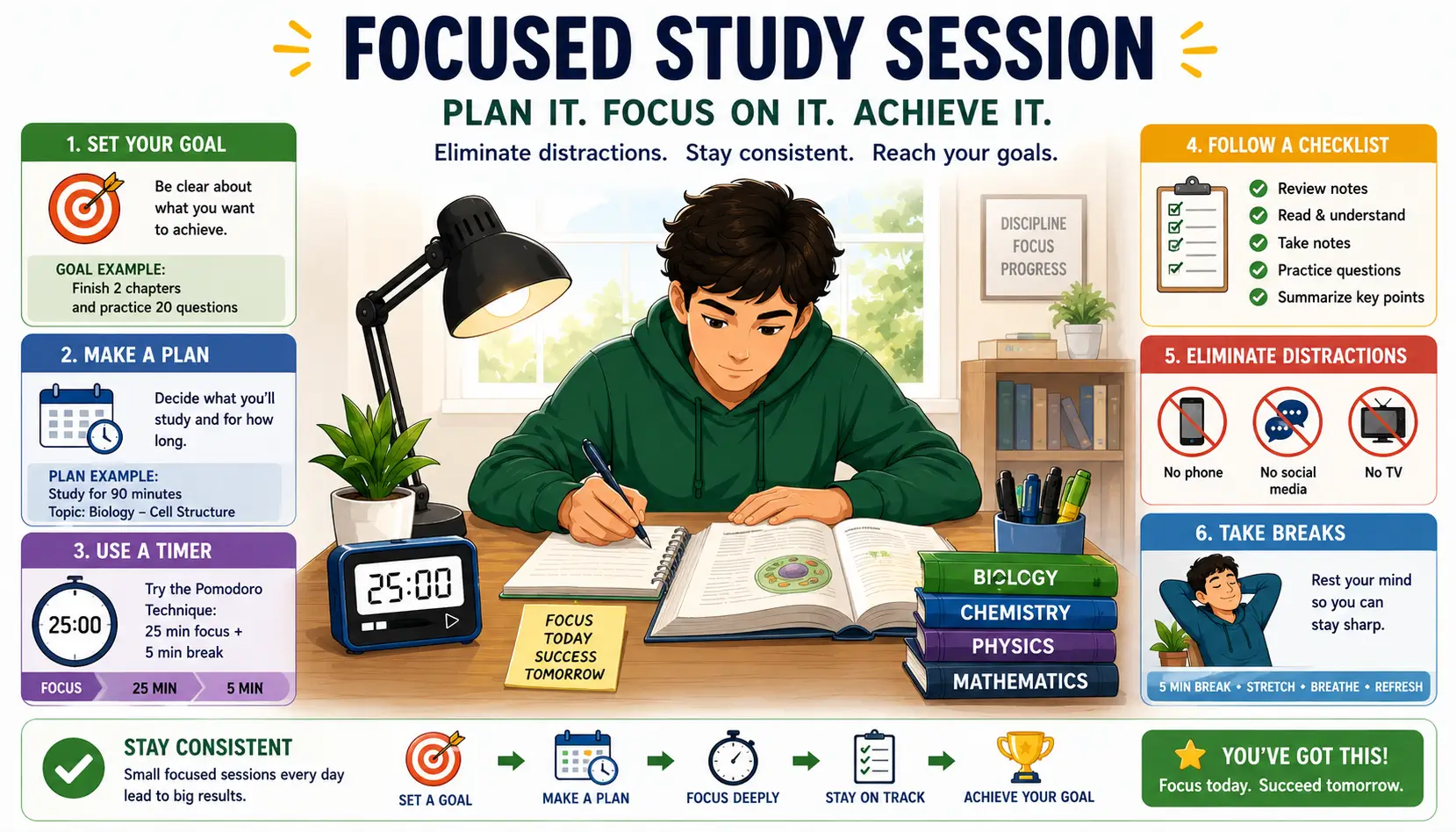
One common approach is the Pomodoro Technique:
- 25 minutes of focused study
- 5-minute break
- Repeat four times
- Take a longer break
This approach helps maintain mental energy while reducing attention fatigue.
Structured study sessions often outperform marathon sessions that lead to exhaustion.
Set Specific Study Goals Before Starting
Vague goals create vague results.
Sitting down with the intention to “study biology” provides little direction for the brain.
Instead, define specific objectives:
- Complete Chapter 3 notes
- Review 20 flashcards
- Solve 15 practice questions
- Summarize one lecture
Specific goals provide clear targets for attention and reduce decision fatigue during study sessions.
Students who use structured learning objectives often maintain focus more effectively because their brains know exactly what task requires attention.
For many learners, combining specific goals with Active Recall produces significantly better learning outcomes than passive reading alone.
Train Your Brain to Resist Distractions
Focus is similar to a muscle.
The more consistently you practice sustained attention, the stronger it becomes over time.
Many students accidentally train distraction instead of concentration by constantly switching between tasks.
Checking messages every few minutes teaches the brain to expect interruptions.
Practicing uninterrupted study sessions teaches the opposite.
Start small.
Even ten minutes of complete focus can help build stronger attention control.
Gradually increase study intervals as concentration improves.
Why Multitasking Hurts Learning
Despite its popularity, multitasking is largely a myth when it comes to learning.
The brain does not truly perform multiple demanding cognitive tasks simultaneously.
Instead, it rapidly switches between them.
This constant switching increases errors, slows learning, and weakens memory formation.
Studies consistently show that students who focus on one task at a time outperform those who divide attention between multiple activities.
If your goal is better retention and understanding, single-tasking is almost always the better strategy.
This principle closely aligns with findings discussed in How to Study Effectively.
Use Active Learning to Maintain Attention
Passive reading often allows the mind to wander.
Active learning forces attention to stay engaged.
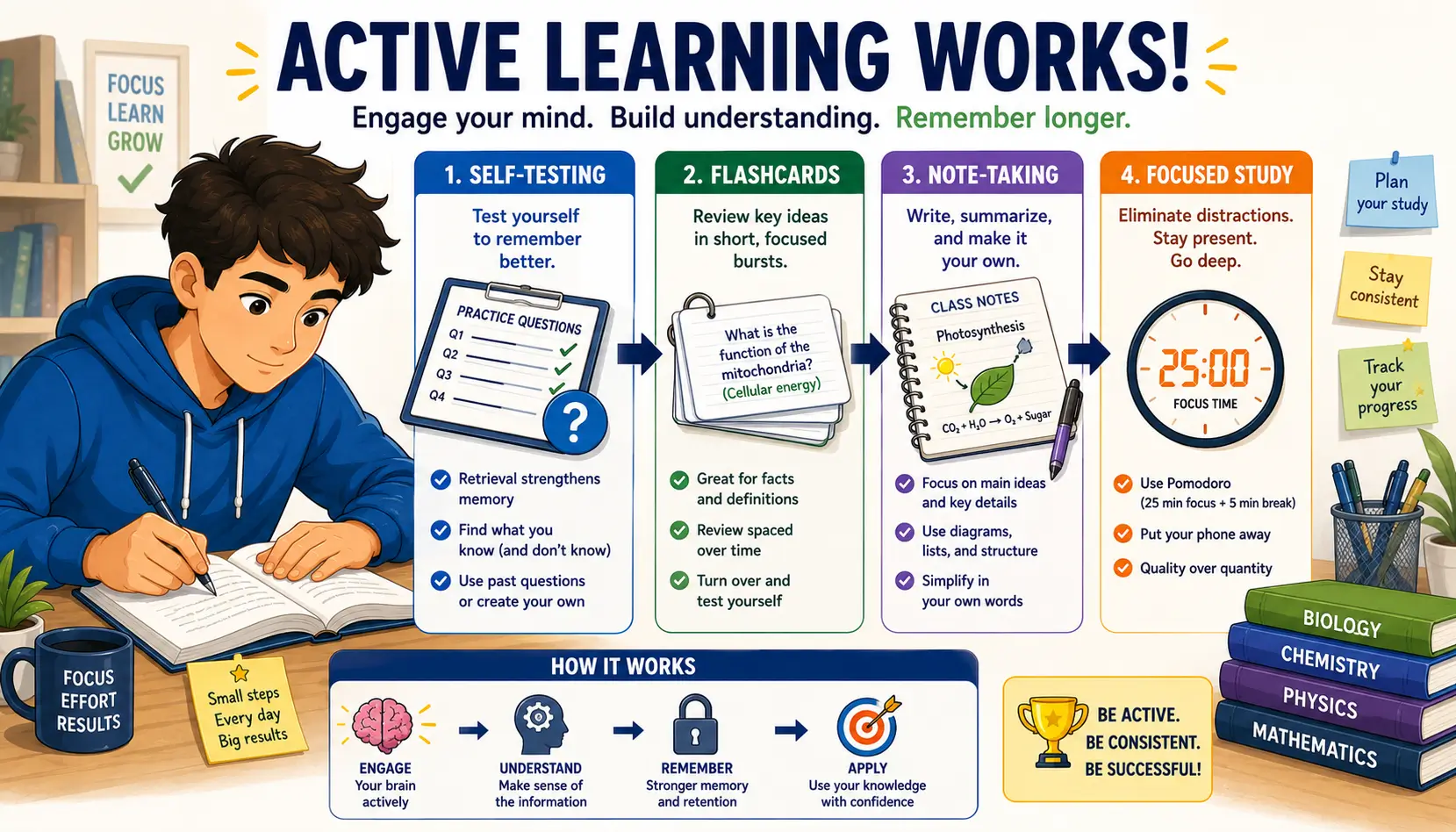
Instead of simply reading material, try:
- Testing yourself without looking at notes.
- Explaining concepts in your own words.
- Creating summaries.
- Answering practice questions.
- Using flashcards.
These techniques require active participation from the brain and naturally increase concentration.
Research supporting Retrieval Practice and the Testing Effect shows that active engagement improves both focus and memory retention.
The Role of Sleep in Concentration
Many students attempt to compensate for poor study habits by studying longer.
Unfortunately, sleep deprivation often reduces the effectiveness of those extra hours.
Sleep supports attention, decision-making, memory consolidation, and mental energy.
Even one night of inadequate sleep can noticeably reduce concentration.
Students who prioritize sleep often learn faster than those who sacrifice rest for additional study time.
Research discussed in Sleep and Memory Consolidation demonstrates the critical relationship between sleep quality and learning performance.
Nutrition, Exercise, and Mental Energy
Focus is influenced by physical health as much as study techniques.
Regular physical activity improves blood flow to the brain and supports cognitive performance.
Proper hydration and balanced nutrition also contribute to sustained attention.
While no single food instantly improves concentration, healthy daily habits create conditions that support better learning.
Small improvements in physical wellbeing often produce meaningful improvements in study performance.
Frequently Asked Questions
How long can the average person stay focused while studying?
Attention varies between individuals, but many learners benefit from focused study blocks lasting between 25 and 60 minutes followed by short breaks.
Does listening to music improve concentration?
For some people, instrumental background music may improve focus. For others, any form of music becomes a distraction. Personal experimentation is often necessary.
Why do I lose focus so quickly when reading?
Common causes include mental fatigue, lack of sleep, distractions, low engagement with the material, or attempting to study for too long without breaks.
What is the fastest way to improve concentration?
Reducing distractions, setting clear goals, using active learning techniques, and maintaining consistent sleep habits are among the most effective strategies.
Building Long-Term Study Focus
Learning how to focus on studying is not about forcing yourself to concentrate through sheer willpower.
It is about creating conditions that allow attention to thrive.
A distraction-free environment, structured study sessions, active learning techniques, adequate sleep, and realistic goals all work together to improve concentration.
Over time, these habits make studying feel less mentally exhausting and far more productive.
Students who consistently train their attention often discover that learning becomes faster, easier, and significantly more effective.
If your goal is long-term academic improvement, focus should be treated as a skill that can be developed rather than a fixed ability.
Some learners also choose to support healthy cognitive performance and memory function through evidence-based nutrition. Learn more here: Advanced Memory Formula.
Related Topics
- How to Study Effectively: Science-Backed Methods to Learn Faster and Remember More
- Active Recall: The Science-Backed Study Method for Long-Term Memory
- Retrieval Practice: Why Testing Yourself Improves Memory Retention
- Study Skills: Essential Academic Skills That Improve Learning, Retention, and Performance