
Now Reading: How to Remember What You Read: Science-Backed Strategies for Better Retention
-
01
How to Remember What You Read: Science-Backed Strategies for Better Retention
How to Remember What You Read: Science-Backed Strategies for Better Retention
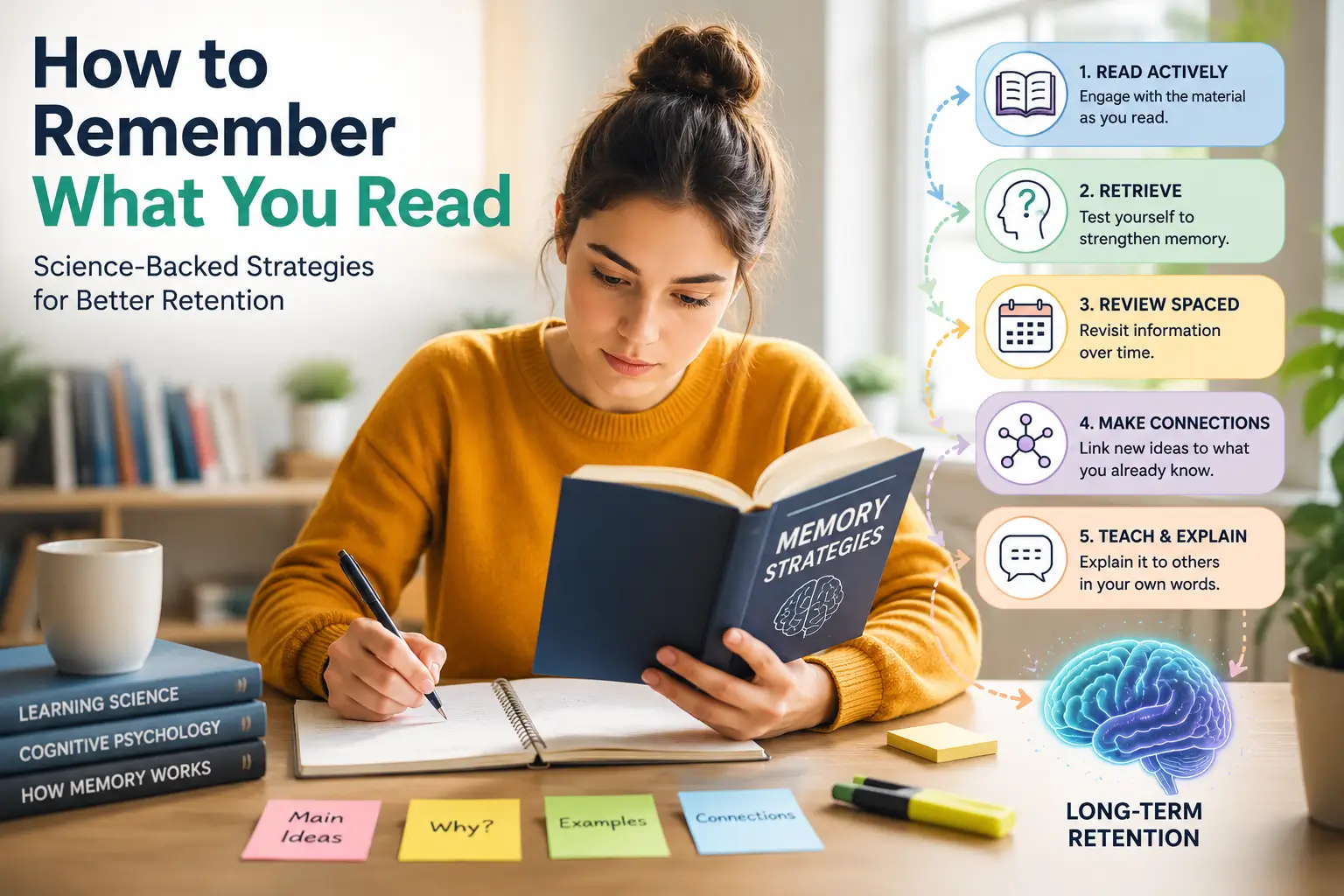
Remembering what you read is not simply a matter of spending more time with a book. Research in cognitive psychology shows that retention improves when information is actively processed, connected to existing knowledge, retrieved from memory, and reviewed over time. In other words, the way you read often matters more than how much you read.
If you regularly finish articles, textbooks, or books only to forget most of the information a few days later, you’re not alone. The brain is designed to filter out information it considers unimportant. Fortunately, several evidence-based learning strategies can dramatically improve how much you remember after reading.
In this guide, you’ll learn how memory works during reading and discover practical techniques that help transform information from short-term awareness into long-term knowledge.
Why We Forget Most of What We Read
Many people assume forgetting is a sign of poor memory. In reality, forgetting is a normal part of how the brain operates.
When information is first encountered, it enters working memory. Unless that information receives sufficient attention, meaning, and repetition, it gradually fades before reaching long-term storage.
This process is closely related to the principles described in our article on Ebbinghaus Forgetting Curve, which demonstrates how memory naturally declines when information is not revisited.
Several factors contribute to poor reading retention:
- Passive reading without active engagement
- Information overload
- Lack of review or retrieval practice
- Distractions while reading
- Shallow processing of information
- Failure to connect new ideas with existing knowledge
The good news is that these factors can be addressed using scientifically supported learning techniques.
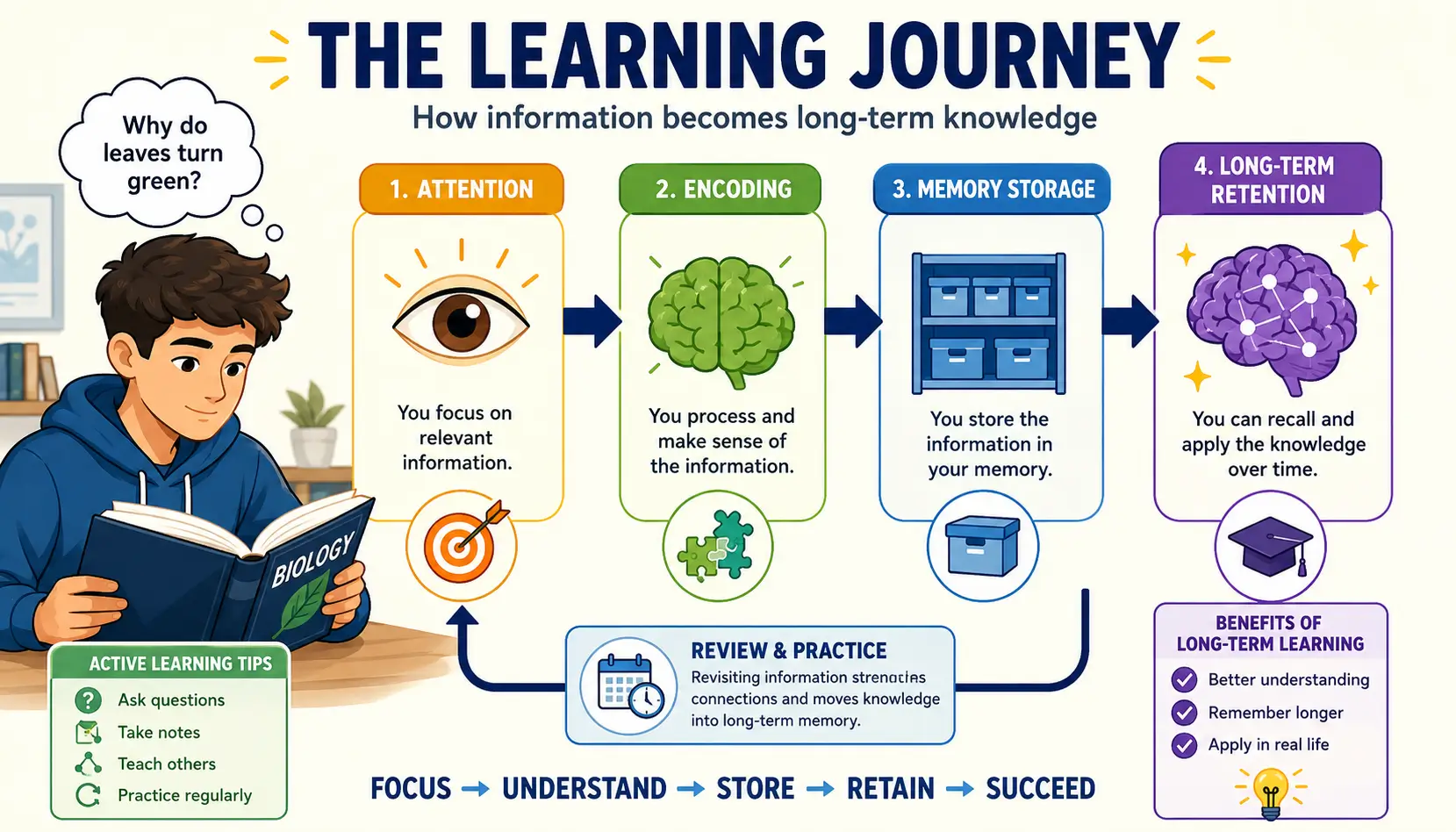
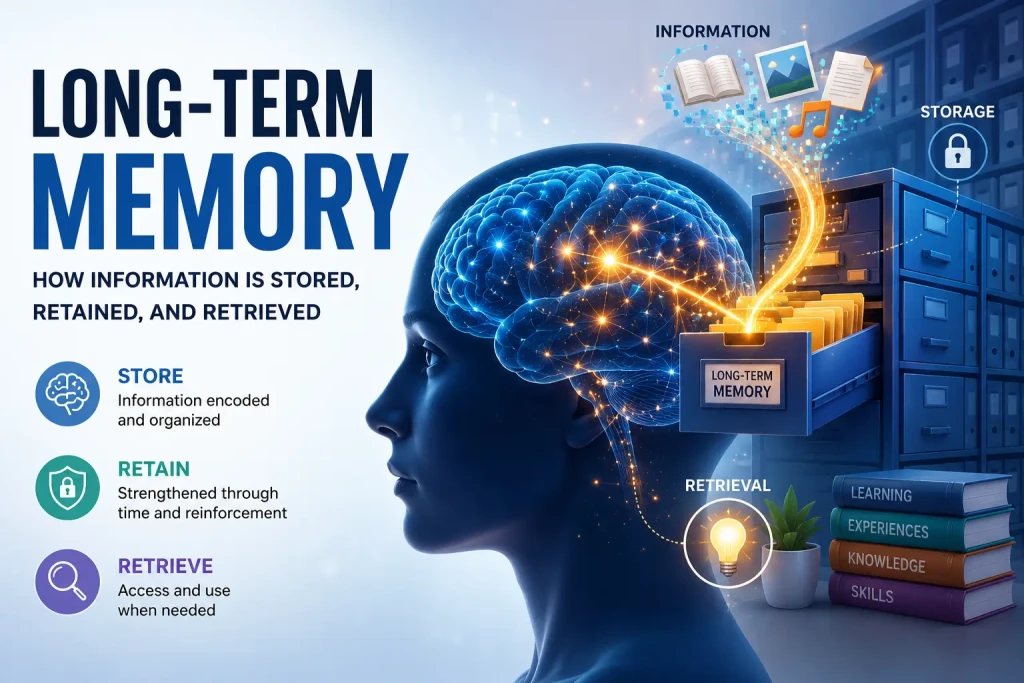
How Reading Creates Long-Term Memory
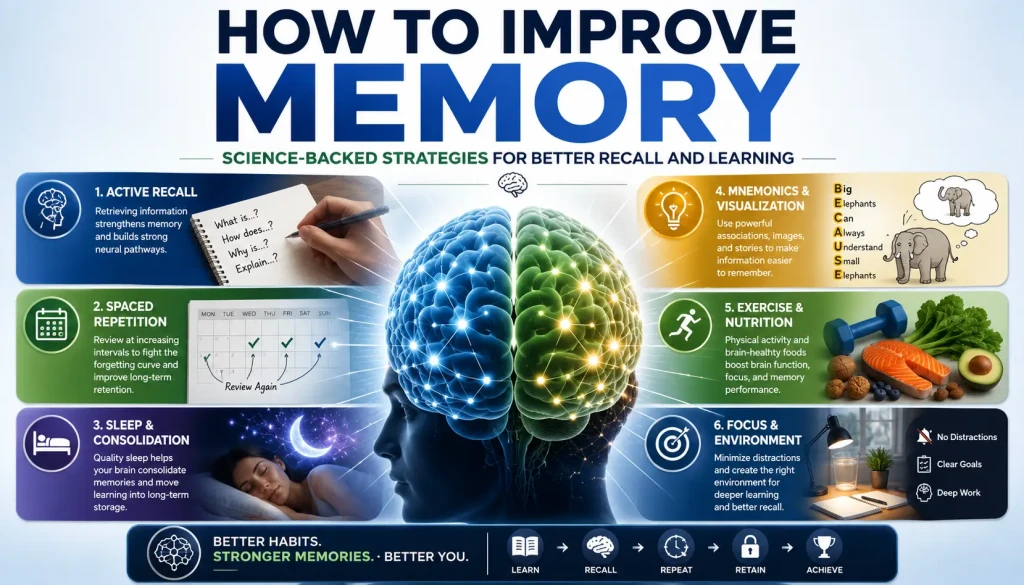
If you want a broader set of science-backed strategies beyond reading-specific retention, visit How to Improve Memory.
To understand how to remember what you read, it helps to understand the basic stages of memory formation.
Information typically moves through several stages:
- Attention
- Encoding
- Storage
- Retrieval
Without attention, encoding becomes weak. Without retrieval, stored memories become difficult to access. Effective readers strengthen each stage of this process.
Research on memory encoding shows that meaningful engagement with information creates stronger neural connections and improves future recall.

Strategy #1: Read Actively Instead of Passively
One of the biggest mistakes readers make is treating reading as a purely visual activity.
Passive reading often looks like this:
- Reading page after page without reflection
- Highlighting excessively
- Continuing despite losing focus
- Never testing understanding
Active reading requires constant interaction with the material.
As you read, ask questions such as:
- What is the main idea?
- Why is this important?
- How does this connect to something I already know?
- Could I explain this to someone else?
These questions force deeper processing and help move information into long-term memory.
Strategy #2: Use Retrieval Practice While Reading
One of the most effective learning techniques ever studied is retrieval practice.
Instead of repeatedly reviewing information, retrieval practice requires you to recall information from memory.
For example:
- Read a section.
- Close the book.
- Write down everything you remember.
- Check for missing information.
This simple technique strengthens memory traces and improves future recall.
Studies consistently show that retrieval practice outperforms passive review for long-term retention. We explored this concept in depth in Retrieval Practice and The Testing Effect.
Strategy #3: Connect New Information to Existing Knowledge
The brain learns more efficiently when new information can attach itself to something already stored in memory.
This is why prior knowledge plays such a powerful role in learning.
When reading:
- Look for familiar concepts.
- Compare new ideas to past experiences.
- Create analogies.
- Identify similarities and differences.
These connections create multiple retrieval pathways, making information easier to access later.
Strategy #4: Apply Elaborative Rehearsal
Simply repeating information rarely produces durable learning.
Elaborative rehearsal involves expanding, explaining, and interpreting information.
For example, instead of memorizing a definition, ask:
- Why does this concept matter?
- How does it work in real life?
- What examples demonstrate it?
Research suggests that deeper processing leads to stronger memory formation. This principle is closely related to both Elaborative Rehearsal and Levels of Processing Theory.
Strategy #5: Take Better Notes While Reading
Effective note-taking is not about copying information. It is about transforming information.
Good notes force the brain to reorganize concepts using its own words.
Some effective approaches include:
- Cornell notes
- Question-and-answer notes
- Concept mapping
- Summary notes
- Feynman-style explanations
The goal is to create understanding rather than produce a transcript of the original material.
Many learners find success combining note-taking with the techniques described in The Feynman Technique.
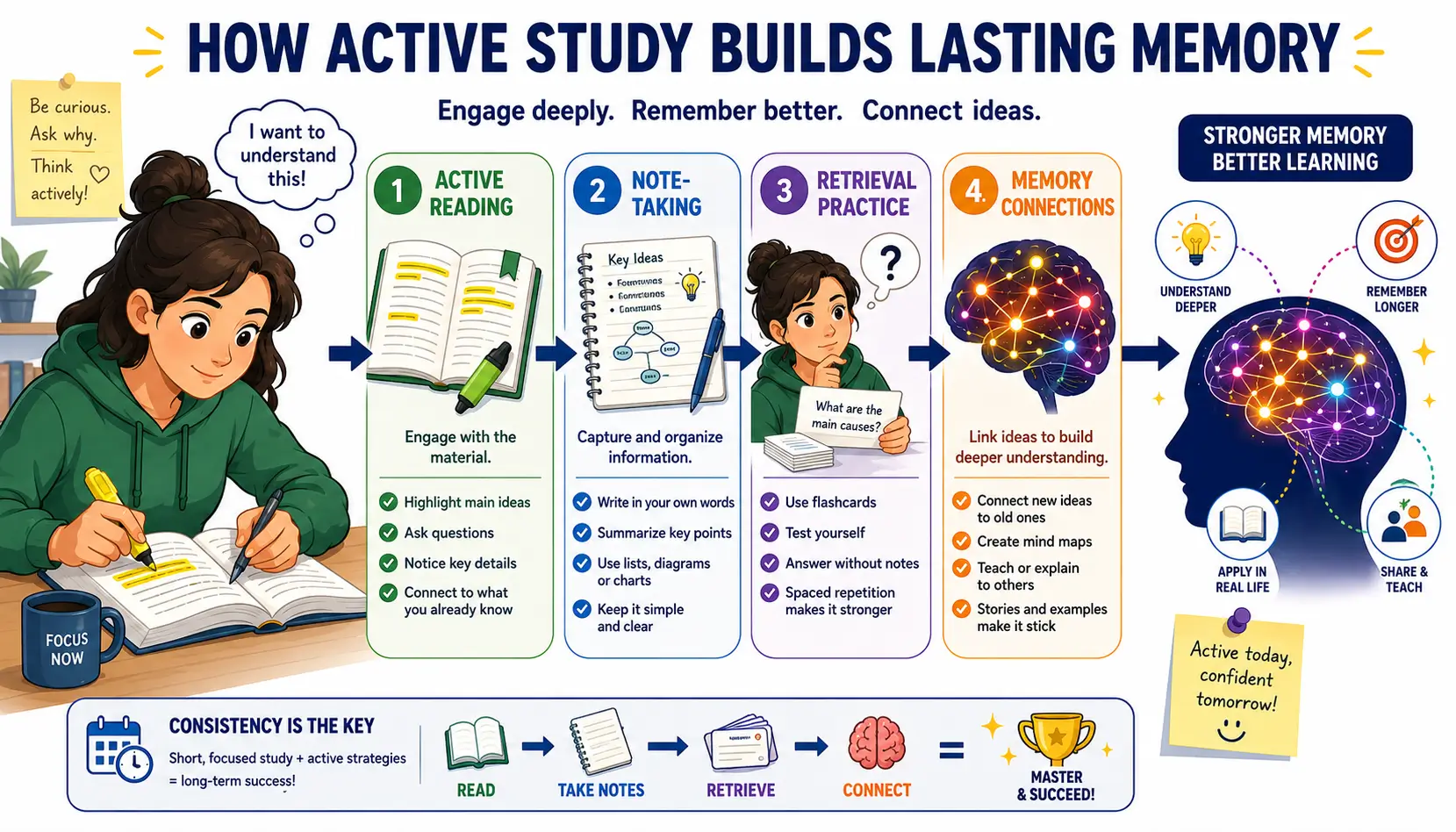
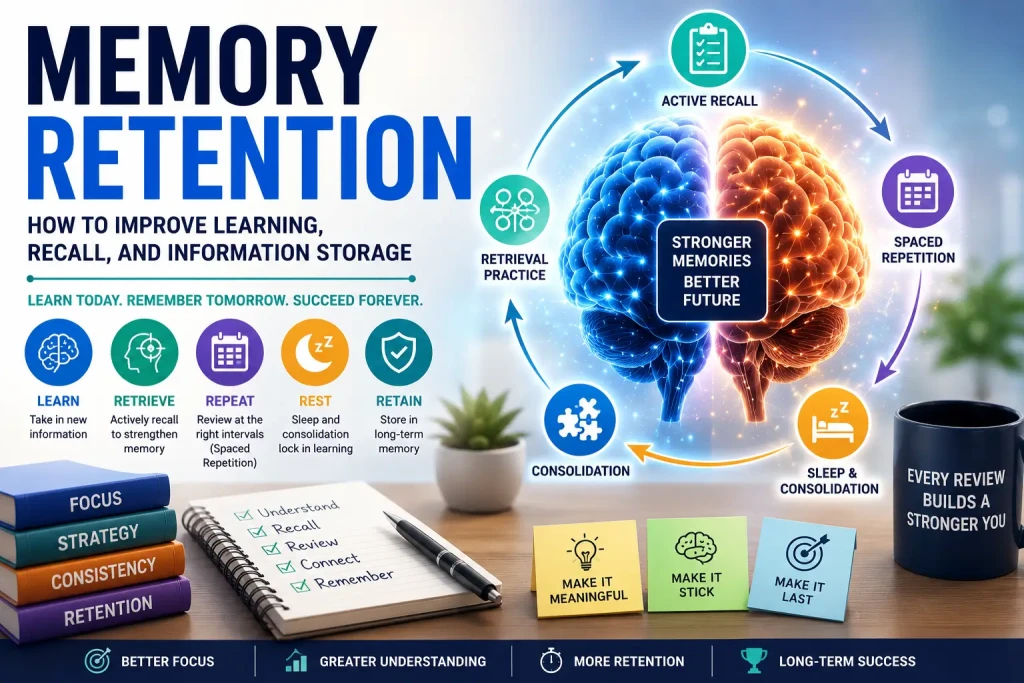
Strategy #6: Review Information Using Spaced Repetition
One of the biggest mistakes readers make is assuming that understanding something once means it will be remembered forever.
Memory doesn’t work that way.
Without review, newly learned information gradually becomes harder to retrieve.
This is where Spaced Repetition becomes valuable.
Instead of reviewing material repeatedly in a single session, spaced repetition spreads reviews over increasing intervals.
A simple schedule might look like:
- Review after 1 day
- Review after 3 days
- Review after 1 week
- Review after 2 weeks
- Review after 1 month
This approach strengthens long-term retention while reducing total study time.
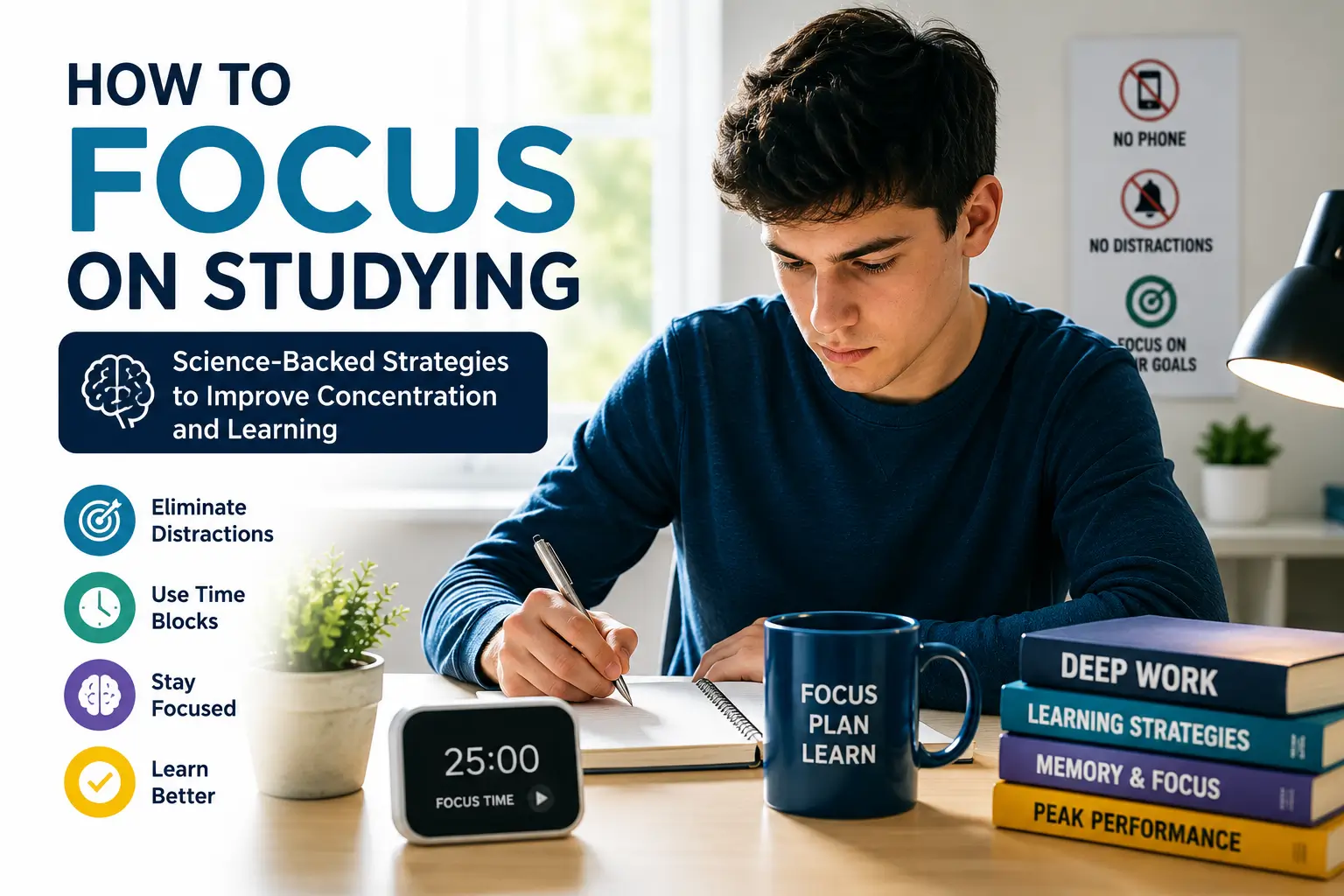
Strategy #7: Reduce Distractions While Reading
Attention is the gateway to memory.
If attention is divided, memory formation becomes weaker.
Research in cognitive psychology consistently shows that multitasking reduces learning efficiency.
Reading while constantly checking notifications, emails, or social media creates interruptions that make encoding less effective.
To improve retention:
- Silence notifications
- Keep only necessary tabs open
- Read in a quiet environment
- Use focused study blocks
- Take scheduled breaks
Readers who struggle with concentration may also find our guide on Study Habits helpful.
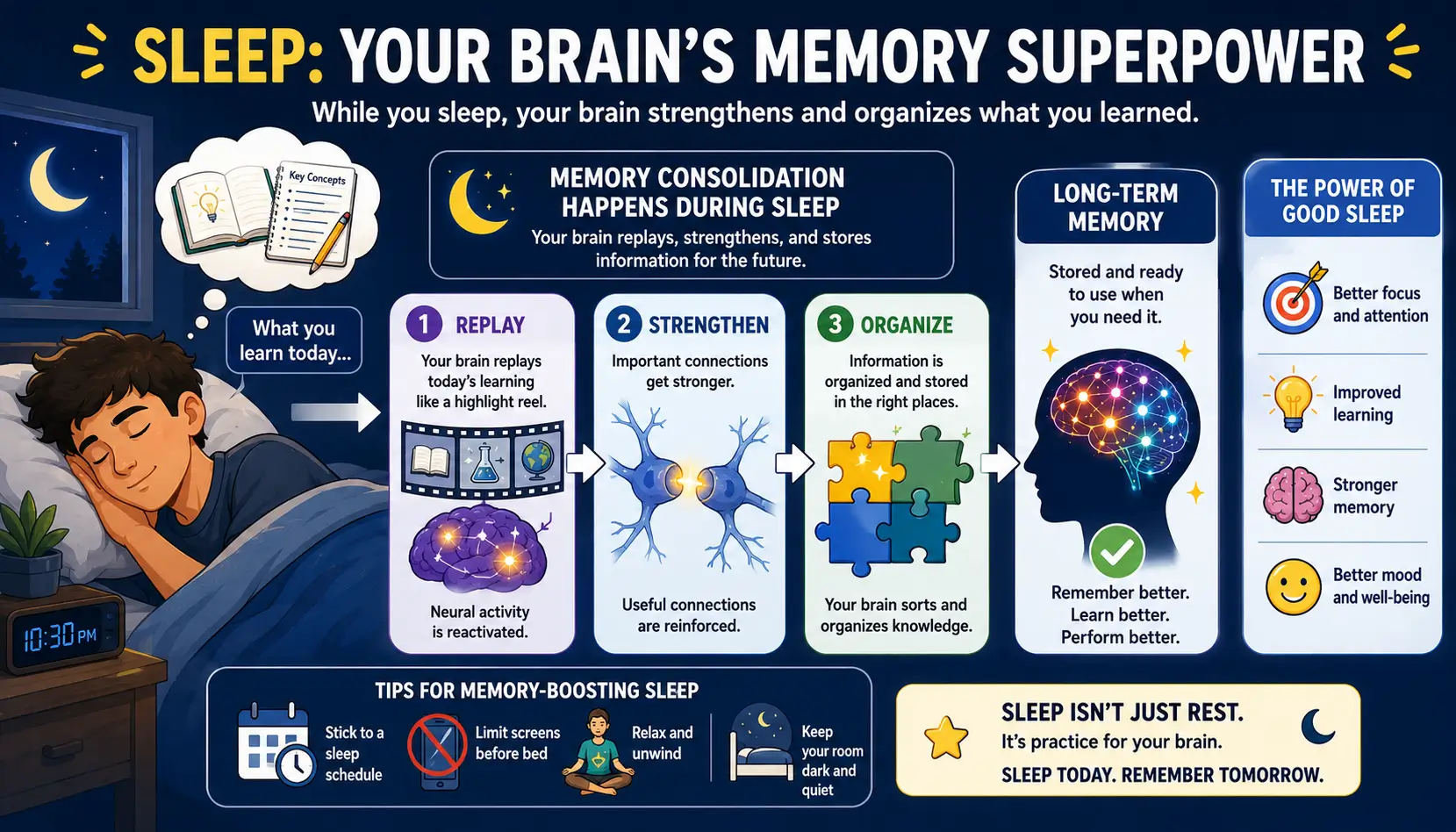
Strategy #8: Sleep After Learning
Many people think learning ends when reading stops.
In reality, some of the most important memory processes occur after learning.
During sleep, the brain continues strengthening and organizing newly acquired information.
Research on Sleep and Memory Consolidation suggests that quality sleep improves memory retention, recall accuracy, and learning efficiency.
If remembering what you read is important, protecting your sleep may be just as important as choosing the right study technique.
Strategy #9: Teach What You Learn
One of the fastest ways to discover whether you truly understand something is to explain it to someone else.
Teaching forces the brain to organize information, identify gaps in understanding, and retrieve knowledge repeatedly.
This idea forms the basis of The Feynman Technique.
After reading a chapter or article, try explaining the material using simple language.
If you struggle to explain it clearly, you may need additional review.
Strategy #10: Create Retrieval Cues
For a faster memorization workflow that combines cues, associations, and active retrieval, see How to Memorize Faster.
The easier information is to retrieve, the more likely it is to remain accessible over time.
Retrieval cues act as mental triggers that help reactivate stored memories.
Examples include:
- Visual images
- Mind maps
- Keywords
- Associations
- Mnemonics
Readers interested in this topic can explore Retrieval Cues and Mnemonics.
Putting It All Together
If your goal is to remember more of what you read, focus on active learning rather than passive exposure.
The most effective readers tend to:
- Read actively
- Practice retrieval
- Take meaningful notes
- Use spaced repetition
- Reduce distractions
- Sleep well
- Teach what they learn
These strategies work because they strengthen the processes responsible for encoding, consolidating, and retrieving information.
Readers looking to support cognitive performance alongside evidence-based learning strategies may also be interested in Advanced Memory Formula, a supplement designed to support healthy memory and cognitive function.
FAQ
Why do I forget what I read so quickly?
Most forgetting occurs because information was not encoded deeply enough or was never retrieved after learning. Active engagement and review can significantly improve retention.
What is the best technique for remembering what you read?
Research consistently supports retrieval practice and spaced repetition as two of the most effective strategies for long-term retention.
Does highlighting improve memory?
Highlighting alone has limited benefits. It becomes more effective when combined with active reading, note-taking, and retrieval practice.
How soon should I review material after reading?
A review within 24 hours is often recommended because it helps interrupt the forgetting process and strengthens memory consolidation.
Does sleep really help memory?
Yes. Sleep plays a major role in memory consolidation and helps stabilize newly learned information.
Related Topics
- Active Recall: The Science-Backed Study Method for Long-Term Memory
- Retrieval Practice: Why Testing Yourself Improves Memory Retention
- Spaced Repetition: The Proven System for Remembering More in Less Time
- The Feynman Technique: Learn Faster by Teaching What You Know
Scientific Sources
https://www.apa.org/topics/memory
https://www.ncbi.nlm.nih.gov/books/NBK547704/
https://www.ncbi.nlm.nih.gov/books/NBK537319/